


The Soldier and the State
| Author: | Samuel P. Huntington |
| ISBN: | 978-0674238022 |
| Reading list: |
|
| Mandatory: | MAJ, WO1 |
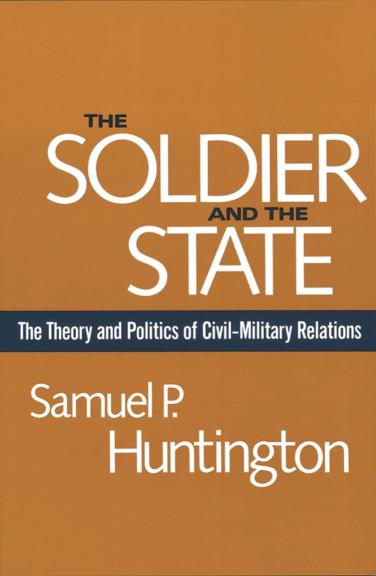
First published in 1957, this classic text develops and advances Huntington’s theory of the ideal model of civil-military relations that advocates for a stark division between politics and the military. The text’s salient focus is Huntington’s account of historic and contemporaneous US civil-military relationships where, examining the historical conflict between the imperatives of military professionalism and a liberal culture, he critiques the undesirable (and escapable) politicisation of the military and the concomitant political influence of military in public life. A military populated by professional soldiers is essential – and The Soldier and the State advocates for a professional officer class arising from those who both bear responsibility and possess the requisite expertise coupled with the crucial dedication to service. In a contemporary society with increasing investment in the ADF’s role in Australian society and actions both at home and abroad, this text poses important questions for all ranks about the intersection between the military and the political world.
Overall I think Huntington's 'Soldier and the state' endures because it talks to a fundamentally unresolved problem. How does and how should the civilian leadership engage with, direct and control the military and the military leadership?
In application of theory, Huntington sets clear division of labour. The politicians set the political objectives whereas the military advises and executes the military means to achieve them. Taken to an extreme, this divorces the political and the military; the end result is failure and finger pointing between the two. Despite military excellence they may succeed but find themselves in political-strategic ambiguity. Conversely, political aspirations may prevent effective military actions. (Echoes of post-US war in Vietnam anyone?).
On reflection I think Huntington is best read, not as a prescriptive manual, but rather as a more insight to academic perspectives on a significant problem of statecraft in war. It seems to argue towards military professionalism over civilian accountability. This seems to be proposing a 'normal' theory of civil-military interactions where political direction is set, then the military is left to deliver.
One key takeaway for me is that Huntington argues that liberal democracies are strongest when their officer corps is professionalised and committed to serving the state under civilian authority. This requires the political leadership to accept the military as professional experts, but retain accountability and ultimate authority for military actions. This requires constant interaction between the soldier and the state.