


The Combat Mindset supports the Australian Army Combative Program (ACP), fostering comprehensive adaptation in cognitive performance by combining IQ (problem‑solving, reasoning), EIQ/EQ (emotional regulation, empathy, resilience), and PIQ (performance integration: aligning emotional, cognitive, and physiological aspects). It highlights the dynamic interaction of psychological, neurological, and physiological systems, enabling individuals not only to endure stress but also to recover and recalibrate these responses in its aftermath.[1]
This integration of mindset and physical training shows how mental adaptation and biomechanical efficiency come together, enhancing resilience while emphasising both the protective and risk factors inherent in combative practice.
Combat sports and martial arts boost both body and mind, enhancing speed, strength, agility, balance, flexibility, coordination, endurance, and fitness, while strengthening neural health through neuroplasticity, metastability, and synchronisation.[2][3] Combat athletes use both static and dynamic imagery, with dynamic reducing stress and static increasing it unless moderated by self‑efficacy.[4]
Traditional martial arts promote brain cortical thickening and resilience, whereas adding competitive striking techniques risks neurodegeneration.[5][6][7] Combative training develops adaptable responses to adversity, enhancing recovery, stress management, and performance, while martial arts ease anxiety, strengthen coping skills, and promote inclusion through shared practice resilience.[8][9][10]
While the ACP lays a foundation for close‑quarters combat skills, its competitive use is best understood by comparing it with international combative tournaments, where different military cultures influence rules, formats, and emphasises to balance realism, resilience, discipline, and operational effectiveness.
Combative Training System Comparison
A comparative analysis of international combat and unarmed fighting systems shows both common roots and unique focus areas influenced by national military cultures. The United States Modern Army Combatives Program (MACP) and Marine Corps Martial Arts Program (MCMAP) emphasise resilience, confidence, and ethical behaviour, combining grappling, striking, and weapons training within structured tournament formats.[11][12][13]
Britain’s Close Combat Survivability (CCS) and milling practices emphasise survivability, restraint, and aggression, although they remain less standardised, blending training courses with boxing-style combat tests.[14][15][16]
Canada’s Close Quarter Combat (CQC) and Military Combatives Grappling Championship emphasise neuropsychological resilience, situational awareness, and unit cohesion, combining technical grappling and weapon retention within competitive frameworks to reinforce a warrior ethos.[17][18][19][20]
In the Asia‑Pacific region, Australia’s ACP and its adoption by New Zealand reflect a principles‑based approach focused on weapon retention, biomechanics, and combat mindset, implemented through submission‑only grappling tournaments.[21][22][23] The Philippines’ Arnis program combines martial heritage with military ethos, emphasising weapons and striking in biennial martial arts competitions tournaments.[24][25]
Japan’s Jieitaikakutōjutsu emphasises realism and preparedness, developing from bayonet and knife combat into comprehensive training without formal sport competition.[26] These systems collectively demonstrate how psychological conditioning, neuro-physiological adaptation, and the technical integration of grappling, striking, and weapons are tailored to national priorities, balancing resilience, discipline, and operational effectiveness through either combative tournaments or martial arts traditions.
US Army MACP Tournament
The US Army MACP Combative Tournament ruleset aims to progressively enhance combat effectiveness while ensuring safety and realism. Its main focus is on developing close‑quarters combat skills – with additional emphasis on leadership, discipline, and unit readiness. The tournament progresses through phases:
- Basic Phase (Army Combat Uniform): Concentrates on grappling basics and maintaining positional control.
- Intermediate Phase: Incorporates controlled striking, takedowns, and submissions under certified supervision.
- Advanced Phase: Expands to full striking, dominant positions, chokes, joint locks, and muscle manipulation.
- Scenario Phase (Full Tactical Gear): Integrates strikes, weapon applications, and graduated force, replicating authentic combat conditions.
Techniques permitted include grappling, controlled striking, submissions, dominant positions, chokes, joint locks, muscle manipulation, and weapons integration. Victory depends on points and progression through rounds, with scenario bouts simulating escalation of force.
Competitors must wear protective gear such as mouthpieces, groin protectors, pads, gloves, and personal protective equipment (PPE), with helmet and vest required for scenario bouts. Matches are held under certified supervision, with referees, judges, and medical staff ensuring rules and safety are followed. The tournament proceeds through preliminaries, quarterfinals, semifinals, and finals – supported by weigh-ins, medical screenings, rehearsals, and briefings.[27]
Medical support is comprehensive, involving brigade surgeons, physicians, and medics to manage injury risks. Preparation focuses on structured training progress, realistic scenarios, and sparring. Psychologically, the tournament boosts courage, confidence, resilience, and readiness to confront the threat, embodying the warrior ethos.[28]
In summary, the US Army MACP Combative Tournament is a progressive, multi‑phase competition that combines grappling, striking, and weapons training under strict supervision, balancing realism with safety to promote combat readiness, discipline, and resilience.
Australian Army Close Quarter Grappling Tournaments
Since 2017, the Australian Army's Close Quarter Grappling Tournament (CQGT), formerly known as the Combative Tournament, has taken place in various formats across the 7th, 3rd, and 1st Brigades at both inter‑ and intra‑brigade levels. Its goal is to enhance physical fitness, psychological resilience, and character within the Army.
Drawing on evidence from combat sports, these events promote discipline, emotional control, and a combat mindset, while maintaining traditional Army fighting methods and lowering injury risk. The ruleset, created by the 7th Brigade Combat Behaviours Centre, follows a structured two-phase competition format.
- Open mat preliminaries. This phase takes place in Australian Multicam Camouflage Uniform (AMCU) pants paired with a rash‑guard shirt or AMCU Dress 4C top, with wrestling boots optional. As the basic entry level, the rash guard encourages quicker movement and smoother transitions by removing clothing grips, thereby boosting athletic performance, practical self-defence skills, and adaptability under pressure. The contest area measures 24m² and is fitted with high‑density mats designed to reduce abrasion and twisting injuries.
- Cage finals. This phase requires competitors to wear the Soldier Combat Ensemble (SCE) chest protector, modified with foam inserts instead of plates. This setup supports improvised weapon training focused on restraint and strangulation, while allowing defence, biomechanical leverage, and balance control. The contest area is circular or polygonal, 6 to 9.8 metres wide, with padded posts rising 1.5 metres above the ring and a flooring of 2.5 to 3.7 centimetres padding covered by non-slip canvas or vinyl, enclosed by vinyl-coated chain-link walls.
- Operating under submission-only rules, victory is achieved through neck submissions or two-arm combat advantages, while lower limb submissions reset the match. Striking is excluded, emphasising control and domination against a wall or on the ground. Referees exercise discretion, restarting bouts if deadlock occurs or if competitors fail to demonstrate ACP principles, particularly maintaining movement. Divisions range from lightweight to super heavyweight, with gender-specific thresholds ensuring fairness, while open weight events permit male and female matchups under strict oversight.
- Preparation requires consistent grappling alongside ACP continuation training, with at least ten 60-minute sessions recommended to reduce injury risk and prepare novices. Training emphasises ACP combat advantage positions, submission proficiency, and tournament rules through theory, drills, and simulated practice. Supplementary techniques include break falls, wall and standing takedowns, throws, maintaining top control, escapes, transitions, wall and cage craft, and submissions such as chokes, strangles, and joint locks – ensuring comprehensive readiness.
Although not part of the CQGT, ACP progressive realism uses Low-Fidelity Simulation (LFS) to provide scenario-based training for qualification and ongoing skills maintenance. Soldiers progress through primary, secondary, tertiary, improvised, and body weapons using non-munitions and training blades, improving survivability, motor skills, and injury awareness. Integrated firearms practice enhances reflex control, postural stability, and quick tool selection to match threat levels. The training moves from individual exercises to coordinated team drills; strengthening adaptability, discipline, and combat effectiveness under pressure.
The US Army MACP Combative Tournament uses a progressive, multi‑phase format that includes grappling, striking, submissions, and weapons. All under strict medical supervision, focusing on realism, safety, and combat readiness. Conversely, the CQGT follows submission‑only rules in open mat preliminaries and cage finals; avoiding striking to reduce the risk of injury while building resilience, discipline, and a combat mindset. Both competitions enhance capability and psychological resilience but differ in scope – US emphasises staged escalation and realism, whereas Australia prioritises control, restraint, and injury prevention.
Conclusion
In conclusion, the Australian ACP shows how combat mindset, physical training, and resilience come together to prepare soldiers for close‑quarters survival. Comparing international systems reveals common foundations in discipline, adaptability, and psychological conditioning, while different tournament structures reflect unique cultural priorities. The US Army stresses progressive realism with staged phases that include striking and weapons, whereas Australia’s submission-only CQGT focuses on resilience, discipline, and injury prevention. These approaches together demonstrate how combat competitions can boost capability, cohesion, and readiness in various military settings.
End Notes
[1] Johnston , A.. 2024. 'Point of Impact Training'. Available at: https://theforge.defence.gov.au/article/point-impact-training (Accessed: 27 November 2025).
[2] D’Aquino, M., n.d. Strength training for judo. JudoInfo. Available at: <https://judoinfo.com/StrengthTraining/> [Accessed 27 November 2025].
[3] Gabriel, C.A., 2025. Martial arts induce quasicritical brain states: a unified, multiscale, and mechanistic theory of brain health optimisation. Frontiers in Psychology, 16, p.1661566. doi:10.3389/fpsyg.2025.1661566
[4] Di Corrado, D., Tortella, P., Coco, M., Guarnera, M., Tusak, M. and Parisi, M.C., 2025. Mental imagery and stress: the mediating role of self-efficacy in competitive martial arts athletes. Frontiers in Psychology, 16, p.1517718. doi:10.3389/fpsyg.2025.1517718
[5] Zehr, E.P., 2023. Kung Fu fighting softens the blow of neurodegeneration: Tai Chi Chuan can alter the rate of neurological decline in Parkinson’s disease. Psychology Today, 26 October. Available at: <https://www.psychologytoday.com/us/blog/black-belt-brain/202310/kung-fu…; [Accessed 27 November 2025].
[6] Khan, S. and Talley, L., 2025. Beyond the hit: the hidden costs of repetitive head trauma. Neuroscience Insights, 20, pp.1–8. doi:10.1177/26331055251316315.
[7] Thalken, J. 2016, Fight like a physicist: the incredible science behind martial arts, YMAA Publication Center, Wolfeboro, NH, pp. 66–69.
[8] Predoiu, R., Bertollo, M., Piotrowski, A., Stănescu, R., Hamdi, F., Szabo, G. and Cosma, G. (2025) ‘Psychological resilience in Olympic combat sports’, Frontiers in Psychology, 16, Article 1605765. doi: 10.3389/fpsyg.2025.1605765.
[9] Ciaccioni, S., Lee, Y., Guidotti, F., Stankovic, N., Pocecco, E., Izzicupo, P. and Capranica, L. (2025) ‘Combat sports and wellbeing: advancing health and inclusion in athletes and practitioners. An opinion paper’, Frontiers in Psychology, 16, 22 April. doi: 10.3389/fpsyg.2025.1587672.
[10] de Lorenco‑Lima, L., Gaines, S.A. and Waterbury, E.M. (2025) ‘Aggression, self‑control, life satisfaction, and resilience as predictors of mental health in Brazilian jiu‑jitsu athletes’, Frontiers in Sports and Active Living, 7, 6 November. doi: 10.3389/fspor.2025.1692536.
[11] United States Army, 2017. Combatives Tournament Rules and Equipment. Fort Benning: U.S. Army Fort Benning and The Manoeuvre Centre of Excellence. Available at: <https://www.benning.army.mil/Armor/316thCav/Combatives/Tournament.html&…; [Accessed 24 November 2025].
[12] Furlong, D.J., Van Dam, D.J. & Larsen, M.C., 2025. Cadets’ perceptions of hand-to-hand combatives instruction for officer development. Military Review, September–October, pp.125–135. Available at: <https://copilot.microsoft.com/chats/VqPMEYBSDcdT1RoPtSo3o> [Accessed 24 November 2025].
[13] Adams, B.A., 2015. The intangible benefits of the Marine Corps Martial Arts Program. Master of Military Studies Research Paper, USMC Command and Staff College, Quantico, VA, September 2014 – April 2015. Available at: <https://apps.dtic.mil/sti/trecms/pdf/AD1175805.pdf> [Accessed 24 November 2025].
[14] Army, 2022. Close combat survivability: New course trialled by British Army's global response force. Forces News, 5 December, 3:32pm. Available at: <https://www.forcesnews.com/services/army/close-combat-survivability-new…; [Accessed 25 November 2025].
[15] Elite UK Forces, n.d. Pegasus Company (P Coy) – Pre-Parachute Selection (PPS). British Special Forces. Available at: <https://www.eliteukforces.info/parachute-regiment/p-company/#sharethis&…; [Accessed 25 November 2025].
[16] Chris, 2018. Why the British Army needs a combatives system. Wavell Room, 9 February. Available at: <https://wavellroom.com/2018/02/09/why-the-british-army-needs-a-combativ…; [Accessed 25 November 2025].
[17] Ho, K., 2024. Close quarter combat teacher training available at 3 CDTC. National Defence, 28 November. Available at: <https://www.canada.ca/en/department-national-defence/corporate/news/reg…; [Accessed 25 November 2025].
[18] Corey, A., 2021. Close-Quarter Combat – Excellence? Canadian Forces College – Collège des Forces Canadiennes, JCSP 47 – PCEMI 47, Service Paper. Available at: <https://www.cfc.forces.gc.ca/259/290/23/192/Han.pdf> [Accessed 25 November 2025].
[19] Melanson, R., 2017. Military combatives and grappling clubs gaining steam. Trident Newspaper. Available at: <https://tridentnewspaper.com/military-combatives-grappling/> [Accessed 25 November 2025].
[20] Fouchard, S., 2017. Combatives championships reinforce hand-to-hand fighting skills. Lookout Newspaper, 1 September. Available at: <https://lookoutnewspaper.com/combatives-championships-reinforce-hand-ha…; [Accessed 25 November 2025].
[21] LD-LWP-G 7-7-11 Army Combative
[22] Cale, P., 2020. NZ Army Combatives Replaced with Aussie Program. Kinetic Fighting, 17 December. Available at: <https://kineticfighting.com.au/nz-army-combatives-replaced-with-aussie-…; [Accessed 25 November 2025].
[23] Hughes, M. (2023) Perfecting hand-to-hand combat. CONTACT Air Land & Sea, 6 December. Available at: https://www.contactairlandandsea.com/2023/12/06/perfecting-hand-to-hand… (Accessed: 26 November 2025).
[24] Philippine Army, 2024. Combatives. Philippine Army. Available at: <https://army.mil.ph/home/index.php/component/sppagebuilder/page/2349> [Accessed 25 November 2025].
[25] Philippine Army, 2023. Army emerges Champion in Filipino Martial Arts Fest 2023. Philippine Army Press Release, 6 August. Available at: <https://army.mil.ph/home/index.php/press-releases-archive-2/2176-army-e…; [Accessed 25 November 2025].
[26] Team Mighty, 2023. Japan’s Self Defense Force combatives were designed for fighters in full battle rattle. We Are The Mighty, 9 March. Available at: <https://www.wearethemighty.com/mighty-tactical/japans-self-defense-forc…; [Accessed 25 November 2025].
[27] United States Army, 2017. Combatives Tournament Rules and Equipment. Fort Benning: U.S. Army Fort Benning and The Manoeuvre Centre of Excellence. Available at: <https://www.benning.army.mil/Armor/316thCav/Combatives/Tournament.html&…; [Accessed 24 November 2025].
[28] United States Army, 2015. III Corps and Fort Hood Combatives Tournament, 14–17 December 2015. Fort Hood: United States Army. [Unpublished internal document].

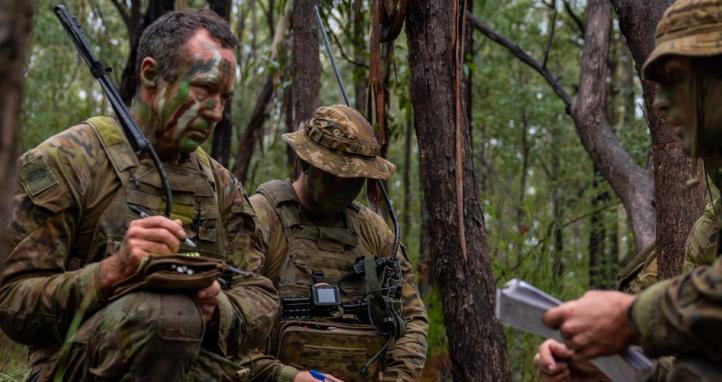
As the author of one of the works cited (reference 3), I am pleased to see the emphasis on translating theory into operationally relevant practice. From a scientific standpoint, well-designed combat sports training offers a rare combination of cognitive, sensorimotor, and social stressors that (when structured with intent) can strengthen functional integration and adaptive capacity, precisely the kind of qualities modern forces need in complex environments.
It is always a positive sign when doctrine, training design, and science move in the same direction. I look forward to seeing how these initiatives continue to evolve in practice and to continued dialogue between the research and operational communities.
CTC’s investment in High‑Fidelity RBT is a strong example of progress, yet we have not, to my knowledge, established a comprehensive 360‑degree feedback system that links this training to wider organisational learning. Such a system would allow for timely adjustments, more effective mentoring, and ultimately higher levels of training performance across the force.
A practical short‑term approach could be to draw on the existing 7th Brigade Combat Behaviour Centre model and its established SOPs as a foundation for building this feedback framework. I drafted several SOPs for the Centre’s establishment prior to leaving the Army, and anyone interested in that work or in discussing the concepts further is welcome to contact me through the Combat Behaviour Centre.
In the meantime, I recommend reviewing the articles on The Forge and The Cove that explore Point of Impact and Melee Warfare, as they provide useful context and complementary perspectives.