Article Summary
This primer introduces techcraft as an emerging element of professional military competence: the ability to understand, integrate, employ and adapt technology in a tactical setting. Rather than replacing traditional fieldcraft, techcraft connects technical knowledge with soldiering fundamentals, operational judgement and problem-solving. Drawing on US and British Army discussions, the article considers how uncrewed systems, AI, electronic warfare and autonomous platforms are changing the demands placed on personnel beyond specialist trades. For the Australian Army, particularly as it prepares for distributed littoral operations, developing techcraft involves recognising technological limitations, operating effectively when systems are degraded or denied, and building a culture of appropriate experimentation, learning and professional curiosity. The objective is not to make every soldier a technical expert, but to help every soldier become more capable and adaptable.
As emerging technologies reshape the battlefield, armies are reconsidering the skills their soldiers need to fight and win. Increasingly, the concept of ‘techcraft’ is entering the conversation. But what exactly is techcraft, and why should it matter to the modern Army professional?
Members of Army have always been expected to master the fundamentals of their profession. Navigation, camouflage and concealment, survival in austere environments, tactical movement, and the effective employment of weapons are among the skills that underpin successful soldiering. Collectively, these skills are known as fieldcraft.
Yet the modern battlefield is increasingly characterised by technologies changing how military forces see, communicate, move, and fight. Uncrewed aerial systems (UAS), autonomous vehicles, artificial intelligence (AI), and electronic warfare are becoming integral to military operations. Technology and its use has always influenced warfare; today the speed at which these capabilities are evolving presents new challenges for military organisations and their people – and the Australian Army is not immune.
Simply issuing soldiers with new equipment is no longer sufficient, no matter how cutting edge it is. They must understand this technology, know how to employ it effectively, adapt it to changing circumstances, and recognise its capabilities and limitations.
This body of knowledge is referred to by the emerging concept of techcraft.
What is techcraft?
Put simply, techcraft is the ability to understand, integrate, and effectively employ technology within a military context, combining technical knowledge with traditional soldiering skills and tactical judgement.
The term has been promoted by the United States Army Futures Command (AFC), which introduced techcraft as a conceptual framework for identifying the attributes soldiers require to succeed on a technology-intensive battlefield.
In its 2024 publication, Embracing Techcraft: The Future of Soldiering in the Emerging Technological Battlefield, the US Army's Center for Army Lessons Learned (CALL) describes techcraft as an expansion of traditional technical proficiency. It encompasses the skills, knowledge, and adaptability necessary to integrate, operate, conceal, maintain, and troubleshoot emerging technologies[1].
Importantly, techcraft is not intended to replace fieldcraft. Rather, it recognises that the two are becoming increasingly interconnected.
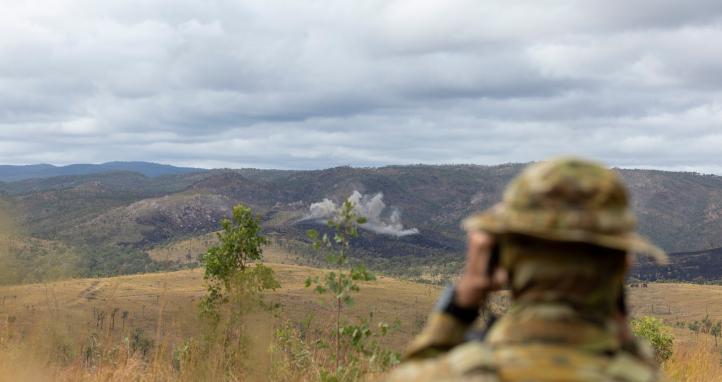
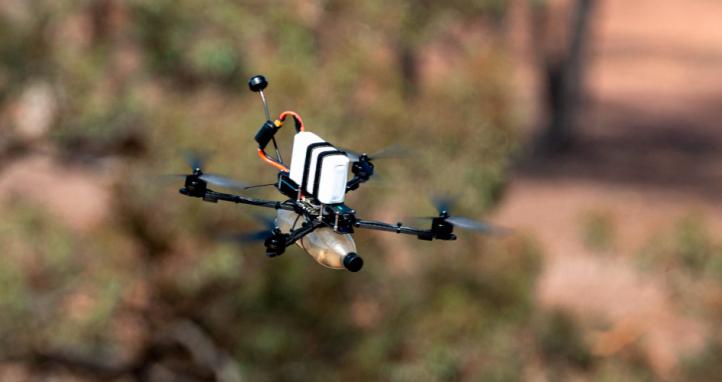
Consider a soldier operating a small UAS to conduct reconnaissance. Operating the UAS requires technical competence, but employing it effectively also demands an understanding of observation, concealment, terrain, and enemy capabilities.
The soldier must understand not only how to operate the system in isolation, but how its employment might expose their position, how environmental conditions affect its performance, what to do when communications are disrupted, and the tactical relevance of what it observes.
This combination of technical knowledge and tactical understanding is techcraft in practice. Ultimately, techcraft is as much about adaptability and problem-solving as pure technological proficiency.
How are other armies approaching techcraft?
The US Army has been active in developing the concept through AFC and experimentation within operational formations.
The US Army Experimental Force (EXFOR) has explored integrating emerging technologies into tactical operations, including robotic and autonomous systems. CALL documents examples of soldiers applying technical knowledge and initiative to overcome tactical challenges, such as modifying antenna configurations to extend robotic operating ranges[2] (Smith and Baker, 2024).
Subsequent work has examined the organisational culture required to develop techcraft, emphasising experimentation, managed risk, collaboration, and empowering soldiers to develop innovative solutions.
The British Army has similarly explored the relationship between technology and traditional military expertise. In a 2025 publication, its Centre for Army Leadership examined techcraft through the concept of military leaders becoming 'tri-lingual': possessing an understanding of tactics, technology, and money.
The argument is not that every commander must become an engineer or procurement specialist, but that leaders increasingly require sufficient technological and commercial understanding to make informed decisions and engage effectively with specialists[3] (Paterson, 2025).
Both approaches recognise that developing techcraft involves more than technical training. It requires adaptable people, capable leadership, and an organisational culture that encourages innovation.
Why does techcraft matter to the Australian Army?
For the Australian Army, the relevance of techcraft is readily apparent.
As Army adapts to an increasingly complex operational environment and continues to roll out new capabilities under the Integrated Investment Plan (IIP), our people will work with technologies that are becoming more sophisticated, interconnected, and prevalent across military functions.
In other words, technological competence is no longer confined to specialist trades.
An infantry section commander may need to understand how UAS can support reconnaissance while managing electronic detection. A logistician may consider autonomous systems for resupply. A headquarters staff officer may employ AI-assisted information processing.
In each case, effectiveness depends on understanding how technology contributes to the mission, its limitations, and how it interacts with other capabilities.
This is particularly relevant as Army optimises for littoral manoeuvre, where dispersed operations, contested communications, and the integration of capabilities across domains place increasing demands on soldiers and commanders. This concept is already being highlighted in Army via case-studies and fictional intelligence (FICINT) that illustrates what techcraft might look like for practitioners.
Importantly, techcraft also encompasses operating when technology fails. A soldier who combines sound fieldcraft with technical understanding is better positioned to adapt, troubleshoot, or employ alternative methods when systems are degraded or denied. Techcraft should therefore be understood as an enhancement of professional competence, rather than a substitute for traditional soldiering skills.
Developing techcraft: A professional responsibility
If techcraft is becoming an increasingly important component of military competence, how should Army members approach its development?
The first step is a cultural shift, in recognising that technological proficiency is not exclusively the responsibility of specialists. Not every soldier needs to write software or build a drone. However, all soldiers should develop understanding of the technologies relevant to their roles, exploring emerging capabilities, their limitations, and questioning established approaches.
For commanders, developing techcraft also means creating environments where experimentation, innovation, and subordinate initiative are encouraged, with risks appropriately managed.
There is also an important role for professional military education (PME). Professional reading, discussion, experimentation, and sharing lessons can expose Army members to unfamiliar technologies and alternative approaches to military problems.
Just as PME and professional reading encourages members of the Army profession to maintain an understanding of tactics, history, and the changing character of warfare, technological literacy should increasingly form part of our ongoing professional development.
The objective is not to produce technical experts in every role, but to cultivate soldiers capable of understanding technology and applying this knowledge to military problems and operations.
Techcraft and the modern Army professional
Despite recent discussion regarding the war in Ukraine emphasising the shifts in technology, it is important to remember that technology alone does not provide a decisive battlefield advantage. Rather, its effectiveness depends on the people and organisations employing it.
The emerging discussion around techcraft recognises that technological understanding, adaptability, and innovation are becoming increasingly important elements of the profession of arms.
Traditional fieldcraft remains fundamental to soldiering. However, as advanced technology becomes further integrated into military operations, combining those skills with technical knowledge will become essential.
Developing techcraft is not about becoming a deep specialist. It is about becoming a more capable, adaptable, and effective soldier.
End Notes
[1] Smith, K. and Baker, J. (2024). Embracing Techcraft: The Future of Soldiering in the Emerging Technological Battlefield. Center for Army Lessons Learned, US Army, Publication No. 24-893.
Read publication
[2] Baker, J. and Smith, K. (2024). Embracing Techcraft: Optimal Elements of Army Techcraft Culture. Center for Army Lessons Learned, US Army.
Read article
[3] Paterson, M.J. (2025). New Challenges for Army Leaders? Tech-Craft and Being Tri-Lingual. Leadership Insight No. 66, Centre for Army Leadership, British Army.
Read publication