Article Summary
This article examines how Ukraine’s Uncrewed Systems Force has used cheap, mass-produced drones to deny the movement, massing, and resupply of Russian forces across the southern occupied regions and, most strikingly, to impose something close to sea denial over the Sea of Azov without deploying a warship. It argues that the decisive factor is not the airframe but the enabling architecture – resilient communications and last-mile autonomy – that together create what the author terms “drone superiority.” The piece concludes that Western force designers, conditioned by assumptions of air, sea, and space superiority should war-game area denial by drone seriously as a way for a smaller force to offset a numerically superior conventional adversary.
Introduction
As of July 2026, Ukraine is having major successes in the Kherson, Zaporizhzhia, and Crimea Oblasts (southern provinces), including the Sea of Azov and northwest Black Sea region, by a strategy of denial by drone. Over the last few months, Ukraine’s Uncrewed Systems Force (USF) has been able to deny the massing, resupply, and movement of ground forces and logistics in these provinces along any recognised highway or railway, whilst also interdicting the bridges into Crimea from Kherson Oblast. Desperate to keep supplies moving into Crimea, Russia switched to movement of supplies by vessel across the Sea of Azov, internal to the Kherson bridge, only to meet a similar fate with 196 merchant ships and shadow fleet tankers disabled in 16 days to 22 July 2026. The entire region is now under the denial of assembly, movement, and resupply, placing significant pressure on Russia’s continuing war efforts in the southern occupied regions of Ukraine.
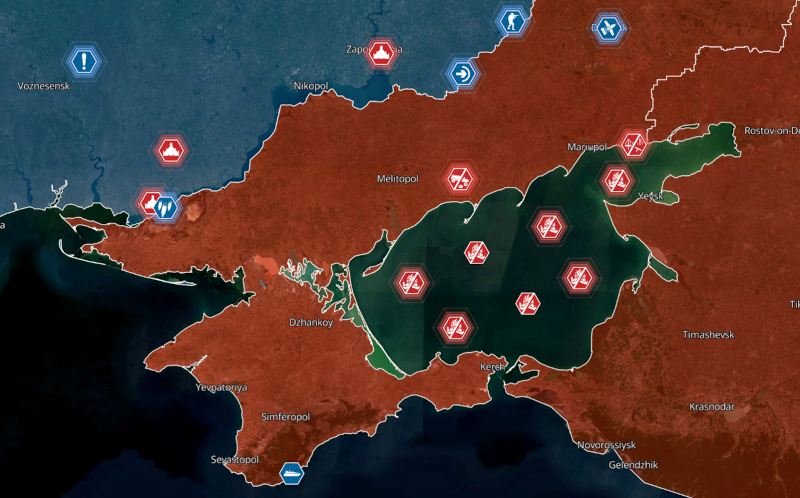
Figure 1 – Southern Ukraine – area denial by drone over sea of Azov (RFU 2026)
What is remarkable is that this area of land and sea denial reaches well beyond 200 km from the front lines, and well into the defended territories occupied by the Russian Armed Forces. Time and time again, Russia’s air, missile, and electronic defences in this region have been located and destroyed by this predominately drone force; integrating stand-off cruise missiles, superior drone capabilities, and tactics to systematically attrit the opposing force. Now a losing game, Russia is finding it near impossible to mass forces, manoeuvre, and resupply in this area and has effectively lost drone superiority in this battlespace. With drone superiority now firmly in the hand of the Ukrainians in these contested areas, the Russians face a desperate future of further attrition and loss to the Uncrewed Systems Force of Ukraine.
What is Denial by Drone and Drone Superiority?
Area denial is a military strategy and capability designed to limit an adversary’s freedom of action within a specific operational environment (Russell 2017). That operational environment may be land, sea, air, space, or cyberspace – the five warfighting domains. In the case of area denial by drone, the capability is uncrewed systems or drones, and the operational strategy is to use these drones systematically to control the specific land and sea areas over which they are being operated. However, the success of these uncrewed systems in an operational area will predominantly rely on the ability of the uncrewed systems to overwhelm the counter drone defences of the adversary and enjoy relative freedom of action in the contested battlespace.
Force superiority refers to a state of overall combat dominance that enables a force to execute operations without prohibitive interference from an adversary (US Air Force 2025). Readers would be familiar with the terms air superiority; space superiority; and sea control; but probably have never heard the term drone superiority applied to uncrewed systems or drone warfare. Well, that is now changing, and the Uncrewed Systems Force of Ukraine have established drone superiority over the Russian Armed Forces in the battlefields of occupied Ukraine. Important elements of that ability to create drone superiority over an adversary are intrinsically linked to the technical components of a generic uncrewed system, especially the components which enable operations without prohibitive interference from the adversary.
Uncrewed System Components and Drone Superiority
An uncrewed system is the assembly of a few generic sub-systems or components (Sarraf 2025). Those generic components of a drone include the:
- Structural components – such as the skeletal frame, chassis, hull or airframe, and landing gear for UAV.
- Propulsion system – comprising electric motors, ducted fans, propellers, speed controllers, tracks, or wheels as appropriate.
- Power supply – comprising batteries, control circuitry, and power distribution.
- Guidance, Navigation and Control (GNC) system – including global navigation satellite system, inertial measurement units, flight/motion controllers, and more recently autonomous or AI enabled control systems.
- Communication and payload – including the transmitter and reception system (typically but not always Radio Frequency), sensors such as cameras (EO and thermal), LiDAR scanners, and delivery mechanisms. Of course, payloads may also include warheads of various sizes for attack missions.
Over the last decade there has been significant technical advancement in all these uncrewed system sub-component areas to rapidly evolve the capabilities of drones. The physical elements of structure, propulsion systems, and power supply have all advanced at great rates to enable the mass manufacture of cheap, small, and powerful drones, whilst seeing the range and endurance of these drones being extended to operationally significant distances. Small group 1 Uncrewed Aerial Vehicles (UAV’s) can fly out to 20-30 km, maybe further extended if launched from a mother ship, with group 2 UAV’s pushing out to hundreds of km. Larger group 3 UAV’s, such as Shahed-136’s push out to thousands of km, meaning that a drone’s physical range and endurance are only design limitations with trade-offs in size and weight to accommodate propulsion and power requirements of the intended missions. Taken to the extreme, nuclear powered and propelled uncrewed systems may have range-less limitations, as demonstrated by the Russian Poseidon undersea program.
Technical Drone Superiority
Whilst physical drone characteristics continue to evolve, technical drone superiority in a contested battlespace tends to reside firmly with the robustness, resilience, and interdependencies between the GNC system and communication links of the drone. And it is in these two areas where Ukraine’s technical capability has advanced rapidly in recent years to permit operations without prohibitive interference from the adversary.
In short range operations, both sides in the war became early adopters of fibre-optic control links for first person view (FPV) drones. Generally limited to 10-20 km ranges over the no man’s land along the front lines, fibre-optic drones have been able to ensure robust control links are maintained in even the most hostile electronic jamming environments. Whilst they have been useful in drone ambushes and as ‘flying mines’, they have been limited in surveillance or armed reconnaissance roles, where either flight time usually exceeds spool time, or there is an elevated risk of breakage of the fibre-link.
A more significant innovation in creating robust and resilient communication links has been the evolution of frequency agile communications for anti-jam performance, use of comms relays for range extension, use of 4G/LTE and Mobile ad-hoc Networks (MANET), and the use of satellite communication links such as Starlink. Use of sophisticated RF communications architectures has probably been the greatest technological advantage that Ukraine has applied to extend its drone superiority over 100’s of km over Russian occupied territories. Add to this systematic targeting of Russia’s air and electronic defence systems in the battlespace, and this technological system superiority has been definitive in enabling area denial by drone.
As an electronic counter drone defence will always favour the on-frequency-jammer at short range, given the inverse proportionality to range-squared of electronic signal propagation, the other significant technical innovation in drone superiority has been the increasing use of AI enabled autonomous GNC– or so called ‘last mile autonomy’. This last mile autonomy has been a significant feature of Ukraine’s FP2 systems that now hunt with lethality at extended ranges over the land and sea battlespace. Semi-autonomous attack capability was first demonstrated to the world in Operation Spider Web, where a combination of 4G/LTE links hosted by Russia’s own RUSTEL network combined with semi-autonomous attack software enabled operators to assign targets to the drone for attack without reliance on real time continuous communications links. Evolution of GNC and AI enabled attack modes, has recently led to the first employment of fully autonomous attack drones, that can be programmed to hunt a defined area, and attack AI identified targets without an operator in the loop control (Sparkes 2026). This involves the use of ‘terminator drones’ in defined kill boxes in open conflict invoking the full notion of area denial by drone.
Organisational Drone Superiority
Whilst discussing the technical aspects of drone superiority, it should be recognised that to employ these technical advantages there must be a systematic approach to establish drone superiority across the contested battlespace. This is where the principles of war come into the game, with the most important being concentration of force, offensive action, surprise, security, cooperation, flexibility, and ultimately economy of effort (Field 2021).
Ukraine has not taken a backwards step in its use of drones and applying these principles of war. Ukraine manufactured and deployed approximately 4 million drones in 2025, and this year will look to produce 7 million drones (Horowitz, Dumbacher and Khan 2026). A great example of systematic application of the principles of war occurred in a recent 48-hour attack on artillery pieces over the period 12-14 July. This attack featured the use of 800 FPV drones to target 231 artillery pieces in a concentrated effort across the battlefield as an example of careful selection and maintenance of the aim, concentrating force, taking offensive action with surprise, security, and the cooperation of surveillance drones and intelligence resources to demonstrate area denial by drone. When you then calculate that 800 FPV drones costing around 500 EUR each (total 400,000 EUR) disabled a reported 171 artillery pieces costing around 500 mil EUR, then the economy of effort equation is of course all in favour of the force with drone superiority.
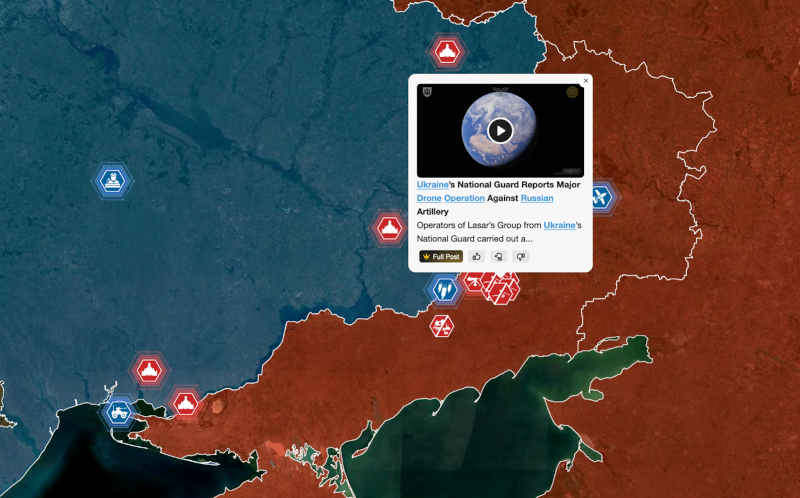
Figure 2 – Major drone operation against Russian Artillery (RFU 2026)
Uncrewed Systems Force of Ukraine
Credit where credit is due, and it must be said that the Uncrewed Systems Forces of Ukraine have proven highly effective in massing, organising, training, equipping, and coordinating the drone forces of Ukraine across the domains of land, air, and sea. Established in June 2024, the USF is commanded by a Major Robert ‘Madyar’ Brovdi – founder of the Madyar birds – a hero of Ukraine (Uncrewed Systems Forces n.d.). Remarkedly this highly effective force is led by a tactical leader, who has demonstrated high proficiency in technical application and organisational drone warfare. Whilst the USF has the operational controls of Ukraine’s drone forces, it is the partnership between the warfighters and the technical industrial base of Ukraine that is fielding this technical and organisational drone superiority campaign in the Russia-Ukraine war.
Implications for Future Warfare
Denial by Drone and Drone Superiority in the battlespace are being proven to be significant advantages for the USF of Ukraine. However, this lesson is not only being proven by Ukraine and adversely learnt by Russia. Iran is continuing to deny the commercial use of shipping through the Strait of Hormuz by drones, having already employed long range attack drones asymmetrically across the Middle East to create significant losses for US Forces (i.e. E3D, THAAD radar, etc). But those taking most notice are the Chinese Communist Party, People’s Liberation Army, and technical industrial base of China, who are preparing their Anti-Access/Area Denial (A2/AD) strategy for the Western Pacific to include the heavy use of drones in a possible contest over Taiwan.
Recent research under the Defence Innovation Network has established that the Chinese technical research and development focus is on the very essence that creates drone superiority – robust and resilient communication architectures and AI enabled GNC systems (Tsai 2026). Add to this the other aspect in China’s favour, mass production, and there is focused research on large scale swarm coordination, leader replacement, and decoy by drone. As these technologies mature, it is highly likely that the PLA may prepare to add denial by drone and drone superiority objectives to their play list in potential operations to truly dominate in their theatre A2/AD strategy.
Implications for Military Strategists and Force Planners
Western military strategists and force designers are conditioned by their joint force doctrines. The doctrines of air superiority, space superiority, and sea control, for example, will all have some primacy in defence strategies and force planning, typically translating to billions of dollars in long term capability programs. Whilst these areas all remain relatively important, the recent lessons from Ukraine along with the rapid technological innovation of uncrewed systems cannot be denied. One could conclude from the undeniable trend in area denial by drone in the Ukraine-Russia war, given the clever use of uncrewed systems by a fully focused and resourced uncrewed systems force, in close cooperation with an innovative technical industrial base, that a country could redefine its national defence strategy and force structure by incorporating area denial by drone and a joint force design to establish drone superiority in the extended battlespace as essential elements for future warfare. At least this should be wargamed in depth to truly understand the benefits of such an approach in various operational environments and the best way to rebalance the future force to ensure success against potentially superior conventional forces.
Conclusion
For countries with small forces, limited budgets, and large areas to defend, this is potentially a pivot point to become a better prepared military with an uncrewed systems force structure that is organised and prepared for future conflict. This area needs a lot of intellectual investment, research, technical innovation, warfighter-innovator cooperation, and industry investment. If nothing else, the dedicated organisational effort to field a well-resourced technically sophisticated uncrewed systems force has proven to be the leveller when facing a numerically superior adversary.