Article Summary
John Wellfare reviews Barbara Tuchman’s The Guns of August to examine how experienced, well-equipped armies entered the First World War with assumptions that proved costly. He highlights the gap between recognising emerging technology and adapting doctrine, training and decision-making to account for it. Drawing parallels with drones, AI and contested communications, this review cautions against treating lessons from past operational experience as universally transferable. It also identifies examples of successful adaptation in 1914 and argues that instructors and senior NCOs have a particular responsibility to challenge assumptions, test emerging lessons and translate them into changes in training, doctrine and capability.
‘A possibility not studied in our war academy’
During the Battle of the Marne, 600 Paris taxis assembled to carry French troops to the front. Ordinary taxi drivers emptied their vehicles of civilian passengers and reported for duty. In The Guns of August, historian Barbara Tuchman portrays their departure as a final expression of the gallantry of the old world as it gave way to the new. It is an appealing story of initiative, resolve, and rapid adaptation. It came after a month of death and destruction on a scale none had anticipated.
Tuchman’s 1962 Pulitzer Prize winning account of the opening month of World War 1 has merit as an historical examination of the period and the key figures. It also reveals some startling similarities with our own time and can be interpreted by the modern military reader as a warning.
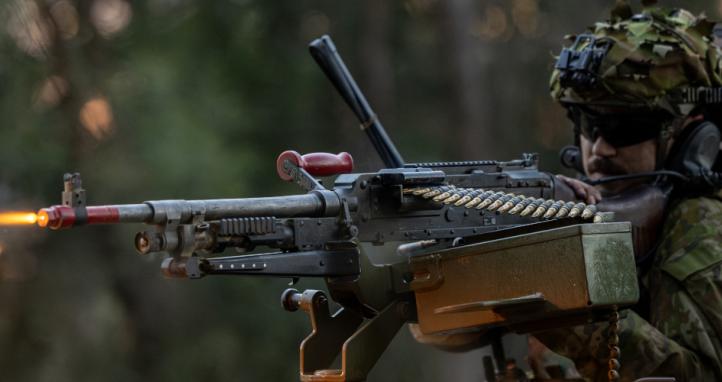
The armies of 1914 were not unprepared in any simple sense. Their leaders possessed operational experience, detailed plans, established doctrine, and modern technology – powerful new weapons such as reliable machine guns and accurate artillery – set to change the character of war. Yet the confidence created by that experience and preparation survived beyond many of the assumptions supporting it, at a cost of countless thousands of lives in the first month alone.
Reading The Guns of August in the current geopolitical context – as assumptions about the global rules-based order that have held true for most of our lifetimes are facing challenge and contradiction (almost as if an ‘old’ world is giving way to a new one) – forces reflection. We have many experienced leaders, all veterans of conflicts that are not synonymous with large-scale interstate industrial warfare. We have emerging watershed technologies that everyone agrees are set to change the character of war, but none can predict with certainty how this change will manifest. We are confident in the quality of our training, our equipment, and our people, but can we endure a month like August 1914?
‘There never was such a crazy way of making war’
In Tuchman’s account, the French Army knew modern firepower, yet its 1913 regulations elevated morale and the offensive while omitting materiel and firepower from their central principles. The warnings were there – British and German observers of the Russo-Japanese War reported the defensive power of entrenched machine guns, but these warnings were largely dismissed by higher command. One such observer was none other than the future General Sir Ian Hamilton, who, despite his astute observations on the failure of cavalry charges against entrenched machine gun positions in the Russo-Japanese War, went on to oversee battles throwing several hundred thousand dismounted infantrymen at Turkish machine guns in the Gallipoli Campaign.
At Morhange in Lorraine, Tuchman shows, doctrine met reality. French military theorists assumed attacking troops could cover 50 metres in 20 seconds before defenders could shoulder their weapons and return accurate fire; machine guns needed eight seconds. These same battles disproved French assumptions on the power of artillery to suppress entrenched troops.
Australia faces a similar gap between awareness and adaptation. Few, if any, in modern defence circles argue against the need to invest more heavily in drones and AI. Observations of the war in Ukraine make drones impossible to ignore. However, as observed by Dr Oleksandra Molloy in a 2026 Australian Army Research Centre paper, ADF training and adoption of drone capabilities remain fragmented. Dr Molloy argues against the continued emphasis on high-cost, low-volume “exquisite” platforms, and observes that most Australian training still assumes a permissive electromagnetic environment, inconsistent with the Ukraine experience.
These modern examples mirror Tuchman’s observations of the French failures of 1914: doctrine privileging inherited beliefs, warnings remaining observations rather than institutional lessons, and training exercises that rehearse assumptions the enemy will not honour. The danger is not that we lack new tools, nor that we lack awareness of them, but that we may preserve operating concepts those tools have rendered obsolete.
‘As war was, so it has remained’
Experience is indispensable to military competence, but it does not transfer cleanly between conflicts. Tuchman’s portrayal of Russia’s Minister for War, General Vladimir Sukhomlinov, provides the starkest example. Having distinguished himself against the Turks in 1877, he treated the military knowledge acquired in that campaign as permanent truth, rejected the growing importance of firepower and boasted that he had not read a military manual for 25 years. His failure was not that experience had taught him nothing, but that he mistook the lessons belonging to one battlefield for enduring principles of war.
The British Army offers a subtler warning. Its defeats in the first Boer War prompted substantial reforms in tactics, equipment, and administration. These reforms were genuine achievements – the British Army went into the first Boer War in 1880 wearing red coats and performing battlefield manoeuvre with drill formations. By the second Boer War (1899-1902), British and Commonwealth troops wore khaki uniforms and exercised tactics better adapted to battlefield realities. But one instance of successful adaptation, however expansive, does not free an institution of the responsibility to adapt again.
Tuchman shows this confidence becoming defensive after the French defeat in the Ardennes. French headquarters inclined towards blaming commanders and troops; French Commander-in-Chief General Joseph Joffre rejected his subordinate General Fernand de Langle’s reports from the front and continued to insist that the French possessed numerical superiority. Contradictory evidence was interpreted first as poor execution, rather than indications that the underlying assumptions were wrong.
The ADF faces a comparable risk. More than 35,000 ADF personnel deployed to Afghanistan and the broader Middle East Area of Operations from 2001-21, and many members of that operational generation now serve in middle and senior ranks. Their experience remains a genuine asset. Leadership under pressure, coalition integration, intelligence, force protection and sustainment are among the many operational skills that cannot be mastered from doctrine alone. However, heuristics developed in operations where Australian forces benefited from overwhelming coalition air superiority, generally reliable communications, access to ISR, fixed and fortified bases providing comparatively secure operating hubs, and established theatre logistics may not transfer directly to a conflict in which those enablers are degraded, disrupted, or denied. This is not to suggest that inexperience is preferable. However, all experienced soldiers must separate durable skills from context-dependent assumptions.
Likewise, the Army should not discount the value of the non-warlike operational experience gained by many of the more junior personnel who entered service in the post-Afghanistan era. Those whose operational exposure has been limited to disaster relief have practised rapid mobilisation, civil-military coordination, austere logistics, and the restoration of essential services. Recent analysis by LTCOL Michael Thomas and US Army MAJ Cora Allen, published in The Forge, identifies civil-military interaction, humanitarian access, and civilian infrastructure as central problems in large-scale combat operations. Future readiness depends upon combining both bodies of experience and treating every lesson as something to be tested and re-tested, rather than as truth made permanent by past success.
‘We must be prepared’
We need not interpret The Guns of August as solely a story of despair. It also demonstrates that experience and confidence can be strengths when they support judgement rather than replace it. While Britain’s military planners concentrated on deploying six divisions, according to established schedules, British Secretary of State for War Field Marshal Lord Horatio Kitchener considered the conflict in its wider strategic dimensions. He anticipated a war lasting several years and requiring Britain to field armies of millions – an assessment his contemporaries found inconceivable, but which history clearly vindicated. Kitchener’s insight did not arise from inexperience, but from extensive experience combined with a willingness to challenge the prevailing consensus.
At Mons, outnumbered British troops were well entrenched and sufficiently trained to deliver rifle fire with such speed and accuracy that German soldiers believed they were facing machine guns. After repeated attacks in dense formations were repelled, the Germans changed to open formations. This was not sweeping institutional transformation, but it was consequential adaptation within a single battle.
French General Joffre provides the most complicated counterexample. The same confidence that had insulated French assumptions from contradictory evidence in the Ardennes became essential during the retreat. Tuchman credits his “impregnable confidence” during those twelve days with preventing the French armies from disintegrating.
‘You have to learn to think’
Ultimately, The Guns of August challenges me to examine not only Army’s preparedness, but my own professional practice. As both an instructor and a senior NCO in a specialised combat support corps, I am a consumer and transmitter of institutional knowledge. I draw extensively upon my past operational experience when interpreting and explaining tactical problems. This reading challenges me to ensure experience informs my judgement without defining the limits of my imagination.
Tuchman’s account of French headquarters following the defeat in the Ardennes provides a direct warning. In training, a failure can all too easily be blamed on the learner. As an instructor, I must ask whether failure reveals a weakness in my instruction, the scenario, the prescribed technique, the doctrine, or one of the assumptions underlying these elements. My responsibility is to make those assumptions visible, deliberately vary or remove them, and be open to contradictory evidence.
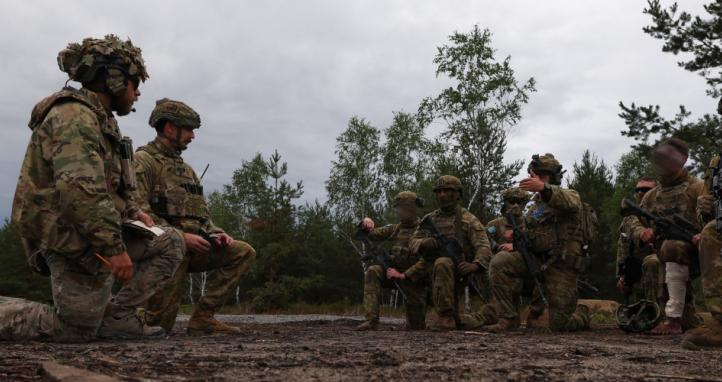
The adaptations made by both the British and Germans at Mons show that good training should build both competence and adaptability: soldiers must master current techniques while also learning to recognise when conditions have invalidated them. Training that seeks to reproduce an expected solution tests conformity, not competence.
The responsibility to observe, validate, and disseminate emerging lessons belongs to senior NCOs. We are close enough to soldiers to observe where doctrine and equipment meet practical friction, while possessing the experience and access to translate those observations through the chain of command. A useful idea does not become an institutional lesson until it is recorded, tested, shared, and given a pathway to influence training, doctrine, or capability development.
Leaders at all levels will benefit from reading The Guns of August. Instructors shape the assumptions with which soldiers approach unfamiliar problems. NCOs see whether doctrine survives contact with practical reality. Commanders determine whether adverse evidence prompts honest reconsideration or is explained away as subordinate failure. The professional lessons I take from the book are that experience should be treated as evidence rather than a conclusion, doctrine as an option rather than a solution, and training as an experiment rather than a demonstration.
The Guns of August tells how, during a single month in 1914, the French Army suffered 206,515 recorded casualties as its leaders’ assumptions about modern war collided with battlefield reality. No army from among the other nations fighting the first month of the war emerged from this opening stoush unbloodied. We cannot afford to wait until the next great war begins to discover which of our own assumptions the battlefield will not honour.