Article Summary
In his review of Jean Larteguy’s The Centurions, Brendan Smith examines the experiences of fictional French paratroopers following defeat at Dien Bien Phu, captivity and their subsequent service in Algeria. He highlights the novel’s exploration of military reform, adaptability, leadership and the emerging techniques of counterinsurgency, while cautioning against equating tactical innovation with strategic success. The paratroopers’ increasingly coercive and brutal methods yield battlefield results but raise serious ethical and political consequences. Smith’s central lesson for contemporary Army readers is that effectiveness in combat must be understood within the wider political purpose of war: a force may fight courageously and skilfully without achieving its strategic objectives.
"Let Rome beware the anger of its legions!"
Written by French soldier, journalist, and author, Jean Larteguy, The Centurions drops the reader in at the dying moments of the Battle of Dien Bien Phu in the French-Indochina War. One at time, Larteguy explores the personal stories of a small band of fictional French paratroopers as they are marched into a Communist POW camp. From the aristocratic Glatigny to African medic Dia, each man’s psyche is battered by the humiliation of defeat and the subsequent grind of a long captivity. Putting up with hunger, deprivation, and extensive attempts at Communist ‘re-education’, the survivors emerge relatively unscathed and return to France.
The middle section of the book explores the detachment, even alienation, the men feel on returning to their homeland. A husband is a virtual stranger to his wife, another man feels he has no further place in his father’s house, even their military mentors are astounded at the scathing opinions of the regular French army now possessed by the paratroopers. Disenchanted with civilian life or, worse, staff work in a headquarters, they are once again roped in or volunteer for another colonial war in Algeria. This time they intend to employ tactics certain to bring victory. Training a new parachute regiment to be efficient and merciless fighters, they set off into the Algerian hinterland to hunt for guerillas. Success and failure go hand in hand as they grapple with the complexities of fighting an enemy seemingly everywhere and nowhere at once. Several of their own men are murdered and in reprisal the paratroopers massacre a village. They manage to root out the local guerillas but have become far more comfortable with increasingly extreme methods.
Relocating to Algiers, the paratroopers interact with the local colonists as well as the native Algerians, the author exploring the arguments and grievances of each side in a surprisingly even-handed manner. A simmering tension is created as the author explores the perspectives of the Algerian insurgents as they prepare to drive the French from the city. The final chapters see the paratroopers put all their new theories of warfare to use, capturing and torturing an insurgent leader to root out his organisation and win the Battle of Algiers. Instead of basking in their victory, however, the paratroopers are sent back into the hinterlands with the notification that several of their number are under investigation for excessive use of violence. With no end to the war in sight, one captain reflects on how the centurions of the Roman Empire, disgusted by the incompetence of their government, overthrew it and began to appoint their own members as Caesar.
"The age of heroics is over. At least the age of cinema heroics. The new armies will have neither regimental standards nor military bands. They will have to be first and foremost efficient."
So speaks soldier-spy Boisfeuras in the aftermath of the defeat at Dien Bien Phu. This quote is emblematic of one of the book’s key themes: the attempt of a younger generation of officers to hastily reform an outdated army into a modern one. Not outdated because of its weapons, but because its whole approach to warfare was based on a paradigm that no longer existed. The younger officers up to battalion level all learn this the hard way at Dien Bien Phu and are keen to develop a new and functional paradigm for their own little corner of the army. Their CO declares:
"I’d like France to have two armies: one for display, with lovely guns, tanks, little soldiers, fanfares, staff, distinguished and doddering generals, and dear little regimental officers. An army that would be shown for a modest fee on every fairground in the country. The other would be composed entirely of young enthusiasts in camouflage battledress, who would not be put on display but from whom impossible efforts would be demanded and to whom all sorts of tricks would be taught. That’s the army in which I should like to fight."
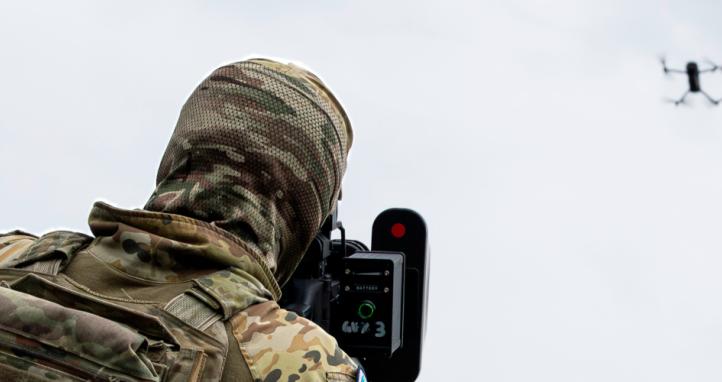
Most members of the Australian Army’s combat corps would heartily agree with such a sentiment at first glance. On the surface the message is sound: Abandon methods of warfare that no longer work and embrace methods that do. If your opponent is using better methods of warfare, immediately adapt and refine them. A modern example might be the employment of FPV attack drones. Some nations have been quick to add them to their military capabilities, others have been slower on the uptake. Their effective use by Hezbollah against the IDF during the latter’s incursion into Lebanon demonstrates, however, that they are no longer simply confined to the Russo-Ukraine war. Once a tactic has been proven effective in one theatre it will inevitably spill to another.
This is a lesson The Centurions takes to heart, as it repeatedly emphasises that the methods of revolutionary warfare employed in Indochina will soon spill over to other conflicts. The paratroopers seek to adopt such methods themselves, employing information warfare, dabbling in local politics, and seeking to leverage spies and irregulars in the same fashion as the insurgents. The trouble with such a sentiment, as the paratroopers soon discover, is that it is one thing to enjoy tactical success using new methods, but tactics alone cannot bring victory. The Centurions should not be read in isolation. Rather, a reader should read its sequel, The Praetorians, immediately afterwards, as well as The Battle of the Casbah by Paul Aussaresses and, if you can locate a copy, Modern Warfare by Roger Trinquier. These last two, a memoir and counterinsurgency study respectively, offer a non-fictional perspective on much the same events in Algeria and with much of the same conclusions.
All of the tactics proposed by Trinquier and Aussaresses are employed, to some extent, by the French paratroopers in The Centurions. They secure an Algerian village, root out the local FLN sympathisers then trap the dislocated rebels in the hinterland and destroy them in open battle as advocated by Trinquier. They also engage in torture and summary execution where necessary as welcomed by Aussaresses. And yet, despite this brutality, the French still lost the war. Even a military coup against their own government failed to shift political policy enough to alter the outcome. In fact, many of the tactics the French used to secure Algeria were brutal enough to cause international scandal and hasten the inevitable collapse.
This last piece is a sobering counter to the otherwise convincing argument the book makes for relentless pursuit of efficiency in warfare. A seemingly slow and conservative approach may not yield victory, but nor is there any guarantee that a hasty and reckless approach will fare better. This is a lesson as relevant to contemporary operating environments as it was to the French in Algeria.
The book’s characters are mostly officers, but this should not deter NCOs from reading it any more than the often-intolerable French-ness of it would. If a reader can get past the flowery prose, and the frequent breaks in the plot when an officer goes and starts another affair, The Centurions has many profound insights to offer on the nature of soldiers in captivity, the pursuit of military reform, and the evolution of counterinsurgency methods. It’s themes of leadership, sacrifice, professionalism, and the relentless pursuit of excellence in warfare will resonate with any officer or NCO who has worked to help modernise the force. Above all, it contains a sobering reminder that many of the wars an army fights will be decided not merely by the skill and morale of the combat units, but by political and military strategy at the highest level. As the recent anniversary of the Australian commitment in Afghanistan should forever remind us, an army can fight skilfully, honourably, and with immense courage, but still fail to achieve overly-optimistic strategic objectives. So it was for Larteguy’s titular Centurions.