Article Summary
The article challenges common narratives surrounding the Ukraine war and what it means for the future of war. It stresses out that the circumstances of every war are ultimately unique and that extrapolating too far is an easy mistake to make. In particular it notes that any conflict in our local region will contain terrain and conditions that are remarkably different from those found in Ukraine that will have a large impact in the effectiveness of surveillance.
There is a powerful and increasingly dominant narrative emerging from the war in Ukraine. It holds that the modern battlefield has become so transparent, saturated with sensors, drones, commercial satellites, and persistent surveillance that large-scale manoeuvre is now complex, costly, and ultimately unsustainable. Movement is detected, fixed, and destroyed. Mass is a liability. The only viable path – the argument runs – is dispersal, concealment, and attritional precision.
This observation contains important truths. The density of intelligence, surveillance, and reconnaissance in Ukraine is unprecedented in recent conventional conflict, and the lessons about signature management, deception, and the vulnerability of concentrated forces are real. Yet we should be cautious about allowing one theatre to become the sole template for all future war. When you are a hammer, every problem starts to look like a nail. There is a risk that we are being drawn into a very specific narrative shaped by the particular conditions of this conflict, conditions that are not universal.
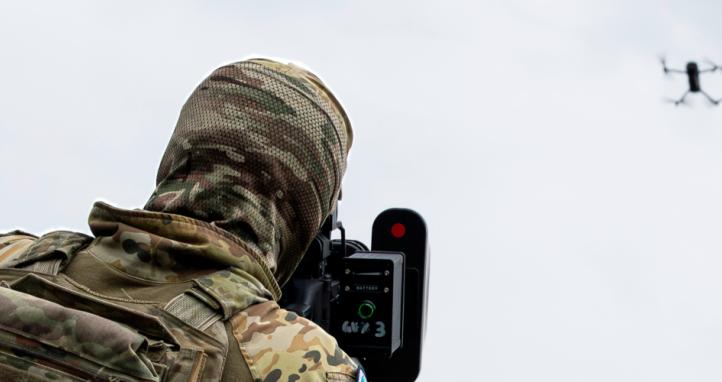
Rarely in recent history has ISR been so heavily stacked in one side’s favour as it has been for Ukraine and its partners. Even then, the picture remains incomplete. Adversaries continue to move, concentrate, and fight. More importantly, history and contemporary analysis repeatedly show that overwhelming technical superiority in surveillance does not automatically translate into decisive control of the battlefield or the elimination of uncertainty.
Consider Iraq and Afghanistan. Coalition forces possessed an ISR advantage that, by the standards of the time, was extraordinary. Persistent aerial surveillance, signals intelligence, biometrics, and networked targeting systems gave Western forces an ability to see and strike that their opponents could never match. Yet the enemy still found ways to hide. They used terrain, population density, low technology, and the simple discipline of patience. With limited resources they imposed costs, denied easy victory, and ultimately compelled political outcomes that no amount of technical transparency could prevent. The lesson was not that surveillance was irrelevant; it was that determined, adaptive opponents can still generate opacity and friction even under the most sophisticated watch.
The same pattern is visible in Gaza. Despite Israel’s layered aerial, electronic, and human intelligence capabilities, Hamas continued to operate, move, plan, and fight. Superior surveillance forced adaptation but did not produce paralysis. Investigations into the 7 October 2023 attack later showed that detailed plans and indicators existed; the failure was institutional, a refusal to credit the possibility of the threat and a confidence that had hardened into strategic blindness rather than an absence of sensing.
These examples do not diminish the genuine challenges of dense ISR. They simply remind us that transparency is relative, contested, and incomplete. A 2024 study by Guillaume Garnier and Théophile Néron-Bancel for the French Institute of International Relations puts the point clearly: visual clarity achieved by technological means does not automatically produce the cognitive clarity required to understand an opponent’s intentions or predict their actions. Transparency remains limited by human errors of interpretation as well as adversary concealment and deception. The concept itself is better understood as a permanent dialectic between transparency and opacity, knowledge and ignorance, rather than a destination. Uncertainty is not the opposite of transparency; it is a fundamental fact of war rooted in its human dimension.
Stephen Biddle’s analysis of the “modern system” of warfare reinforces this. Success continues to rest on the interrelated practices of cover, concealment, dispersion, suppression, small-unit manoeuvre, and combined arms – not on sensors alone. Technology amplifies these practices; it does not replace them. In Ukraine, both sides have adapted precisely along these lines. New lethality has driven further dispersion and concealment, just as it has done for more than a century. Claims that drones and precision fires have fundamentally rewritten the rules of combat overstate the case; force employment and organisational adaptation still determine outcomes.
Even in the most surveilled sector of the current war, surprise has proven possible. Ukraine’s August 2024 incursion into Russia’s Kursk Oblast achieved operational surprise against a background of dense drone and electromagnetic coverage. Restricted planning circles, active efforts to shape perceptions of Ukraine’s offensive capacity, electronic warfare that degraded Russian reconnaissance and communications in the assault corridor, and movement under the cover of routine activity combined to create the conditions for rapid initial gains. Analysts noted that Russian forces could observe concentrations yet still failed to correctly interpret intent. Seeing actions is not the same as understanding what they mean or what will happen next.
The volume of data itself can thicken rather than lift the fog. Open-source imagery, social media, drone feeds, and competing narratives generate enough information to support almost any story. Quality, processing capacity, and judgement remain the bottlenecks. Emerging and disruptive technologies transform the character of uncertainty but do not eliminate the Clausewitzian fog of war. Gaps persist between expectations of performance and battlefield realities; claims of revolutionary clarity often contribute to the fog they claim to dispel.
Geography and environment further limit easy generalisation. The confidence behind strong versions of the transparency thesis rests heavily on open, low-relief terrain. Dense vegetation, complex littorals, extreme weather, and vast distances – the conditions that characterise much of the Pacific theatre most relevant to Australian planning – change the equation. Vegetation cover in many Pacific locations far exceeds that of eastern Ukraine. Sensing and striking at operational depth become higher-echelon functions. Local force packets and different electronic attack patterns alter the practical demands of dispersion and signature management. Lessons from one environment must be translated carefully if they are to inform another.
War remains a human contest of will, ingenuity, and endurance as much as it is a technical competition of sensors. Cohesion, courage, doctrine, leadership, and the willingness to absorb losses are inferred, not directly sensed. Logistics reliability, industrial capacity, recruitment pipelines, and political constraints are among the most important variables in any net assessment and are rarely observable in real time. An intelligent opponent continuously works to deny, degrade, and deceive whatever picture is being assembled. Friction, both within one’s own forces and that imposed by an adaptive adversary, is structural – not a temporary technological deficiency awaiting correction.
If we close our thinking around a single narrative drawn primarily from Ukraine, we risk preparing only for the war we can currently see most clearly. We may undervalue other forms of conflict, dense urban terrain, jungle and littoral environments, hybrid campaigns, or peer competition under different force structures and political constraints. We may also underestimate the enduring power of initiative at the small-team level, the ability to operate when communications and sensors fail, and the moral and physical resilience required to keep moving when the environment is hostile and the picture is incomplete.
Worse, if we accept that mass is always a liability and that the only sustainable posture is permanent dispersal and attrition, we risk locking ourselves into a continuous defensive battle of the future. That would surrender the initiative. We must still train to concentrate combat power. The requirement is not to abandon mass, but to master its temporary, precise application: to deliver massed effects or forces at a time and place of our choosing, achieve the necessary decision or disruption, and then rapidly disperse again before the adversary can fully respond. Signature management, deception, and resilience in dispersal remain essential. So does the capacity to mass and manoeuvre when opportunity or necessity demands it.
Manoeuvre remains the key to offensive success. History and recent experience both show that pure attrition, however technologically sophisticated, rarely delivers decisive results against a determined opponent. The ability to force the enemy to react to our actions, to create dilemmas, to exploit fleeting advantages, and to retain the initiative still depends on movement, timing, and the intelligent application of combat power. The transparent battlefield makes this harder and more dangerous. It does not make it optional.
What matters most is not that we perfect a single model of warfare derived from the current conflict. What matters is that we remain innovative and resilient. Innovation means constantly testing assumptions, adapting methods, and refusing to treat any technological advantage as permanent. It means investing in deception and concealment as seriously as in sensors, embedding counter-deception as a parallel discipline, and recognising that the adversary will target not only human commanders but the algorithms and training data that support decisions. Resilience means developing people and organisations that can absorb surprise, operate with imperfect information, and continue to act with purpose when the plan unravels. It means training commanders to expect that the picture in front of them is wrong in some way they cannot yet identify, and rewarding the expression of doubt about prevailing assessments. It also means deliberately practising the rapid concentration and dispersal of combat power so that our forces do not become prisoners of a purely defensive, attritional mindset.
The Australian profession of arms has long understood this. Our history from the islands of the Second World War to more recent operations has repeatedly rewarded those who could think, adapt, and endure when conditions changed. The same qualities remain decisive now. Battlefield transparency is a significant and growing factor. It is not destiny. The side that stays intellectually open, operationally agile, and humanly resilient – capable of both enduring under surveillance and seizing the initiative through manoeuvre – will still shape the fight.
We should study Ukraine carefully. We should not let it be the only lens through which we view war.