
Article Summary
Persistent surveillance and precision fires have made dispersion essential for tactical survival, but excessive battlefield dispersion can prevent forces from concentrating effects and sustaining manoeuvre. Drawing on the war in Ukraine, the article describes an operational cycle that creates brief windows for protected movement. Centralised battlefield circulation, protected mobility corridors, and rapid fortification allow forces to reconcentrate, exploit those windows, and consolidate gains. The argument presents these measures as an evolution of combined-arms warfare rather than a replacement for manoeuvre.
Introduction: The Battlefield Management Problem
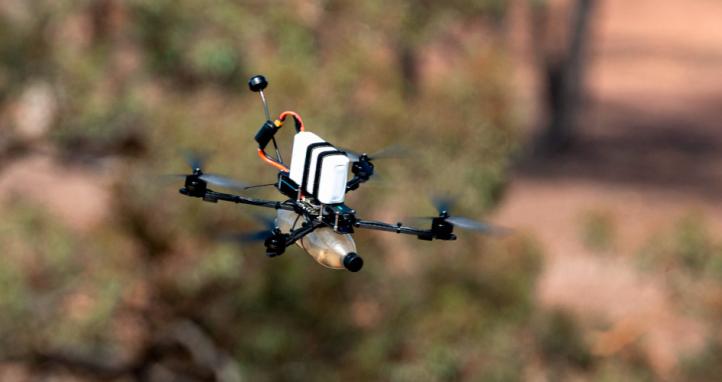
The war in Ukraine has become a crucible for adaptation of battlefield management in an era characterised by large numbers of drones, persistent surveillance, and precision fires (MSCOE, 2025:23; Lushenko, 2026: 73). Early in the conflict, dispersion – defined as the spreading of forces, resources, or fires over a wide area to reduce vulnerability to enemy attack and increase flexibility – initially reduced vulnerability to drone-cued artillery and loitering munitions. As drone density, range, and technical integration increased, however, the benefits of dispersion diminished. Dispersed units experienced longer exposure during movement, struggled to mass effects, and were increasingly vulnerable to low‑cost, mid‑range strikes.
The central dilemma is clear: dispersion enhances survivability but undermines the generation of decisive combat power. This article argues that while drones have expanded the battlefield’s depth and encouraged more dispersed postures, decisive action now depends on restoring tempo through an operational cycle built on centralised control, protected mobility, and rapid fortification.
Dispersion on the Battlefield: Diminishing Returns
The Institute for the Study of War notes that Ukraine is exploiting a drone‑dominated, “pointillist” battlefield marked by “dispersion, positional warfare, [and] the inability to mass logistics in the tactical rear” (Barros and Stepanenko, 2026: 18). But dispersion’s usefulness is finite. It improves survivability but does not create tempo, enable mass, or generate operational advantage (Gledhill, 2025:4). It remains a tactical response to lethality, not a new operational paradigm.
In today’s positional fight, drones, obstacles, and artillery produce “complementary attrition” (MSCOE, 2025: 18-19; Watling, 2025: 4-5). From a Ukrainian military account in early 2026, Mick Ryan (2026: 21) notes that “the first drone wave served simultaneously as a direct fire weapon, a reconnaissance tool, and a suppression mechanism,” underscoring their integration within the combined‑arms system. Drones expose movements that were once concealed, and artillery exploits this visibility to deliver rapid, concentrated fires and prevent the fortification of battle positions. Together, they create a mutually reinforcing detection‑to‑effects cycle that extends roughly 30 km on either side of the forward line (Radin et al, 2026).
Artillery range, rather than drones, defines the outer boundary of this kill zone. Drones make the zone transparent; artillery makes it lethal. The zone is elastic: Ukraine has shifted it forward by degrading Russian artillery, radars, logistics nodes, and ammunition depots. Since winter 2025, Ukrainian mid‑range strikes have dislocated Russian artillery and sustainment in the tactical deep, reshaping the geometry of the close fight (Watling, 2025: 25). The kill zone is therefore dynamic, shaped by the interaction of sensing, drone enabled fires, and sustainment across depth.
In this environment, halting increases vulnerability. Movement is survivable only when forces set favourable conditions; even brief pauses invite detection and rapid fires. Units thus operate in pulses, manoeuvring quickly when windows of opportunity open and dispersing immediately when observed unless local air superiority has been established and protective effects employed (Barbina, 2026). Dispersion remains essential for surviving initial observation, but it restricts freedom of action until enemy sensors and fires are sufficiently suppressed to allow reconcentration and renewed manoeuvre.
Restoring Tempo: Centralised Battlefield Circulation
Operational tempo – rapid, synchronised action that disrupts the enemy – now depends on creating and exploiting pulses of survivable movement (Barbina, 2026). Advantage belongs to the force that can generate brief windows in which manoeuvre becomes possible and then exploit those windows faster than the adversary can respond (Kagan et al, 2024: 56). The side that repeatedly creates these pulses – suppressing enemy sensors, disrupting fires, and enabling protected movement – gains and maintains the initiative (Gledhill, 2026: 2). Rather than enabling continuous advance, this produces a cycle of setting conditions, manoeuvring quickly, dispersing under observation, and reconcentrating once enemy fires are again disrupted.
The Institute for the Study of War notes that “Ukraine’s degradation of Russian forces at operational depth, combined with tactical-level drone overmatch, is likely creating vulnerabilities in the Russian lines” (Barros and Stepanenko, 2026: 18). Unlike Russian infiltration tactics, which rely on concealed routes linking a series of covered waypoints, Ukraine has developed the drone and counter drone capabilities required to move through the kill zone (Ryan, 2026: 20-21; Coultis, 2026: 19-21; Watling 2025: 3-4). Centralised control of movement from the rear accelerates the concentration of combat power and sets the conditions for penetrating Russian defences.
Ukraine’s principal challenge is operational integration. Extended penetration requires a corps headquarters capable of linking rear, deep and close areas so that effects generated in one can be exploited immediately in another (Watling, 2025: 25; Lushenko, 2026: 74). Fragmented command‑and‑control systems complicate this process. Open‑architecture systems like DELTA MONITOR have improved intelligence sharing, but detailed tactical plans remain difficult to transmit under electromagnetic contestation (Sefton, 2026; Blishun and Lytvynenko, 2026). Corps‑level shaping and circulation control therefore remain disjointed, limiting Ukraine’s capacity to generate tempo.
Centralising circulation control mitigates these constraints. Corps‑controlled routes through brigade sectors align force concentration with concentration of effect (Watling, 2025: 6). Tempo is generated when extended penetration is launched from the tactical rear, converting tactical gains into operational effects. Even with degraded networks, engineers, military police and sustainment units can support this battlefield circulation so long as they maintain over‑the‑horizon data communications and possess the organic protection needed to counter constant drone threats.
Penetrating the Close Area: Protected Mobility Corridors
Protected mobility corridors underscore that battlefield management is key to achieving decisive shock (Garrett and Hoffman, 2023: 4). Since March 2026, open-source reporting has confirmed several Ukrainian mechanised penetrations of up to 20 km into Russian lines (Ryan, 2026: 20; Watling, 2026: 5; Barros and Stepanenko, 2026: 6; USAREUR-AF 2026: 5). The Institute for the Study of War assesses that these “counterattacks created cascading operational and strategic effects against Russia’s ongoing Spring-Summer 2026 offensive against the Fortress Belt” (Barros and Stepanenko, 2026: 6). Though each penetration yields limited terrain, their cumulative effect – forcing lateral Russian troop movements and disrupting Russian operational priorities – has proven decisive (Bajc, 2025; MRTHUB, 2026; Kagan et al, 2024: 54).
Synchronised corps level actions to degrade artillery, disrupt drone and missile launch sites, and establish protected mobility corridors create deliberate, time sensitive conditions to penetrate sensor networks (JATEC, 2026:2-3; USAREUR-AF 2026: 2). These corridors are not pre-existing gaps, but fleeting opportunities generated through coordinated effects across depth. Battlefield mobility becomes decisive only when forces have the awareness, delegated authority, and responsiveness to exploit these openings the moment they appear (Lushenko, 2026: 68).
Russian attempts to contest mobility – such as dropping improvised anti-vehicle mines – expose inherent drone limitations. High payload drones sacrifice endurance, manoeuvrability, and stability for explosive weight, making them more vulnerable to defeat (MSCOE, 2025: 14). As Ukrainian forces integrate counter-drone measures, electronic warfare, and strict movement control, Russian ability to disrupt protected vehicles will further diminish.
These dynamics reinforce that protected mobility corridors function as the connective tissue between operational pulses. They enable manoeuvre forces to transition from dispersed postures into concentrated shock action, compounding the disruption on sensors and fires (Gledhill, 2026: 3-4; USAREUR-AF 2026: 4). These transitions are temporal but shaped by geometry: distance takes time to cross, and manoeuvre elements must do so without unmasking intentions or exposing fortified positions. Seconds matter only insofar as premature movement risks revealing those positions before disruption effects fully take hold. Pulses emerge when disruption effects and protected mobility align to make movement survivable. The synchronisation of suppression, timing, and spatial constraints determines when units can reconcentrate and manoeuvre.
Protected mobility corridors convert operational depth into manoeuvre. They rely on mid-range strikes that disrupt logistics, create localised air superiority, suppress Russian reconnaissance, and enable protected mobility platforms to survive residual threats (Watling, 2026: 5). Netting, sensors, and route management further reinforce these corridors. In contrast to battlefield dispersion – which spreads forces thin and slows momentum – protected mobility corridors concentrate combat power at decisive points, shorten decision cycles, and restore tempo.
Consolidating Gains: Rapid Fortification
Seizing ground under drone observation is only half the challenge. Holding it requires immediate fortification. Artillery remains the most cost‑effective means of destroying defensive positions, especially without air superiority. Drones typically lack the kinetic power to defeat overhead cover, so establishing such protection sharply reduces their effectiveness (NSATU, 2026: 4-5). Suppressing or dislocating Russian artillery further widens the window in which newly seized terrain can be consolidated.
Ukrainian forces now build fortified positions or emplace prefabricated bunkers within hours, often using unmanned systems to reduce exposure (Milley, 2023:8). These fortified nodes anchor supply lines, protect command posts, and establish new firing and launch points – extending operational depth forward. Crucially, they create the durable structures required for relief‑in‑place, allowing committed units to rotate without surrendering the initiative. Fortification also reinforces pulsed operations by reducing vulnerability during operational pauses and shortening the time needed to reset conditions for further manoeuvre. Jack Watling (2026: 5) notes that Ukrainian combined-arms teams around Huliapole in spring 2026 were “able to create periods of dominance over the Russians that allowed the rotation of troops and even offensive gains.” This dominance was possible only because rapid fortification turned short-term gains into secure positions.
Fortification is the final stage of the operational cycle, where battlefield management converts tactical success into durable operational advantage. By transforming temporary gains into defended nodes, rapid fortification preserves combat power, enables sustained operations, and sets conditions for future manoeuvre. In a battlespace shaped by drones and precision fires, fortified positions are not simply protective; they are the essential foundation for restoring tempo and sustaining momentum.
Conclusion: Operational Depth as the Decisive Variable
Dispersion has improved tactical survivability in Ukraine, but it has not produced the conditions necessary for decisive action. Though effective against persistent surveillance and precision fires, dispersion dilutes combat power, slows operational tempo, and restricts manoeuvre. Ukraine’s recent experience demonstrates that drones have expanded operational depth, driving the adaptation in combined arms warfare rather than replacing it.
Decisive action will come from managing the battlefield in depth, not from dispersing forces further. Centralised control, protected mobility, and rapid fortification can restore tempo and extend operational depth even under constant observation. Future approaches will depend on how effectively armies generate and exploit operational pulses – creating brief moments in which movement becomes survivable, then acting faster than the enemy can adapt. Achieving this will require extended penetration along protected routes, followed by rapid fortification before the enemy recovers – linking sustainment, sensors, fires, and fortified positions into a coherent system.
Still Interested?
Why not also read Modernising DFSW for the ISR Dominated Fight – A Call for Practical Change
Or explore Cove+ learning and resources on combined-arms manoeuvre

Under sensor-strike conditions 'dispersion' is a part of a 'comprehensive survivability concept'. Stephen Biddle in his 2006 book 'Military Power' provides a comprehensive study on the vulnerability of ‘classic’ manoeuvre warfare which has underpinned NATO affiliated armies for some time. Biddle describes the experience of the Germans on the western front during the period 1944-45. The parallels with ‘drone-enabled warfare’ are stark. Biddle observed that the German forces in the west, without air cover and adequate air defence (and now electronic warfare systems), were unable to do more than ‘infiltrate forces’ in small groups using restricted terrain and inclement weather. Their lack of artillery further resulted in the need for stealth too. Once detected they were suppressed, neutralised or destroyed. The stories of free-ranging allied aircraft matches the proliferation of drones.
Biddle identified the core problem as – 'how do you survive the mass of fires long enough to perform meaningful tasks'.
Biddle states that solutions would revolve around a sophisticated embrace of 'cover, concealment, decoys, dispersion and deception'. To place each of those elements requires space; and even more space to be plausible. The result is a low-density of 'real entities' across the battlespace. Biddle further observed, that movement and manoeuvre would focus on small combined arms and service groups, and emphasis infiltration. The closure rate of any movement would maximise survival – not ‘best speed’. Suppressive fires, obscurants and inclement weather assist closure, where terrain is not favourable to stealthy movement. The threat of sensor-strikes drives the need for protective air defence and electronic warfare system to the lowest echelons. As a result, the adversary, not terrain is the focus, leading to the need for significant mobile reserves to cover contingencies. Infiltration tactics are now 'central' to the solution. An analysis of the Russian effort matched neatly with Biddle's study - the Ukrainian (NATO) effort does not.
Army lessons is in the process of finalising a primer and focus report on infiltration and how we could integrate it into our doctrine. It will be available within weeks.
Your observation about 'rapid fortification' sounds very interesting and I think that it is worthy of exploration. Right now it seems that in the Australian Army context this could be mis-interpreted as having to carry an e-tool on belt rig.... even though it takes about three days to dig a proper stage 3 pit.
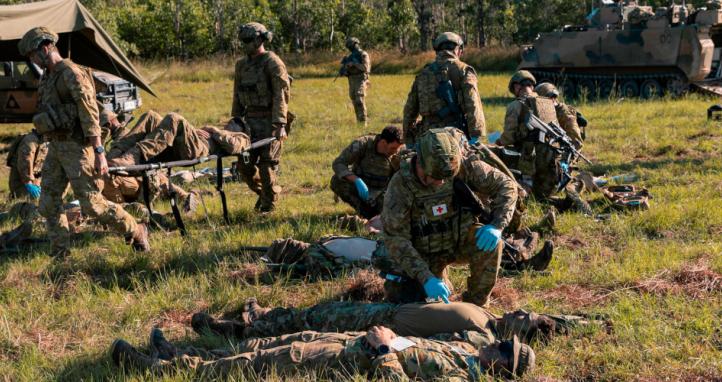
Rapid fortification probably means establishing significant and substantial company level mutually supporting and defensible interlocked positions, inclusive of communications trenches, protected supply points, observation points, direct and indirect fire bays, drone launch areas and casualty treatment and holding bays. This is probably beyond the capabilities of a 'digger' with an e-tool.
That rapid fortification idea is probably a capability to be developed itself!
Great article and thanks for writing it.