
Modern battlefields are increasingly transparent, and weapons that cannot survive detection cannot influence the fight.
The fundamentals of Direct Fire Support Weapons (DFSW) employment in the Australian Army remain sound. Concealment, mutual support, depth, survivability, and combined arms integration – as articulated in LWP-CA (DMTD CBT) 3-3-4 Infantry Direct Fire and Manoeuvre Support – are still valid foundations of infantry combat.
What has changed is the battlefield.
Persistent ISR, proliferated uncrewed aerial systems (UAS), loitering munitions, and compressed sensor-to-shooter cycles now define tactical reality. In Ukraine, tanks have been destroyed by top-attack anti-armour missiles cued by drones. Crew-served weapons have been detected and struck within minutes of firing. Thermal signatures and electromagnetic emissions are exploited in near real time.
The implication is straightforward: survivability now governs whether combat power can be applied at all.
Ukraine: A Contemporary Warning
Ukraine has demonstrated the effectiveness of small, dispersed anti-armour teams operating inside an ISR-saturated environment. Javelin and comparable top-attack systems remain lethal against main battle tanks when integrated with reconnaissance and rapid displacement. Older shoulder-launched systems continue to achieve effect when employed with mobility and discipline.
Armour has not disappeared from the battlefield. It remains central to manoeuvre. What has changed is the level of exposure. Anti-armour teams that survive do so by minimising time in position, relocating immediately after engagement, and integrating ISR at every stage.
For the Australian Army, the lesson is clear: Javelin and the 84 mm remain effective, but static overwatch in a persistently observed battlespace is increasingly untenable. Anti-armour detachments must operate as hunter-killer teams.
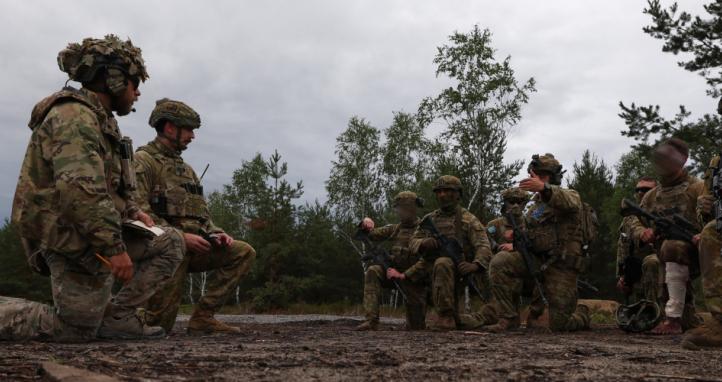
That requires organic UAS for detection and confirmation, short engagement windows, pre-selected alternate positions, and rehearsed displacement. Junior leaders must act decisively within commander’s intent.
The cycle is unforgiving: detect, decide, deliver, displace.
Heavy Weapons in a Transparent Battlespace
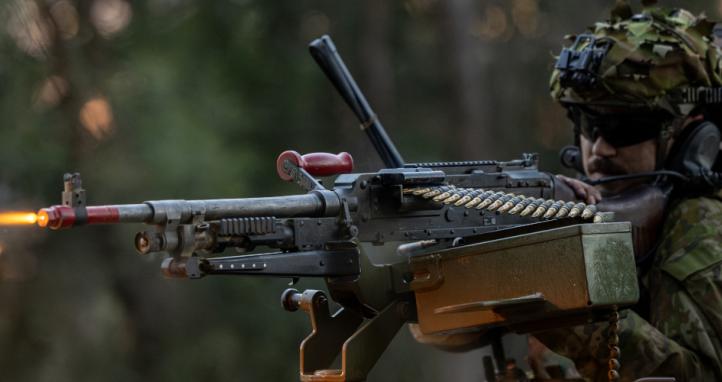
Heavy weapons – MAG 58, Mk 47 and M2 Browning .50 cal – remain central to infantry combat power. Their range and suppressive effect extend manoeuvre and shape the fight.
However, recent conflicts show that static firing positions are rapidly targeted by artillery, drones, and loitering munitions. Exposure time, not calibre, is now the decisive vulnerability.
Modern employment must prioritise indirect firing from defilade positions supported by displaced observers or UAS correction. Engagement windows must be deliberately short. Gun lines should be temporary and organically secured, using claymores, pre-sited DFs on likely enemy approaches, and early warning from UAS. Displacement routes should be pre-planned and rehearsed prior to engagement.
Firepower that cannot survive cannot influence the battle.
Strategic Context
The strategic environment is becoming more contested. China’s continued military modernisation – particularly in long-range fires, integrated ISR networks, and unmanned systems – signals an Indo-Pacific operating environment defined by persistent surveillance and precision strike.
In the Middle East, conflict involving Iran and its proxies demonstrates the routine use of drones and loitering munitions by both state and non-state actors. Affordable ISR and strike platforms are now widespread.
Future conflict involving state adversaries will likely feature dense ISR coverage and compressed targeting cycles from the outset. DFSW elements should expect to operate inside that threat envelope.
Preparation must begin in training.
UAS as Central Capability
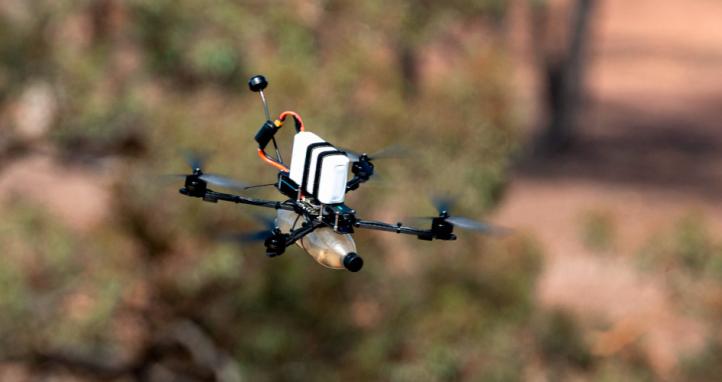
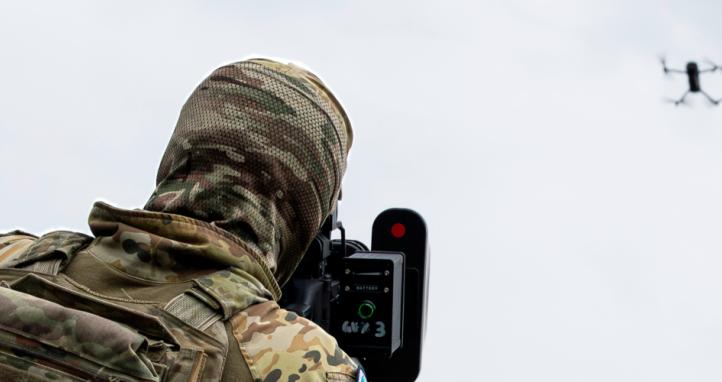
UAS is no longer an enabler; it is central to DFSW survivability and lethality. Without organic ISR, DFSW risks operating blind in a transparent battlespace.
Every DFSW section should be capable of employing a small UAS for reconnaissance, target confirmation, and fire correction; with platoon headquarters retaining a longer-endurance system.
The employment cycle is simple: detect with ISR, decide through mission command, deliver rapidly with the suite of DFSW weapons, displace immediately.
Battery management, emission control and signature discipline are now section-level responsibilities.
Adapting at Unit Level
Within 6 RAR DFSW Platoon, adaptation is already underway.
UAS is integrated into live-fire serials. Rapid displacement is rehearsed as a default battle drill. Anti-armour employment is being refined around mobility, dispersion, and ISR integration.
Air-enabled anti-armour concepts are being explored to dislocate detachments forward and impose early effects. Advanced sustained fire machine gun (SFMG) concepts integrate claymores, UAS, MFC observation posts and small arms to provide organic security within gun positions. Mounted options, including more mobile employment of the .50 cal and 40 mm AGL, are being scoped to increase responsiveness and reduce exposure.
These are practical refinements within existing capability, focused on survivability and tempo.
Adapting Before Contact
The fundamentals of DFSW remain valid. Combined arms integration remains decisive. Tanks remain relevant. Heavy weapons remain lethal.
What has changed is the tolerance for exposure.
In an ISR-dominated battlespace, survivability is a prerequisite for lethality. The weapons are ready.
The question is whether our employment is.

You've provided some great insights and observations on the Ukraine's experience. I couldn't agree more that the micro-teaming of capabilities and speeding up of detection-decision-action cycles.
For me the key takeaway is that the decisions and capabilities normally held (or reserved) at Battalion HQ or higher are actually needed to be delegated down to the platoon and below. Your article particularly highlights that long gone are the days when deliberate planning and orders cycles 'placed' teams in fixed fighting positions; what is needed now is manoeuvre boxes for these micro combat team with the authorities and delegations to engage as well as freedoms to manoeuvre.
Thank you for a great article on DFSW!
For some time it has been clear that our plans, doctrine, equipment and training is well short of the mark to succeed in a sensor-strike environment, especially one as unique as the Asian Archipelago. Why we are so slow to learn is a shock to me and places personnel, such as your self in great danger. Here in Army Lessons were are trying to highlight the issues you've identified, but sadly change is not swift. I commend your efforts and recommend you persist in bringing the issues to the attention of your peer, superiors and development staffs.
Outstanding article, it is great to see input from an NCO who is clearly dedicated to technical and tactical mastery.
Your statement: “survivability now governs whether combat power can be applied at all.” Is a perfect summation of the current battle space that holds really important implication for Army. Saying that your first priority is to not die sounds trite until you think about how we will need to shift our focus to survivability before lethality. This is huge, especially for a small army like ours that simply can’t sustain high level of attrition. I think we need to unpack this need to “not die” as our primary focus. I’ll be accused of handing the initiative to adversary by taking a cautious approach but proactive aggression may come at an unsustainable cost .
I do have a question I was hoping you may engage with Jake. “Engagement windows must be deliberately short”; agreed. How do we manage the “sustained” in SFMG? And given the weight of systems and especially ammo in any sustained fire role how do you think we keep these teams agile, mobile and survivable? Does this need the default mounting of SFMG?
Appreciate the question and to attempt to answer it my opinion is that the way we do position suppression will have to change.
After some conversations with my JNCO’s and we agree that suppression for deliberate kinetic actions will have to adjust. Each SFMG kit comes with a later occupation kit to allow for rapid emplacement usually at a primary firing position at a later time. Maybe these kits are used to mark an alternative position to disperse to as part of the fire plan.
I think for any operation we will require a second SFMG section superimposed to support the mission whilst the primary section conducts its displacement.
We have been drilling it at 6 and with a little sacrifice to intimate security posture the teams can pack down and be off a position in less than 60 seconds which if rapidly relocating to pre sighted position (pending distance) could see them re established in a matter of minutes.
This with some development of thermal top screens to attempt to delay sensor detection hopefully aid gain an extra minute as it will matter.
The old train of thought of “as close to 90 degrees as they can achieve” will likely turn into a more detailed and deliberate part of the planning cycle, understanding enemy capabilities will help dictate tolerable exposure windows as well as how far these teams may need to displace to avoid any form of disruption.
Apologies as I have thrown a lot at you there but this is something I could talk about all day.