
Article Summary: Asymmetric warfare exploits capability mismatches, allowing weaker forces to avoid direct confrontation and instead weaken stronger opponents through disruption, deception, and attrition. The article provides a foundation for professional military discussion on asymmetric warfare by drawing on a 2009 article by Major General Chris Field and offering example discussion questions for collective training.
In November 2009, Major General (then Colonel) Chris Field published a Land Warfare Studies Centre Paper (No. 136) titled ‘Asymmetric Warfare and Australian National Asymmetric Advantages: Taking the Fight to the Enemy’.
This paper examined asymmetric warfare as a military tactic and depicted it as a method often used by our enemies. Through this, our adversaries could exploit mismatches in ‘defeat thresholds’. Notably, it cautions that terms such as asymmetry and asymmetric warfare may become almost meaningless adjectives in future warfare.
We must understand that asymmetry in military tactics occurs when forces differ significantly in capability. This prompts the weaker force to avoid direct confrontation and instead look to exploit possible vulnerabilities to gain an advantage. Avoiding strength-on-strength engagement and employing indirect methods such as disruption, deception, and attrition often lead to the erosion of an adversary’s resources or will. This turns an imbalanced situation into a strategic advantage through adaptability and persistence.
Field’s paper serves as a solid reference for commanders at all levels to review lessons learned from ‘lived’ asymmetric warfare tactics. It also presents an opportunity for professional military education (PME) sessions, creating a forum for leaders to analyse modern asymmetric tactics and openly discuss lessons learned and areas for improvement.
To further encourage PME engagement, the following example questions are provided. It is suggested that groups relate their considerations to Field’s 2009 paper and discuss recent conflicts, such as Ukraine/Russia and Israel/USA/Iran.
Question: Is modern warfare shifting from decisive battles to sustainable contests?
Discussion: Could the side that can maintain attritional asymmetry in economics, industry, manpower, political will, and regional support win the next conflict?
Question: Referencing modern conflicts (in the last five years), discuss asymmetric advantages that have been used?
Discussion: Considering the Vietnam, Iraq, and Afghanistan wars, identify some of the asymmetric systems of attrition that were used. Now consider the new age systems and possible ways to counteract or exploit their weaknesses.
Question: Explained as ‘asymmetric warfare is what weaker actors do to survive’, what are some asymmetric advantages that the Australian Defence Force could utilise?
Discussion: Consider the way you and your team have trained over the past 12 months. Do you think this is how you would fight in one of the current conflict zones? What would you change? What would be your concern? What would you need to better perform?
Question: Historically, smaller militaries have adapted more quickly in an asymmetrical threat environment. How could integration within a larger alliance impact our approach to force survivability?
Discussion: Consider the statement ‘A weaker force doesn’t have to win tactically, it just has to make a conflict economically or politically unsustainable’. How would you use your force to achieve this goal in a modern conflict?
Question: Identify the strengths of a force that you may encounter in conflict, in a like-for-like engagement (e.g. tank vs. tank). Think of a niche strength your call sign could use to force a stronger element into an unwinnable position?
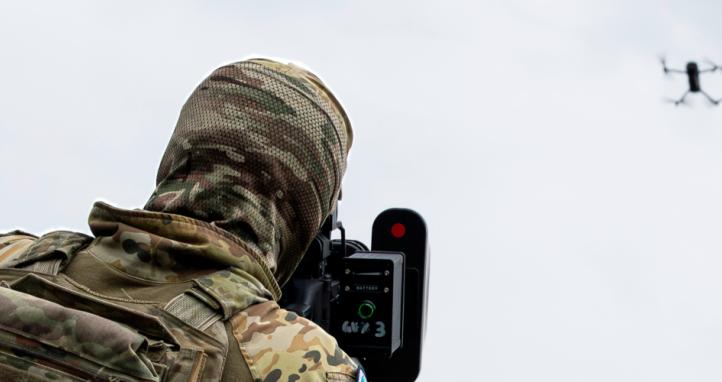
Discussion: Are we asymmetrically ignorant? Compare expensive, limited capabilities (e.g. a $3M Missile), with cheap, plentiful capabilities (e.g. a $20k Drone) that could be employed.
Question: Considering Attrition Theory, why do you think modern wars are trending back to attrition?
Discussion: Compelling a stronger force to commit to a conflict that is unsustainable is an asymmetric advantage. Is there a way that you, at your command level, could compel your adversary to commit to something that is unsustainable?
Conclusion
Asymmetric warfare remains as relevant today as it was in Field’s 2009 analysis, yet its character is evolving fast. Some of the conflicts that we see today demonstrate that victory may no longer be determined by decisive battles, but by the ability to sustain pressure through asymmetric tactics. It is hoped that this PME has provided an opportunity to explore how your force may adapt and shape itself into gaining an advantage in conflict.
If this topic has been of interest to you, future reading into ‘irritation tactics’ could provide insight for commanders looking to integrate strategic options into potential PME sessions. A great article to explore is titled The Soft Underbelly of American Primacy: Tactical Advantages of Terror (Betts, 2002), which examines the inherent vulnerabilities created by dominant military powers.

Thank you for a well-written article, that hopefully finds its way into PME discussions in all Allied Forces.
Asymmetry and symmetry are seen as polar opposites, but militarily the two are separated by di-symmetry. The ‘Asymmetry - Di-symmetry - Symmetry’ continuum is a French concept worth investigating. An example is: tanks in 1918 provided asymmetry, anti-tank weapons such as the T-Gewehr, emerged to present di-symmetry. Di-symmetry represents a direct counter to an asymmetry. Now, most states have both tanks and anti-tanks weapons - creating systems symmetry. The guerrilla - counter-insurgent forces - conventional forces continuum scales the concept. Flipped we now see the carrier aircraft, anti-ship missiles, shore defence continuum. The list goes on.
Ukraine, SW-Asia and the Chinese coastal defence system highlight the serious problem presented by senor-strike complexes. What are viable asymmetric and di-symmetric options against sensor-strike? Has Major General Slipchenko's 'contactless warfare' prediction come true?
Asymmetric advantages tend to be fleeting as the foe is part of a learning-adaptive system.