
The War in Ukraine has now been ongoing for over four years. During this time, Ukraine has successfully held at bay a numerically and materially superior adversary through effective tactics, resilience, and determination. Not only does Russia possess numerical superiority, but it also maintains a significant overabundance of materiel when compared to Ukraine. Ukraine has fought to defend its sovereignty, and there are valuable lessons from this conflict that Australia, as a Defence Force, should learn and adopt in order to better prepare for a near‑peer on near‑peer adversarial conflict.
Outlined below are key lessons identified from the conflict itself and from the training of Ukrainian personnel.
Force Expansion
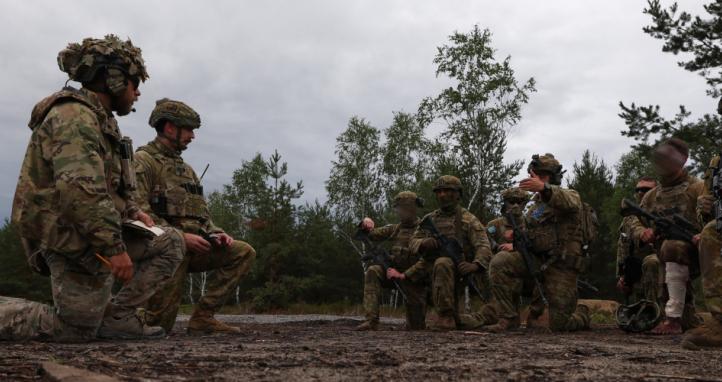
Training – If Australia was required to rapidly expand its land forces and increase the trained force, a bespoke citizen‑to‑soldier training package would need to be developed. This should be designed now, rather than relying on current SERCAT 5 or SERCAT 7 training models.
This course must remove “nice‑to‑have” training and instead focus squarely on warfighting fundamentals to produce a capable fighting soldier. Under Op INTERFLEX, in conjunction with the Armed Forces of Ukraine, a bespoke recruit training package was developed. Drawing upon lessons and methodologies from the ADF, NZDF, NATO forces, and Ukrainian frontline experience, a seven‑week course was designed that produced soldiers capable of operating effectively at platoon level in an urban environment.
Notably, the course evolved over time – initially adjusted from three to five weeks, then to seven, then ten, and ultimately back to seven weeks – demonstrating the importance of testing, feedback, and rapid adaptation.
Delivery – Op INTERFLEX utilised four training delivery locations across the United Kingdom, each managed at battalion/regiment headquarters level. This approach prevented excessive resource strain on any single location while enabling centralised control combined with decentralised execution. Upon completion of training, newly qualified Ukrainian soldiers returned to Ukraine and were rapidly committed to frontline operations.
Reality Based Training / Training Aids – To establish force‑on‑force and near‑realistic training, Op INTERFLEX (with significant contribution from the Australian contingent) introduced airsoft weapons as a training aid. These proved highly effective for close combat and urban operations training, providing immediate tactile feedback to trainees.
Airsoft systems offer several advantages over standard Non‑Lethal Training Ammunition (NLTA): reduced safety requirements, minimal additional protective equipment, and the ability to train in full combat attire – reinforcing the principle of train as you fight. This environment enables soldiers to develop recognition‑primed decision‑making under realistic stress.
Medical – The Ukraine war experience and the near-peer on near-peer contested environment have created potential delays in access to higher levels of medical care for wounded personnel injured on the frontline. Ukraine are now doing advanced tourniquet training where their people are being taught the application of tourniquets and, if delays in higher-level medical treatment require it, they are being taught how and when to reduce the tourniquet to save the limbs. Opportunity – train our Combat First Aider (CFAs) in the release of tourniquets techniques.
Trench Warfare – As a nation, Australia has forgotten how to fight in trenches and trench design. There is a need to bring back trench training at the basic level. Understanding the environmental requirements of our training areas, we can be creative and build trenches above ground – to replicate a trench (Koppers logs and hessian or other material with NLTA or airsoft weapons).
Modern Warfare
Grenades are abundant in the Ukraine conflict. Clearing trenches using a large number of grenades. This provides an opportunity to bring grenade training, both static and assault grenade, to an all corps skill as opposed to being infantry-centric.
Booby Traps – the ADF needs to get used to rapidly neutralising booby traps (blow in place) and continue the fight – using grenades or improved pulling devices like a hand cultivator (that can be purchased form Bunnings) tied to a cord. The ADF needs to teach its fighting force how to stay in the fight when exposed to booby traps.
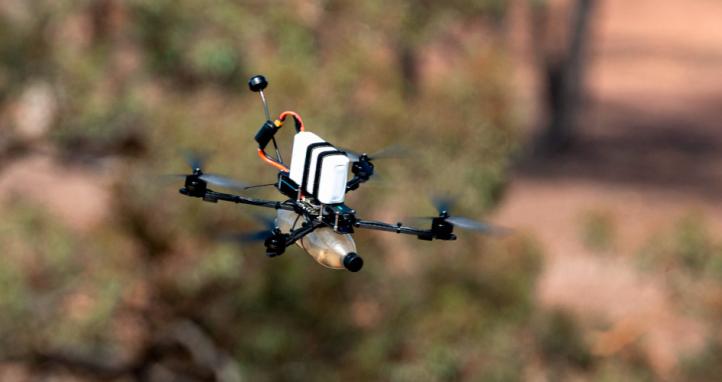
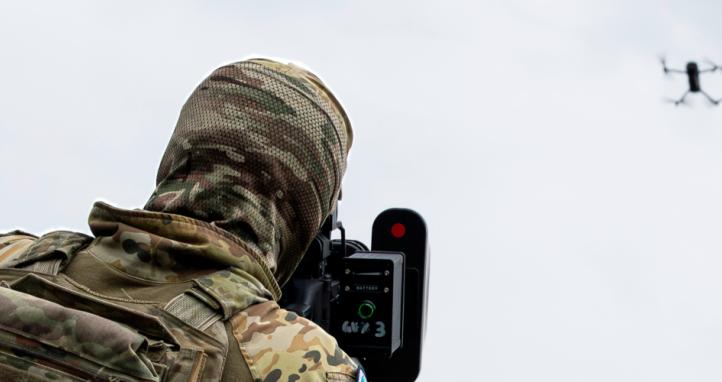
Drones [Small Uncrewed Aerial Vehicles (sUAV)] – a lot has been written about sUAV (drones) and their use in a Defence context. I will not discuss the details here; however, the ADF needs to start treating sUAVs as a disposable commodity down to section level (or at the very least platoon level). We have previously had them allegedly at company level but have been treating them like a protected species. Opportunity – Introduce sUAVs into all foundational warfighting as an observation platform and offensive platform (precision strike and dropping capability) across the battlespace.
Dedicated Enemy Picture – We currently have Decisive Action Training Environment (DATE). We need to develop an enemy (Opposing Force (OPFOR)) trained in DATE so that they can operate and act like the enemy enacting Enemy TTPs. This will allow ADF persons to learn to fight at the higher end and face that near-peer on near-peer.
Conclusion
The war in Ukraine represents a determined struggle by the Ukrainian people to retain and regain their sovereignty. However, it also provides critical lessons for Australia. By studying, adapting, and institutionalising these lessons now, the ADF can better prepare itself for a future threat environment.
If and when Australia faces a similar challenge, these adaptations will ensure we are more ready, capable, and competent to fight as an integrated force – and to win in both competition and conflict.

I have little doubt that the tactical adaptations of Ukraine’s Armed Forces, and the military technology trends that COL D’Rozario highlights, are real, relevant, and require consideration and integration into the ADF’s Training System.
The fundamental takeaway for me, however, is not the tactics or technology itself; it is that the timescales for innovation and adaptation are collapsing. The ability to enhance, augment, and replace systems, procedures, equipment and processes within the Training System increasingly needs to be measured in days and weeks rather than years.
The reality is that we still operate within training and procurement systems that prioritise surety, safety, governance, and risk minimisation at every level. There are valid reasons for this approach, but conflicts such as Ukraine demonstrate the trade-offs involved when adaptation speed becomes operationally decisive.
Are our governance, training and acquisition frameworks capable of moving at the speed that conflicts like Ukraine (and our soldiers, sailors and aviators) may require of them?
During operations in Iraq and Afghanistan, Australian soldiers developed highly effective tactics, techniques, and procedures to counter insurgent IED threats. Units refined route clearance drills, electronic warfare integration, intelligence fusion, and combined arms coordination between engineers, infantry, armour, aviation, and EOD teams. ECM systems became essential battlefield survivability tools, protecting patrols and disrupting enemy initiation systems. These capabilities were not isolated specialties; they were integral to mission planning and combat operations.
However, as the Army transitioned focus toward conventional warfighting and near-peer conflict preparedness, many counter-IED lessons risked being deprioritised. Training cycles reduced emphasis on mounted and dismounted IED awareness, ECM integration became less routine, and institutional knowledge began to fade as experienced operators discharged or moved into non-combat roles. This creates a dangerous gap between doctrine and lived operational experience.
Future conflicts will likely involve hybrid threats where conventional manoeuvre and asymmetric tactics coexist. Adversaries will continue using low-cost explosive systems, drones, and electronic attack methods to offset technological disadvantages. Counter-IED and ECM capabilities must therefore remain embedded within combined arms training, not treated as relics of Afghanistan. Armies that forget lessons paid for in blood are often forced to relearn them under far worse conditions.
Blow in place has its place however has inherent risks when skills aren’t maintained and small teams don’t have the freedom to use their judgment to employ the skills in training let a lone on operations without needing endless layers of approval.
Officers now are so far removed from the realities of conflict and bulk of the enlisted combat experience has exited from the Army I feel like there will be some horrendously painful lessons to be relearned.
Keen to see the next instalment - great work.