
The Kobayashi Maru is a fictional training event in Star Trek – an unwinnable scenario designed to acclimate trainees to defeat.
Combat commanders exist at all ranks, from section to division. One of the most important functions of a combat commander is knowing when a mission has failed or is unwinnable. The intimate knowledge of your plan and your commander's plan, alongside the judgement that training and experience provides, is essential to identifying your mission is a failure and what can be done about it.
The Army training philosophy places trainees of all ranks under significant stress to develop resilience and bring the training experience as close to the combat experience as possible. The combat experience is a fixed point that is chosen for us by an adversary and not sustainable to replicate. The training experience is a sliding scale that is limited by your imagination and risk tolerance, and commanders should look for every opportunity to push training as close to combat as practicable. In the training environment you are placed in an unfamiliar situation with an unpredictable enemy, and are required to use your tactical acumen to achieve the mission. As stressful as the scenario is, there is almost always a way through. The obstacle will eventually be breached and the position cleared; the need to exercise the entire tactical action overrides the reality that you were rendered combat ineffective at the break-in. What our training philosophy can miss, in my experience, is allowing a commander to genuinely fail and forcing them to navigate that failure with no offramp.
One of the most formative training events I've experienced was as a brand-new cavalry squadron commander during a brigade simulation exercise. Alongside my troop leaders and sergeants, I was given a simulated boxer squadron in Steel Beasts and a task nested to the brigade commander's mission.
I needed to secure a bridge that would allow a tank squadron to conduct a forward passage of lines and enable the brigade to continue its advance. Without my bridge, the brigade could not move forward.
I had two troops forward and one in depth along my squadron axis. Within the first thirty minutes, an enemy anti-tank guided missile position destroyed three vehicles in my forward left troop, leaving a single vehicle alive. The contact lasted about three seconds.
At that moment I recognised that troop was combat ineffective, having lost 75% of its combat power. That reduced my squadron's combat power by 33% which, by doctrine, rendered the squadron combat ineffective. I had a couple of options:
A) Continue the advance as planned and risk a similar encounter destroying the remainder of my squadron.
B) Collapse to a single axis, prioritise dead ground to secure the bridge – eliminating my ability to clear a broader axis for the brigade, which was my primary contribution to the brigade plan.
C) Flag my culmination to my commander and seek additional support.
D) Declare the simulation unfair and find an adjudicator to respawn my troop.
I had to sit in that failure and find a suitable compromise – a partial victory – that preserved as much of my commander's intent as the situation allowed. In most simulation exercises, that contact would be declared unfair. The friendly force would reset, the enemy position revealed, and a deliberate clearance conducted. That preserves the overall outcome of the brigade activity, but it robs commanders of the opportunity to dwell in their failure.
Failure forces us to do two things:
1. Realise that you have failed. This is a nuanced skill that needs to be practised. Self-awareness should not be assumed, because our training philosophy inadvertently undermines it. Trainees are indirectly taught that despite casualties they must press on, because that preserves the integrity of the resource-intensive event and allows the full tactical action to be exercised. Training rarely halts at the line of departure and never progresses beyond it due to a tactical consequence. Recognising that your mission has failed, and recognising it early, is a critical skill. The earlier you identify failure, the more likely you are to salvage something from it.
2. Identify what a suitable compromise looks like that preserves the commander's intent. Commanders don't execute tactical actions in a vacuum. From section to division, every commander fits into a larger plan where their success enables the operation to continue. The operation can absorb failure to a point, and its capacity to do so is determined by what commanders of all ranks are able to salvage from failure. If you treat it as fact, and I would, that military operations will experience combat failures at some scale, then we must train our commanders to fail and adapt just as much as we train them to succeed. Developing options for your commander when your force has reduced combat power, is behind timings, or is physically dislocated from its objective requires tactical cunning and an in-depth understanding of how you contribute to the higher plan. We can build that capacity, but only if we force commanders to fail and make them sit in it until they find a way out.
Commanders who plan training should include scenarios that are unwinnable – a Kobayashi Maru – where the terrain is too tough, timings too strict, enemy resistance too significant, casualties too great. Only in that fail state can we develop a commander's failure response and their instinct to search for partial victory. If I was responsible for training commanders, a secret Kobayashi Maru scenario would feature in our training program. The objective is not to punish, even if it feels that way, but to place commanders at the peak of the stress curve and make them comfortable existing there – because our adversary will be seeking to do exactly the same.

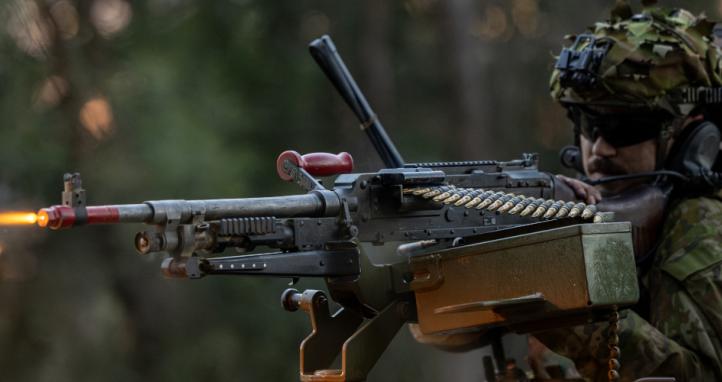
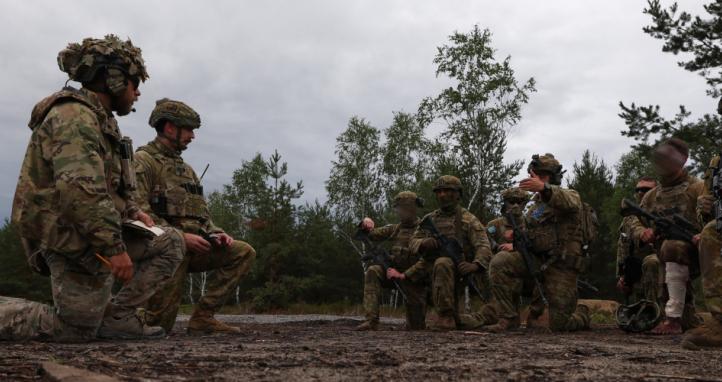
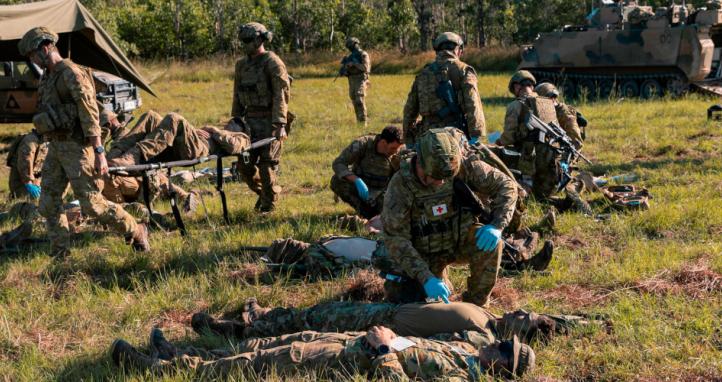
'the only people you can trust on the battlefield are the enemy. They are smarter than you, and will act in ways you don't expect to defeat you (intelligently). Conversely, your partners will let you down at the worst time...'
Training (with notable exceptions, like the old COAC 'fight club Friday'/rare unscripted instances of force-on-force) often fails to drive that point home, and rarely inculcates trainees or PTA to the real nature of war.
Army must get comfortable training to and through culmination. Tactical culmination is almost certain during every rotation at the US Army's NTC and JRTC. Rotating training units do all they can avoid or delay culmination, but it is accepted that the training environment will culminate them at some point. Culmination is not seen as failure. It is seen as an opportunity for tactical adaptation by identifying lessons, re-setting and applying lessons identified when they do it again. This should be the bench mark we aim for in training at all tactical echelons.
The final sentence sums sit up eloquently, the objective is not to punish or embarrass but to fully immerse and load-test commanders and staffs at all echelons.
I have seen a some of what you are prescribing in genuine force-on-force free play exercises run by CTC (albeit in 3 days bursts).
The most jarring lesson I recall from my exercises as an OC was the effect of momentum. It is hard to capture how relentless my opposing number was (a LT from 2 CAV) when they had a clear tactical advantage and no one was “pausing” the exercise. It was great experience for myself and the team, the experience of losing.
Obviously we cannot shoot at each other but we can compete against each other to drive learning.
I totally agree with your assertions. As a professional wargamer I often point out to participants that we do not often reflect on defeats and what we might learn from such events. Whilst being defeated during a manual wargame may not have the same visceral effect as your personal example, I suggest to the wider readership that the use of wargames in training does offer some exposure to dealing with defeat. They certainly provide the opportunity to reflect on such possible outcomes.
Wargame facilitators can (and should) in my opinion consider thew inclusion of unwinable scenarios that provide similar learning opportunities for the players - for the reasons you have articulated. At least manual wargames offer a cheaper and perhaps more accessible training option to provide these experiences rather than via major live exercises which are by necessity often focused on other collective training outcomes.
Yours sincerely,
Andrew Somerville