



Article Summary
The article welcomes Australia’s investment in sovereign uncrewed aerial systems, but argues that sovereignty alone will not deliver operational advantage. From an operator’s perspective, it identifies scale, tempo, integration and risk tolerance as the main gaps between current development approaches and battlefield requirements. It argues that UAS must be expendable, adaptable and interoperable with allied networks and doctrine. The article concludes that sovereign capability and coalition interoperability must grow together if Army is to employ UAS effectively in future conflict.
Sovereign UAS Capability Must Also Be Interoperable
Australia is rightly investing in sovereign uncrewed aerial systems (UAS) capability. Programs like Defence’s Sovereign Uncrewed Aerial Systems Challenge, delivered through the Advanced Strategic Capabilities Accelerator (ASCA), show that the ADF is serious about building domestic capacity rather than relying entirely on foreign supply chains. That matters. Sovereignty matters.
But from where I sit, as a serving Australian Army Tactical UAS operator, sovereignty alone will not determine whether our UAS capability will be useful in the next fight. What will decide that is whether our systems can be produced in numbers, adapted quickly, and integrated properly within our own command, control, communications, computers, and intelligence (C4I) systems and alongside our allies.
If we get those elements wrong, we risk building drones that look good on paper but struggle to matter when it counts because they cannot integrate at both the tactical and strategic levels.
At the tactical level, the way UAS are used today differs significantly from how we design and acquire them. We often treat drones like miniature aircraft: assets to preserve, protect, and operate cautiously.
On modern battlefields, drones represent a fundamental shift in how capability is generated. They are not valued as enduring platforms, but as expendable systems expected to be lost to jamming, attrition, or interception. Their true value lies not in their longevity, but in the effects they enable: intelligence, surveillance and reconnaissance, strike capability, and enhanced decision superiority for commanders.
In this context, success is measured by how rapidly these systems can be fielded, adapted, and replaced to sustain operational advantage. From an operator’s perspective, four challenges define the gap between what we are building and what we are likely to need: scale, tempo, integration, and risk tolerance.
Scale is the most obvious. Initiatives like ASCA’s challenge, which delivered hundreds of Australian-made drones to Army, are a positive step.
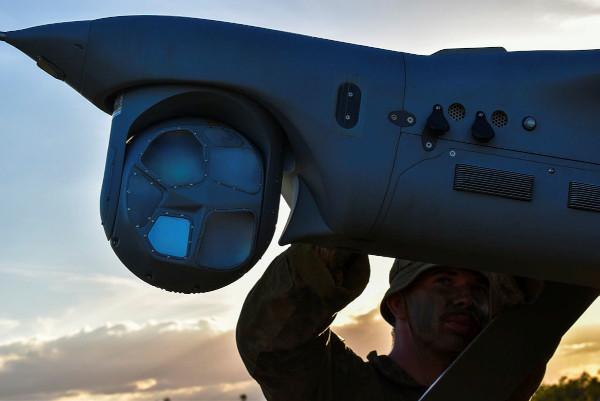
But contemporary conflict shows that UAS are expended at rates more comparable to munitions than aircraft. Sovereign capability must therefore mean more than prototypes and limited production runs. It must include the ability to produce systems in volume, sustain them under pressure, and surge production when required. Without that, sovereignty remains aspirational rather than operational.
Tempo matters just as much. Our development cycles are still measured in years, while adversaries adapt in months or even weeks. In the UAS domain, speed of adaptation is a form of protection. A drone that cannot evolve quickly will be countered quickly.
Closing this gap means shortening the loop between concept, testing, and fielding, and accepting incremental improvement over theoretical perfection. Organisations like the Defence Science and Technology Group (DSTG) already do critical work in this space, but tempo ultimately depends on culture and on how much failure we are willing to accept to learn faster.
Integration is where friction is most often felt at the tactical edge. The ADF, associated industry and DSTG all bring expertise, but too often that effort runs in parallel rather than along a shared operational axis.
The result can be capable systems that do not talk to each other cleanly, do not integrate into existing digital architectures, or add cognitive burden rather than reducing it. Sovereign UAS capability must be guided by a clear understanding of how systems are employed in combat, how sensors feed data to the users who need it, how data moves through networks, and how operators function under adverse conditions.
Equally, it must be integrated into coalition C4I systems so that we can connect and operate efficiently within that environment. Underlying all of this is risk tolerance. We are still generally uncomfortable with failure.
Yet in UAS development, failure is not only inevitable but also essential. Crashes, jamming events, and system losses generate the data that improve the next iteration. If systems are not failing during testing, we are not pushing the capability forward nor learning quickly enough. Normalising controlled, constructive failure is not recklessness; it is how UAS capability matures at the pace the environment demands.
However, there is another gap that receives far less attention: coalition integration, in line with the need for increased training with partners and allies in the UAS domain. We train extensively with allies across manoeuvre, fires, and command and control. UAS, by comparison, remains underdeveloped. This is a problem.
Any future operation Australia participates in will almost certainly be coalition-based, alongside partners such as the United States, the United Kingdom, Japan, and other regional allies. In this context, rehearsing coalition fundamentals such as integration into allied targeting chains, operation within partner digital networks, or coordination of electronic warfare protection for uncrewed systems, is essential. These are not niche capabilities. They are baseline requirements for modern coalition warfare.
Defence continues to emphasise interoperability as central to regional security, particularly across the Indo-Pacific, but UAS integration still lags behind that intent. Sovereignty without interoperability creates risk. A drone that cannot integrate with allied networks, standards, and doctrine limits Australia’s ability to contribute meaningfully to collective combat power.
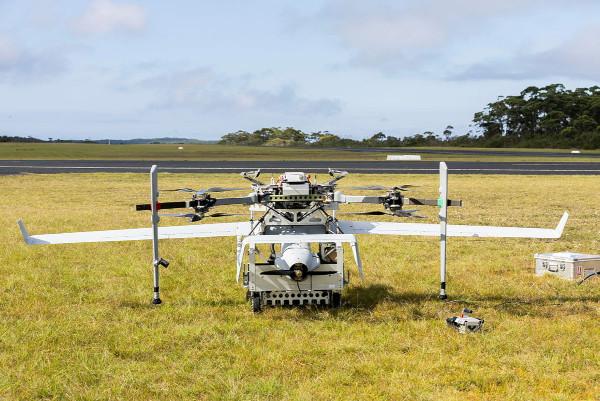
True sovereignty should strengthen our role within a coalition, not push us to its edges. By investing in sovereign UAS capability, Australia can reduce its dependence on allies to safeguard trade routes and the flow of critical components, enhancing resilience and ensuring operational sustainability in a contested South-East Asian operating environment.
So, what needs to change?
First, we need to fully embrace a ‘good enough now’ mindset. Not every UAS needs to be exquisite. Many should be simple, affordable, and expendable. Availability and adaptability matter more than perfection.
Second, operators need to be embedded directly with industry and development teams. Operators provide context; engineers provide solutions. When those perspectives combine early, systems improve faster and arrive closer to what is actually needed.
Third, scalability must be built in from the start through modular architectures, standardised components, and production models that can scale with demand. A common ground control station spanning small uncrewed aerial systems, tactical uncrewed aerial systems, and loitering munitions should also be considered to maximise interoperability, simplify sustainment, and enable more flexible employment.
And finally, coalition integration must be treated as a foundational requirement, not an afterthought. Allies should be built more extensively into exercises, UAS trials, ISR experiments, and electronic warfare training from the outset.
In Eyes in the Sky, Heart in the Fight: Why UAS Integration Is Essential for the Australian Army’s Future, I argued that UAS are no longer a niche enabler, but a capability that sits at the centre of how Army fights and survives.
That argument still holds, but it now needs to go further. It is not enough to integrate drones within our own formations if they cannot integrate into the coalitions we will inevitably fight within. From the tactical edge, the path forward is clear: build UAS that can be replaced quickly, adapted faster than our adversaries, and employed seamlessly alongside our allies. Sovereign does not mean separate. If we want drones to remain the eyes in the sky that protect the heart of the force, then sovereignty and interoperability must grow together.
Still Interested?
Why not read: Unmanned but Unused: Unlocking Drone Capability for Australian Army by Tom Parker.
Cove+ also has short learning courses on similar topics, including Introduction to Information Warfare.

Maybe a worth topic in the next one, our youngy generation getting exposure.
Operating in a high risk training environments and overseas training, flying alongside other nations and layering multinational systems would all help in developing an increased awareness to different tactical environments before its go time. We must ensure we stay level with our partner nations. Airmanship is key, Drones are the new battle winning asset
Without to much effort, one can find evidence that a defending drone platoon can destroy an advancing armoured brigade, yet we still don't have that type of platoon available.
Having completed staff and technical college, and been employed in capability development; I've struggled with the dilemma between fielding to our operational plans or fielding to what is fashionable or worse what is affordable. We tend not to keep the PGPA in mind, where expenditure needs to be governed by effectiveness, efficiency, economy and ethics. If we field to our plans, we'll know the true costs, the true need and then can understand the implications. That does mean we need sound plans.
A dedicated UAS platoon, structured like a DFSW platoon, would give commanders a reliable, concentrated force element of battle proven desired effects, rather than relying solely on fragmented sUAS teams.
Organic UAS at the combat team level is essential, but it should sit within a broader ORBAT design that provides depth, resilience, and a unit capable of generating persistent UAS effects when the call comes.