
Summary
Modern warfare, as seen on the Eastern Front, is defined by fragile logistics, pervasive drone use, and small, decentralised teams operating with limited support, which forces junior leaders to make rapid decisions under extreme uncertainty. Success depends on cognitive skills over technology, including disciplined situational awareness, procedural identification, adaptive leadership, and the ability to operate independently without reliable resupply, evacuation, or higher command control. The central lesson from this article is that modern armies must train realistically for chaos, loss, and autonomy at the lowest levels, or risk avoidable casualties when confronted with the realities of contemporary combat.
Introduction
For months now, I’ve been in private conversation with a volunteer fighting on the Eastern Front in Ukraine. Nothing he has told me came through official channels, after‑action reviews, or doctrinal committees. It is raw, lived experience from a man who fights daily in contested ground where drones, fear, exhaustion, and improvisation define survival. I’ve cross‑checked his observations against open reporting; the alignment is stark. The modern battlefield has accelerated far beyond much of Western peacetime thinking. And the soldiers who will absorb the first blows of that learning curve are our junior leaders.
This piece blends his candid insights with the leadership lessons we already know but too often forget. The emphasis is on what is happening now – unfiltered reality from the front.
1. The Supply Chain Collapses First
“Issued” means whatever isn’t destroyed. After artillery flattened the basement he slept in, his personal helmet and rifle were crushed. A resupply drone eventually dropped him a helmet; he picked up an AK from a dead Russian and pushed forward.
Food, water, batteries, medical supplies, if you get them, it’s because a drone survived the flight. Heavy‑lift platforms are intercepted often enough that soldiers step off carrying deep ammunition buffers, loaded not by doctrine but by necessity. Units fight with mixed generations of kit: early‑2000s armour beside modern plates, personal stores beside issued gear. The comfortable idea that logistics is predictable evaporates on Day One of a peer fight. A soldier who has never trained without guaranteed resupply is a soldier not preparing.
This reality is starkly confirmed in RUSI’s detailed examinations of the Russo-Ukrainian conflict and US Army analyses of contested logistics, which document how drone interdiction has turned main supply routes into ‘killing zones,’ forcing both sides to rely on small-drone drops and ad-hoc buffers rather than predictable resupply convoys.
2. Know Everything – Beyond Your Lane
He stressed that positive identification (PID) starts before you see anyone. That means knowing friendly locations, likely approaches, and empty buildings; tracking who is meant to be in the AO via tools like Mil Chat or Kropyva; and understanding what ‘normal’ looks like right now. Moving into a tree line, his team met three men in multicam with M4s who looked perfectly friendly. They couldn’t name a single friendly unit operating nearby. That thread, pulled hard, exposed infiltrators. Situational awareness is not a map trace, it’s constant, disciplined curiosity about your battlespace.
3. Positive Identification (PID) Is Cognitive, Not Cosmetic
‘The hardest thing is PID,’ he told me. ‘Tape is a stupid idea. Russians carry different colours to blend in.’ Open reporting shows both sides spoofing markers routinely. Night vision, drones, thermal, every modern aid compresses friendly and enemy into similar silhouettes. Under these conditions, PID is procedural and behavioural: challenges, questions, timings, routes, and observed patterns, not armbands. Mistaken identity is one of the most lethal threats on today’s battlefield. Train PID as a thought process, not a colour scheme.
4. Trust Is Earned in Contact – Not Assumed
‘Don’t train like you can trust the man next to you,’ he said. ‘Most people freeze the first time rounds crack past. Drones drop and they run. I’ve seen tough people cry from gunshots.’ This is not criticism, it is human nature. Leadership under fire anticipates paralysis; it doesn’t act surprised by it. Design teams and drills that expect human shock responses and still function. The aim must be to train so realistically and repeatedly that soldiers can trust the person next to them when the moment arrives.
5. Share the Load – Leadership Diffuses in the Fight
Western habit: one person commands, everyone else executes. Reality: in close, fast contact, decisions diffuse instantly across the team. Leadership is shared because it has to be; momentum beats theatrical control. Build trust so individuals act on intent without waiting for permission, and back them when they do. This reinforces earlier work by David Kilcullen on Battle Command concepts for the Australian Army.
6. Command: The Four‑Man Reality
Teams fight in packets of three to six because anything larger is seen and struck by drones. One soldier is designated the Ground Force Commander for that mission empowered to call First Person View (FPV) drones, counter‑battery, whatever is available. Further back, a Joint Tactical Operations Centre (JTOC) (or equivalent) sees the fight through dozens of drone feeds, but cannot micromanage through jamming, lag, and chaos. Movement is coordinated through secure chat to deconflict with friendly FPVs but even then, ‘a lot of dudes still get shwacked.’ Mission command isn’t an aspiration, it is survival. Train junior leaders to decide early, with incomplete information, and live with the consequences.
This mirrors documented shifts in both Ukrainian and Russian tactics, where small 4-6 man infiltration groups have become the norm to survive drone-saturated airspace, as reported by Ukrainian commanders and open-source assessments.
7. Training Must Match the Sensory Violence of Combat
‘Blanks don’t cut it,’ he said. ‘In tight spaces you don’t understand blast, dust, overpressure, or how fast fine motor skills disappear.’ His team rehearses constantly before stepping off: patrolling, clearing blindages, grenade drills, trench penetration, and immediate action on drones. They practise live because the environment is live. He also noted that no sterile range prepares you for the choking dust, smoke and carcinogenic debris that hang in the air after high explosives in enclosed spaces. The first time breaks people. Train until dust, noise, blast, and fear feel familiar enough that your drills survive them.
8. Passage of Information Saves the Next Team
Unusual activity – odd digging, new mine patterns, unexpected silence – is rarely unique. ‘If Russians do something strange, pass it up. Most of them will do it.’ Both sides lean heavily on SOPs; if one team sees a change, others will soon. Reporting is not administrative, it is protective. It buys others time and saves limbs.
9. Doctrine Is Useful Until It Isn’t
Western armies love standardisation and predictability. The Eastern Front has neither. Centralised responses often arrive too slowly. JTOCs become information and problem‑solving nodes, not joysticks. Units go weeks or months without visible support. Under those conditions, teams must experiment within the law and commander’s intent. They deceive, feint, canalise, and out-think at close range. To succeed here, units need rapid learning and adaptation cycles quickly observing what works in contact, orienting to new realities, making decisions at the lowest level, acting on them, and sharing those lessons horizontally with adjacent teams. If we train only to wait for assets, we will die waiting. Train legal, ethical initiative at the lowest level.
10. Drones: Assume You’ve Been Seen
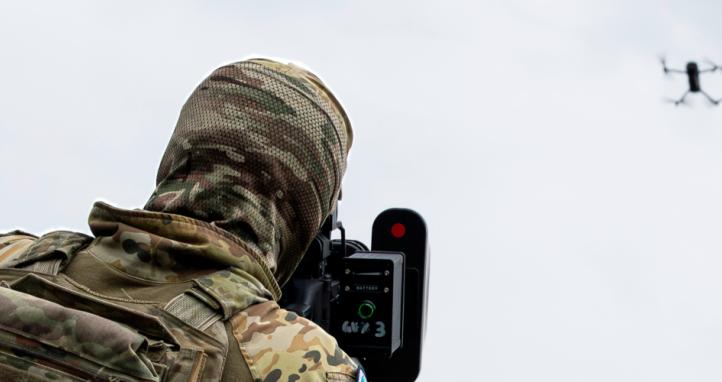
Soldiers on the line can hear when a Mavic spots them. They know the sound of FPVs accelerating. They move in small bursts, break signature, and expect the sky to be hostile. Drone literacy (behaviour, patterns, strengths, and limits) is as basic now as arcs and grenades once were. Drones aren’t a niche. Every soldier needs a working understanding of UAS threats and cues.
RUSI and NATO analyses of the conflict underscore that drone literacy is now an all-arms survivability requirement, with FPV drones accounting for the majority of equipment losses and forcing constant signature discipline across the front.
11. Mines: Everything That Looks Helpful Can Kill You
He described booby‑trapped radios, flashlights and brand new, attractive looking kit seeded as bait. Drone‑dropped mines at intersections. Magnetic effects that detonate from metal mass with lethal radii. The environment is designed to punish curiosity and routine. Discipline saves lives. Anything found on the battlefield is guilty until proven innocent.
Ukrainian medics and soldiers report that mines and booby traps often seeded on bodies, equipment, or civilian items cause more casualties than artillery in some sectors, with Russian forces routinely employing perfidy violations such as grenade rigged corpses.
12. Assaulting Fortified Positions: Close, Brutal, Grenade‑Driven
Assaults are small (often 4–6) and relentless: 15+ grenades for a single trench is not unusual. Corners are pre‑fired to maintain pressure. Top‑cover on trench roofs is cleared at the same time. Defenders hold fire until the last moment. It’s intimate and violent; momentum comes from sequencing, communication and discipline, not speed alone. Close combat isn’t dead. It’s faster, nastier, and more technically demanding than many expect.
13. Medical Reality: When Evacuation Takes Weeks
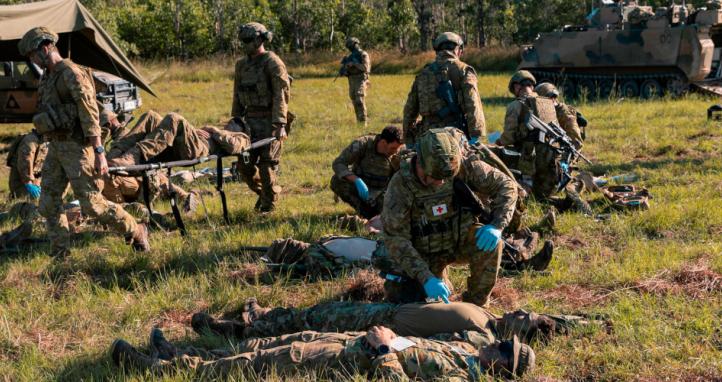
The ‘golden hour’ is gone. The fastest evacuation he’s seen was three days; the longest, twelve weeks. Infection becomes a second enemy; wounds that would be routine in a Western hospital turn life‑threatening after days on the line. Antibiotics matter. Medics are stretched; drug accountability becomes extremely difficult under sustained pressure and must be protected by leadership. Blood must be given forward; drones can and do deliver blood bags when roads are cut. Tourniquets and conversions require qualified clinical judgement and resuscitation plans, not rules of thumb. Resource, protect, and listen to your medics. Train for prolonged field care expectations at team level. Treat medical reporting and resupply as operational functions, not afterthoughts.
US Army medicine observations from the conflict confirm evacuations routinely stretch from days to weeks, with drones now delivering blood and critical supplies forward while medics must master prolonged field care far beyond traditional golden-hour assumptions.
14. Loss Is the Price – Not the Exception
He lost two of his closest mates in a sudden close‑quarter fight, then fought through with one other survivor to finish six Russians. ‘Get with the terms that you’ll have very little wins at massive cost,’ he said. ‘War’s not fun.’ Western training often scripts victories to build confidence. Reality does not. Prepare mentally and emotionally for shock, grief, and ambiguity and to still lead through it.
15. The One Skill He Wishes He’d Trained More
‘Operating with nothing. No water, no food, no Starlink, no ISR, no assets. Just your team.’ Self‑reliance is not aspirational it’s required. Schedule genuinely asset‑denied training and measure performance, not promises.
Conclusion
The Eastern Front is compressing decades of tactical evolution into months. Small teams, drone‑saturated airspace, fragile supply chains, decentralised command, and extended medical isolation are no longer emerging trends – they are the baseline conditions of modern war. While our own primary operating environment will differ in terrain, climate, and adversary; the underlying forces driving these changes are universal. If anything, these insights offer us a rare window into what the future may demand of Australian soldiers before we experience it ourselves.
The point is not that we will fight the same fight, or in the same way. It is that war is once again rewarding adaptability, imagination, resilience, and honesty at the lowest levels. Learning from other peoples’ wars before we fight our own is critically important. It allows us to compress the learning curve and avoid paying for the same lessons in Australian blood. As emphasised in works such as Brent Sterling’s Other Peoples Wars, studying conflicts like Ukraine gives us a rare and valuable head start. The Ukrainians have learned these lessons under fire. We have the advantage of learning them in training.
As an Army we are capable of rapid change and learning but only when under immense pressure. The transformation from the early struggles on the Kokoda Track in 1942 to mastery in the Borneo campaigns of 1945 remains the clearest example: within months, doctrine, training, equipment, and culture shifted dramatically once the reality of jungle warfare hit home.
Yet today our institutional culture constrains that same adaptability. As Mick Ryan has repeatedly warned, “Defence lacks a robust learning and adaptation culture suited to the pace of change in the 21st century… Decision making, and therefore modernisation, moves at a glacial pace.” Promotion and incentive structures continue to reward ‘regulators’ over ‘ratcatchers’ (those who solve problems fast) while risk-aversion has become the dominant organisational norm.
We cannot wait for cultural adaptation to filter down from the top, where leaders have long been rewarded for bureaucratic caution and risk-aversion. Real change in the profession of arms must come from a bottom-up approach, one of individual responsibility to be better. Every junior leader must own their craft: stay informed, challenge assumptions, train hard and realistically, and build teams that can fight through shock, confusion, and loss. The battlefield does not care whose job it was to prepare you; the consequences are paid in blood all the same.
Junior leaders must embrace the reality that the profession of arms is changing fast. Expect to operate without enablers, without resupply, and without perfect information. And above all, maintain the intellectual curiosity to study conflicts like Ukraine not because they are identical to what we will face, but because they reveal the direction modern war is moving.
We must internalise these lessons now through rigorous training, realistic expectations, and ruthless honesty. We must do so to avoid the devastating shock experienced by Task Force Smith in the Korean War as unsparingly detailed in T.R. Fehrenbach’s seminal book This Kind of War where peacetime complacency, under-equipment, and forgotten hard lessons left junior leaders and soldiers tragically unprepared for the brutal realities of peer combat.
If we internalise these lessons now then we stand a chance of meeting the next fight on our terms, not the enemy’s. If we fail to do so, reality will deliver these lessons to us the hard way, under fire, when learning is most costly.

It would be fantastic if they could be loaded into the Defence Lessons Repository DLR) by one of your staff. We see many articles, papers and presentations, but the observations and insights rarely make it into DLR. DLR is the first place lessons staff go to, to respond to information requests, which includes queries from our doctrine and training staff. While great to publish articles, we need to insist on multiple products or placements out of a body of work. The combination of The Cove and DLR provides both a quick feed to the troops and critical information to the troops supporters in the rear.
DLR is at http://dlr.dpe.protected.mil.au/ All personnel have input and read status. Lessons managers clear inputs and create insights and lessons.
A useful appraisal
Ex RAR
Ukrainian Defence Attache once gave his views. I invited a dozen ADF officers to listen in, but none did. Perhaps 20.30-22.30 was outside of working hours ....?
Please add 'How Ukrainians Lead: Military Leadership in a David and Goliath War' by Viktor Andrusiv & Yevhen Sasko ISBN: 1908202378