
Summary: Hypersonic weapons are not invulnerable “silver bullets” but manoeuvrable, atmosphere-bound systems that trade speed for unpredictability and reduced detection windows. While they present real challenges to defence systems and compress decision-making timelines, they are constrained by cost, physics, payload, and reliability limitations. This article argues that their true significance lies in forcing militaries (particularly the ADF) to evolve targeting, integration, and response systems to operate effectively in increasingly compressed and contested environments.
What comes to mind when you hear the words ‘hypersonic missile’?
Perhaps a rocket travelling at a spectacular speed, making it uninterceptable? Or an object that retains some pseudo-mythical properties of lethality, precision, and speed?
Missiles in general are often equated with an otherworldly weapon, as described above. Largely misunderstood and misrepresented, hypersonic weapons are similarly shrouded in mystery and are often reported on merely as experimental capabilities that will remain so for the foreseeable future.
This assessment, however, falls short of the current employment of hypersonics by both Australia’s strategic partners and adversaries. The term ‘hypersonic’ is no longer reduced to a strategic buzzword, representative of emerging technologies that seem invulnerable to current interception and defensive platforms. On the contrary, hypersonics are now an increasingly active weapon choice across the target selection, analysis, and prosecution cycles of many nations.
With this in mind, what then makes them different from missiles of the past?
This article will describe the physical characteristics of hypersonic technologies and the physics that enable their unique weapon profile. With this context, we will then explore their use in contemporary conflicts, counter-hypersonic technologies, and their implications for the Australian Defence Force’s (ADF) Targeting Enterprise (TE). The aforementioned points of discussion are designed to challenge our understanding of what constitutes a weapon as ‘invulnerable’ or even ‘revolutionary’ in its effects on a modern battlespace.
Make no mistake, hypersonic weapons pose a range of dilemmas for in-service Air Defence Assets (ADA) and their commanders. For the ADF, the development of sovereign hypersonic technologies is underway. The ADF’s development of a comprehensive understanding of hypersonic weapons, including their strengths and vulnerabilities, is essential to grasping the operational dilemmas hypersonics pose for detection, decision-making, and defence systems.
What are Hypersonic Technologies?
The following description provides an overview of the physics that enable the unique weapon profile of hypersonic missiles. At a foundational level, hypersonics refers to technologies that fly faster than five times the speed of sound (Mach 5), utilising atmospheric lift to perform manoeuvres rather than relying on rocket boosters for in-flight corrections. They follow a unique trajectory profile. Hypersonics do not align with a traditional ballistic or parabolic trajectory, and often do not exit the atmosphere at any stage of flight.
Modern militaries developing hypersonic weapons are likely producing one of two types:
- Hypersonic Cruise Missiles (HCMs): Powered throughout the flight by a scramjet engine. The engine intakes atmospheric oxygen (colloquially known as ‘air-breathing’ engines) and combines it with a hydrocarbon fuel to produce combustion.
- Hypersonic Glide Vehicles (HGVs): Powered to hypersonic speed by rockets, they glide unpowered through the atmosphere for long distances after reaching apogee (the peak of a projectile’s trajectory) towards the target.
These two categories encompass a wide range of subcategories, including Manoeuvrable Re-entry Vehicles (MaRVs), which will not be covered in this article. However, they pose further complications for modern ADA. What is important to understand is how a hypersonic weapon differs from supersonic or subsonic missiles.
Existing weapon systems, such as ballistic missiles, can already travel at hypersonic speeds. What distinguishes HGVs and HCMs from these is their ability to glide at low altitudes, remaining within the atmosphere for most of their flight whilst performing evasive manoeuvres onto target.
This distinction is critical, as it reframes hypersonics not as faster than ballistic missiles but as manoeuvrable, atmosphere-bound systems that trade raw speed for unpredictability and reduced detection windows.
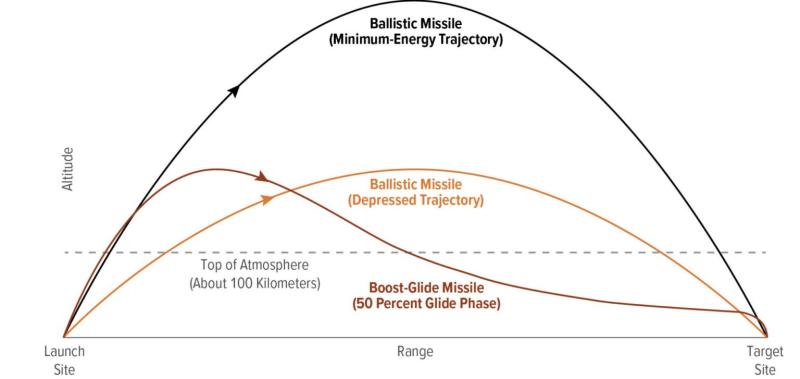
Figure 1: Flight path of different missiles
Why then would a nation choose a weapon that flies at a relatively low altitude, compared with, for example, an Intercontinental Ballistic Missile (ICBM) like the US ‘Minuteman’, which enters the exosphere at its trajectory’s apogee?
A hypersonic weapon offers advantages to its user, including increased stealth by reducing the range at which ground-based radars can detect them. HGVs can manoeuvre during their long glide phase, allowing them to evade long-range anti-missile radars that operate above the atmosphere.
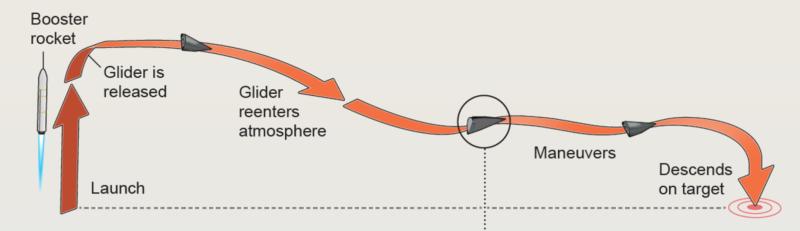
Figure 2: Hypersonic Glide Vehicles
However, remaining within the atmosphere causes significant drag and can slow a once-hypersonic projectile to subsonic speeds (Mach 1 or lower) upon impact. These effects can be mitigated by employing MaRVs on glide vehicles, but this increases the margin of error for targets. This is but one of a multitude of weaknesses of contemporary war’s ‘invulnerable’ weapon.
These limitations highlight a tension. The same characteristics that enable hypersonic manoeuvring and reduced detectability also impose aerodynamic, thermal, and payload constraints that undermine hypersonic weapon effectiveness. Thermal heating issues due to extended drag in the atmosphere result from prolonged atmospheric flight. Furthermore, the development of complex hypersonics – including their materials, propulsion, and inertial navigation systems – increases the financial trade-off of sustaining high speeds with lighter payloads (conventional warheads) and the resulting shorter ranges.
At what point does the use of a hypersonic missile, and the effects of its successful employment, outweigh conventional ballistic solutions? More specifically, do hypersonic weapons provide a proportionate operational advantage over existing ballistic and cruise missile systems when considering cost, payload, range, and reliability?
Hypersonic Technologies Matter
With these foundations in place, we can begin analysing the strategic relevance of hypersonic technologies in the contemporary battlespace.
Hypersonics, even with these vulnerabilities and pay-off considerations, demonstrate emerging technologies that capitalise on lethality, precision, and speed. Similarly, they reflect a shift in Long Range Fires (LRF) that produces more complex dilemmas for commanders in protracted, joint operations. The sustainability of employing exquisite, precise weapons that carry a costly price tag when fired feeds into these complex dilemmas.
Despite these vulnerabilities and pay-off considerations, the development and acceleration of hypersonic technologies have posed a targeting and interception challenge for contemporary defence systems in modern warfare.
The 2024 National Defence Strategy explicitly links long-range strike, hypersonics, and targeting, noting investment in capabilities able to hold ‘time-critical and heavily defended targets at risk from increased ranges’. This places the ADF and an integrated TE at the centre of a ‘hypersonic problem’.
This ‘problem’ is not solely one of interception, but of time, compressing the sensor-to-shooter cycle to operate effectively within significantly reduced decision windows. The ability of a nation to detect, identify, and track targets in contested environments quickly enough to enable effective strike and defence is central to understanding this problem.
Contemporary Case Studies
Contemporary case studies will assist us in contextualising their current employment within the battlespace and in assessing their potential trajectory and effects in future conflicts. Exquisite yet experimental, China’s DF-ZF Glide Vehicle has been assessed as a leading HGV platform, designed to penetrate missile defences and threaten regional elements.
The People’s Liberation Army’s (PLA) Dong-Feng medium-range HGV, can contain either a conventional High-Explosive or Nuclear payload, reaching speeds of up to Mach 10, or 3.43 km/s. First launched for test in 2014, its strengths, whilst flying slower than a conventional ballistic re-entry vehicle, are its evasive manoeuvrability and assorted accuracy.
Similarly, Iran’s Fattah-II (translated as Conqueror II) has troubled Israeli Air Defence Systems and the US’ Terminal High Altitude Area Defence (THAAD) System throughout the initial stages of the US’ operations against Iran in March 2026.
With the genesis of Iran’s ‘Operation True Promise 4’, hypersonic technologies, including HGVs, have found an open battleground where experimental capabilities are instantly proven or disproven against conventional and non-conventional targets. Striking the Israeli Ministry of Defence and Ben Gurion International Airport in Tel Aviv, Fattah-II hypersonics pose interception challenges for some of the world’s most advanced surface-to-air anti-missile platforms.
However, the operational performance of these systems remains contested, and limited transparent data on accuracy, reliability, and interception rates make it difficult to separate demonstrated capability from strategic messaging.
The ADF’s Hypersonic Technologies
For the ADF, the implication is clear: hypersonic threats are proliferating, and maintaining credible deterrence and defence will depend on both advanced strike systems and a robust Targeting Enterprise capable of operating at hypersonic speeds.
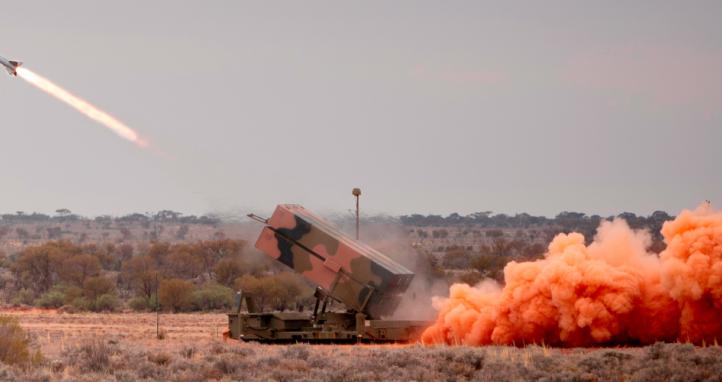
The ADF’s strategic partnerships have created an experimental community that has enabled the Australian industry and government sectors to oversee active hypersonic projects. The first successful test flight of Hypersonix’s DART AE Aircraft reached Mach 12 and was designed to validate propulsion, sensors, and guidance systems in real hypersonic flight conditions.
Similarly, the accelerated delivery of AUKUS Pillar II Hypersonic Systems, including Hypersonic Flight Test and Experimentation, will enable greater collaboration on emerging technologies. Done well, Pillar II will enhance sovereign production of hypersonic technologies.
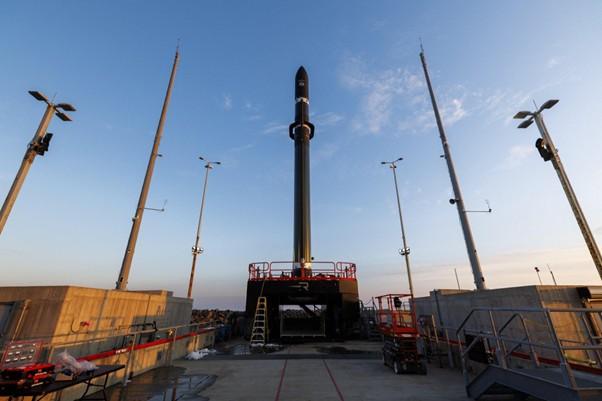
Image 1: Hypersonix Launch Systems’ Dart AE Hypersonic Aircraft completed its first flight, reaching speeds of greater than Mach 5, after launch from NASA’s Wallops Island.
These developments suggest that Australia’s approach to hypersonics is as much about integration, experimentation, and alliance interoperability as it is about fielding a singular capability.
‘Hitting a Bullet with a Bullet’
The rules of missile defence have changed due to the advent of hypersonic technologies that fly faster than shuttles, further than ICBMs and more precisely than close-combat arms.
Intercepting these threats, especially during a HGV’s glide phase after apogee, has been likened to ‘hitting a bullet with a bullet’. At altitudes of 20-80 km, hypersonic missiles often evade traditional ballistic missile detectors, including Ground Based Interceptors (GBIs), due to their low-altitude manoeuvrability and unpredictable trajectories.
The development of a Glide Phase Interceptor (GPI) by the US Military’s Missile Defence Agency will provide a bespoke solution to hypersonics’ unique flight profile. In collaboration with Raytheon and Northrop Grumman, GPIs will be launched from sea-based vertical launch systems aboard the US Navy’s Arleigh Burke-class destroyers.
The fielding of GPIs will demonstrate a marked shift in hypersonic defence, bridging the gap between the currently employed SM-3 (exoatmospheric defence) and SM-6 (Terminal Ballistic Missile Defence [BMD]).
As previously discussed, the ADF is contributing to coalition-led hypersonic projects through its sovereign Space Agency. Close monitoring of hypersonics’ effects, especially in the current Middle East operational context, will reveal the challenges these technologies pose to Command & Control, decision-making windows, and defence capabilities.
A Silver Bullet?
Hypersonic weapons are neither the invulnerable ‘silver bullet’ often portrayed, nor irrelevant to the conduct of modern conflicts. They are a complex capability that offers advantages in speed, manoeuvrability, and reduced warning time, but these advantages are constrained by cost, physics, and technical limitations.
Hypersonic weapons are therefore best understood not as invulnerable systems, but as catalysts that expose gaps in existing defence, targeting, and decision-making architectures. For the ADF, the significance of the missiles lies less in the missile itself. Rather, it lies in the increasingly complex dilemmas they pose for commanders and in the pressure they place on the ADF’s Targeting Enterprise to evolve into a faster, more integrated network capable of operating in compressed, contested environments.
The true challenge is not just countering hypersonic speed and emerging technologies but also overcoming the strategic misunderstanding surrounding their use and effects on modern warfare.
Still Interested?
Why not also have a read of:
‘How to Prevent a War in Space’
Cove+ also offers the following related course in Module 4 – STEM.



I guess cost of munition impacts quantity and therefore informs targeting. These things will largely be used against targets that are high value high pay off. Thank you putting it all together in one place for non-specialist.
There should be little surprise at the progression of either the Ukraine or Iranian war and it's outcomes.
While high cost, high efficacy munitions and associated defenses achieve significant attention and funding, hypersonics are an amuse-bouche in a fine dining resturant. Meanwhile Iran and Ukraine show that wars are waged on a diet of meat and veges. Low cost munitions such as drones, glide bombs and drones and associated industry are what counts.
Failing to realise this is a failure of strategy so fundamental that a any action is lost before it is begun.