
Article Summary
The article argues that a Clausewitzian reading of military medicine initially suggests a utilitarian logic, in which finite medical resources are allocated to maximise combat effectiveness rather than individual casualty outcomes. It identifies resource scarcity as an enduring feature of large-scale combat operations, modelling health support as a zero-sum trade-off against other battlefield operating systems with an optimal level of investment for any given force element. The piece concludes that militaries should invest in clear, command-endorsed ethical guidance before conflict, so that clinicians are not left to resolve these dilemmas case-by-case within the fog of war.
Introduction
The intersection of medical ethics and military necessity presents profound challenges for healthcare providers in armed conflict, particularly in the context of Large-Scale Combat Operations (LSCO). As military clinicians navigate the complexities of resource-limited environments while maintaining their professional obligations to patients, fundamental questions emerge regarding the appropriate ethical framework for clinical decision-making. This essay examines these tensions through the philosophical lens of Carl von Clausewitz. Through a systems theory approach, the friction between utilitarian and deontological ethics in military medicine is discussed, with a conclusion that pre-emptive ethical investment can enhance system efficiency, reduce moral injury, and ultimately improve combat effectiveness.
The Clausewitzian Systems Efficiency Framework and Military Medical Ethics
In On War, Clausewitz describes war as “an act of violence to compel the enemy to fulfil our will” where success depends fundamentally upon “overthrowing the enemy, that is, disarming him, and on that alone”. This may be criticised as an overly simplistic reading of Clausewitz, although at the operational level this philosophy seems central to Clausewitz’ thought process. When applied to military health services, this philosophy suggests adopting a utilitarian approach, where medical resources should be allocated to maximise collective outcomes and thus combat effectiveness, rather than seeking to optimise individual casualty outcomes.
However, this view of military medicine creates profound friction with traditional medical ethics. The medical profession operates within a more deontological framework emphasising the clinician-patient relationship, patient autonomy, and the categorical imperative to (first) do no harm. Military clinicians face the paradox of being simultaneously bound by their duty to individual patients whilst serving within a military framework that may prioritise collective over individual welfare.
Having Limited Medical Resources is an Enduring Feature of LSCO
To apply Clausewitzian reasoning to the allocation of resources to medical support, it seems logical that for any military action, whether this is short or protracted, small or large, there should be an ‘optimal’ level of resourcing of health support to maximise the combat effectiveness of the force element (FE). This is because military resource allocation, in its simplest form, is a zero-sum system. That is, increasing health support resources will obligatorily lead to a decrease in the finite resources of some other Battlefield Operating System (BOS), and vice versa. To put this most simply – there is always a trade-off for any increase in health support (illustrated below in Figure 1).
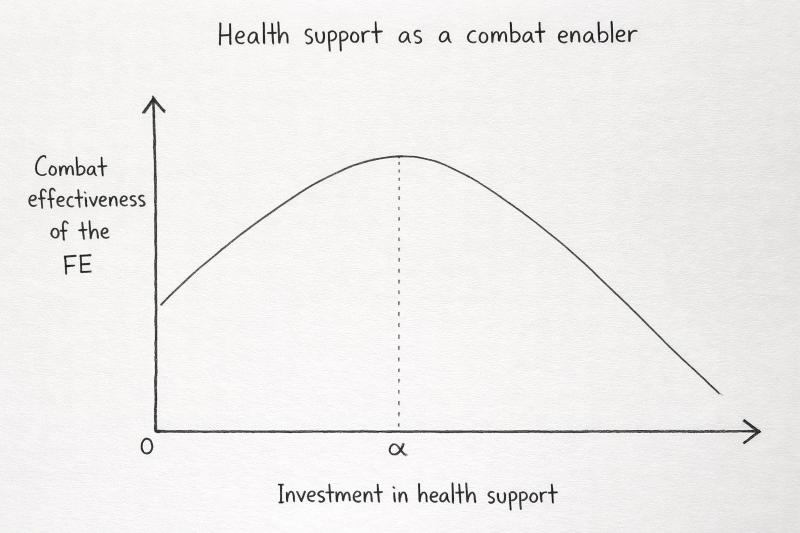
Figure 1: Health Support as a Combat Enabler
This graph plots combat effectiveness of the Force Element (FE) on the y-axis as the dependent variable, and investment in health support on the x-axis as the independent variable.
This graph assumes that the resources available for use in combat, specifically LSCO, are finite, and that all resources available to each layer of command are being used to their maximum potential. This theory draws inspiration from Clausewitz’ reciprocal-action argument, where he proposes that each party to a conflict will mandatorily escalate their means towards a maximum, in a series of reciprocal actions, in an attempt to disarm their opponent, for fear of being disarmed by them. As Clausewitz states “both (sides in a war) proceed to the extremities to which the only limitations are those imposed by the amount of counteracting force on each side”. Whilst Clausewitz heavily qualifies this argument as an abstract thought, noting that in reality there are always limitations to the extremes (“The smaller the sacrifice we demand from our opponent…, the smaller will ours require to be") , it seems true that potential near-peer LSCO in the 21st century provides an environment that tends strongly towards the extremes, with large sacrifices being required of all parties to achieve major political objectives. Therefore, with reference to medical resource allocation in modern LSCO, it holds that we can consider this a zero-sum system.
To further illustrate this concept, as a thought experiment, imagine the far left and right of the x-axis for any given action and any size FE. For example, let us take a battlegroup mounting an offensive action in a broader LSCO operating environment (OE). The extreme left of the x-axis represents nil investment in health support – i.e., no soldiers have any medical training, no Class VIII stores, and no investment into the concept of health support in the planning phase. This FE will have some level of combat effectiveness, representing the starting point of the curve. On the other hand, let us consider far right of the graph, to illustrate the other extreme of this thought experiment. This would imply a maximal investment in health support, at the cost of all other BOS, for example by sending a Role 2 Enhanced Hospital and all its attachments to support one single soldier in this offensive action.
It stands to reason that at the far left of the x-axis, any additional investment in health support will increase the combat effectiveness of the FE, for example, by preventing infectious disease, treating minor wounds to return soldiers to the fight, or through an increase in the morale of the FE. Conversely, on the far right of the x-axis, decreasing the investment in health support and adding more manoeuvre elements and firepower will increase the combat effectiveness of the FE.
It can therefore be theorised that, for any action, there will be an optimal level of investment in health support, represented by alpha on the x-axis. It is interesting to note that ‘alpha’ investment in health support is independent of any traditional clinical governance standard. One would assume that Clausewitz would always seek exactly ‘alpha’ investment in health support, as this will maximise the efficiency of the entire military system.
Another interesting systems theory corollary from this line of reasoning is that there will always be a limit to medical resources in LSCO, if a zero-sum system is assumed. According to this logic, the only way that medical resources could potentially not be limited is if a zero-sum system does not exist, for example through the actions of a non-combatant third party to the conflict, such as the Red Cross.
Could LSCO be Considered a ‘Rolling Disaster’?
In civilian medical practice, a disaster can be defined as an event where systems are overwhelmed and there is a greater demand than supply for resources to manage that event. Utilitarianism is seen as a universal guiding ethical principle in disaster medicine – that is, the health response will aim to do the ‘greatest good for the greatest number’. Secondary to this ethical principle, the concept of reverse triage is well accepted as a way of maximising system efficiency to save the most lives. One key point, however, is that reverse triage is generally only applied when there are multiple co-existing patients competing for resources at a singular point in time.
Considering reasoning above, that medical resources will always be limited in LSCO, periods of increased military activity in a LSCO OE could be considered a ‘rolling disaster’ if these limited resources are overwhelmed, that is, if the disaster occurs over a period of time. If it is accepted that a state of ‘rolling disaster’ exists, then the question of ‘pre-emptive’ reverse triage must be considered. Pre-emptive reverse triage implies that during protracted periods of limited resources during LSCO, casualties with the least likelihood of survival would receive limited treatment due to the knowledge that the resources saved by this limitation of treatment will be able to be used to treat other casualties (with a greater chance of survival), with the intention of utilising the available resources to provide the ‘greatest good for the greatest number’.
Some examples of pre-emptive reverse triage may include setting a maximum amount of blood that any one casualty may receive, mandating a maximum number of days that someone may remain on a ventilator, or not performing damage-control abdominal surgery. It is crucial to highlight that reverse triage is very different to not continuing futile care and that many casualties with survivable injuries will die if this ethical framework is used to guide decisions. The reasons for denying treatment will need to be clearly documented – this documentation would need to read something along the lines of ‘further treatment was withheld in order to save resources for other patients who have a greater chance of survival’.
Of course, the concept of pre-emptive reverse triage is very morally confronting to clinicians, as it directly undermines the patient-clinician relationship, reducing trust in both the health support system and the command framework that enabled this decision making. This would likely have a negative effect on the morale of the FE. Consider the impact it would have on clinicians to deny treatment to a conscious casualty at a singular point in time where there are no other immediate casualties to be treated at that facility. Further, consideration must be given to how families would receive the news that their loved ones had treatment withheld in order to conserve resources, resulting in their preventable death.
Balancing System Efficiency with Medical Ethics by Recognising War as a ‘Moral Tragedy’
Noting the initial assumption that Clausewitz would advocate for a utilitarian approach to military medical ethics to increase system efficiency, on deeper consideration, it seems that strict adherence to a utilitarian ethical framework will produce second-order consequences that are undesirable. Clausewitz himself would likely have recognised that systematically limiting the care of the sickest patients to conserve resources, i.e. applying a utilitarian ethical framework, would generate significant negative second-order effects. The erosion of trust between combatants and medical personnel would diminish morale across the FE, potentially degrading combat effectiveness to a greater degree than any efficiency gains achieved through resource optimisation. Furthermore, requiring clinicians to make repeated triage decisions without adequate ethical preparation will substantially increase the risk of moral injury and therefore reduce the ability of clinicians to perform their role.
In the 21st century, when confronted with potential LSCO, militaries would be prudent to adopt a more nuanced ethical framework that balances utilitarian efficiency with deontological obligations and recognises warfare as an inherent ‘moral tragedy’ where all available choices incur moral costs. After presenting this line of reasoning at a recent conference, a senior military colleague spoke to me and offered a potential ethical framework that can be summarised as ‘a bird in the hand is worth two in the bush’. This framework supports clinicians treating those casualties who are under their care with curative intent, noting that this may be resource intensive, rather than conserving those resources for others who are outside of the immediate sphere of influence of the clinician. This ethical perspective represents a deviation from a strict utilitarian approach and may be more appropriate as a framework to guide medical resource allocation in LSCO environments.
Regardless of the ethical framework that is adopted, rather than allowing individual clinicians to navigate these dilemmas case-by-case within the ‘fog of war’, the modern military should invest in robust ethical guidance pre-conflict. This preparation must be endorsed by both technical and command chains, and will establish shared understandings of acceptable practice, enable more rapid decision-making, and facilitate the most effective orchestration and synchronisation of medical effects across the operational environment.
Conclusion
Considering modern military medical ethics through a Clausewitzian lens reveals a conflict between utilitarian and deontological ethical paradigms. Whilst Clausewitz's emphasis on achieving strategic objectives might initially suggest a strictly utilitarian approach to medical resource allocation, a more nuanced reading acknowledges that combat effectiveness depends not only on highly efficient systems but also on morale, trust, and the moral resilience of both combatants and medical personnel. Pre-emptive ethical investment – including the development of clear ethical guidance and the systematic integration of ethics into training – represents a practical means of navigating these dilemmas whilst minimising moral injury. Ultimately, I think that Clausewitz would agree that the most effective military medical system is not one that strictly maximises resource efficiency, but one that sustains the moral integrity and operational capability of its people throughout protracted conflict.


What to do with casualties that have serious/catastrophic damage is a difficult decision for more than medical staff.
Having been a paratrooper, we occasionally, Cocos, Coen, Malaya etc had to deal with such situations. Sometimes the young man died, sometimes in hindsight death might have been a better fate, sometimes they survived to live well. Much thought was applied, field surgical teams found, equipment/supplies acquired and training provided.
Operational planning owes the state, communities, families and individuals considered effort to reduce casualties to the minimum. As Grotious and Aquinas noted, ‘war is a dispute between oligarchs, and we are pawns’. Reduction is achieved via smart application of the inputs to capability - such as ensuring the right armour is provided, the right first aid kits are available, the right training is provided, the right tactics used and the right moral code exists.
As you observed, not everyone is ‘savable’, but better preparation will reduce that to the minimum. Operations staff have no excuse for not ensure adequate supplies are available, systems sited correctly and procedures in place. We are far from ready to ‘fight’ from a medical perspective and I don’t accept the current ‘trade-off’ excuse. Thought, word and deed need to be applied. Solutions can be found.
For those who are beyond care, a well developed spiritual foundation needs to be inculcated to prepare everyone for death and to know when nothing more can be done. Here too we are deficient.
Regardless of the scale of the fight each life is valuable - whether friend or foe. We have duty to ensure the least death and destruction occurs.