Facts and figures
The ‘Know Your Region’ series is designed to support unit and individual professional military education on the Indo-Pacific region. It’s important for all serving members of our military to have a foundational knowledge of the countries and issues in the Indo-Pacific.
Mongolia’s Response to Russia’s Illegal Invasion of Ukraine
Australia’s Foreign Minister Senator, the Honourable Penny Wong, has condemned Russia’s “illegal and immoral invasion” of Ukraine, assured Australia’s unwavering support for Ukraine's sovereignty and territorial integrity, and sanctioned individuals and entities in Russia’s defence, energy, media, and minerals sectors.
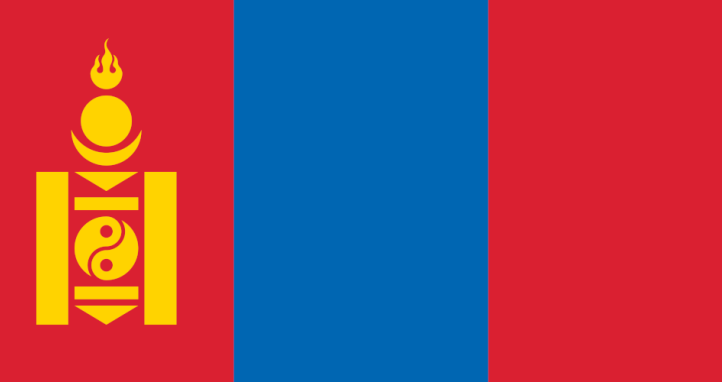
This is a stark contrast to Ulaanbaatar’s position, and this geopolitical issue is a useful case study which makes real the challenges of Mongolia’s ‘geographic prison’, the impact on its foreign policy, and the tension of its ‘third neighbour’ policy. Mongolia is not ‘pro-invasion’, but it has carefully balanced its response to the war in Ukraine between its strong ties with Russia and its desire to maintain good relations with other countries, particularly its ‘third neighbours’ in the West. While officially neutral, Mongolia has maintained diplomatic relations with Russia, purchased fuel supplies, and actively pursued and strengthened its relationship with Russia, including through infrastructure agreements and diplomatic meetings. Mongolia’s decision not to arrest Vladimir Putin for war crimes in 2024, despite being a member of the International Criminal Court, was criticised by Ukraine and the European Union. This decision raised questions about Mongolia’s commitment to international law. Mongolia’s neutral stance is not unique; India, Sri Lanka, Pakistan, and South Africa are notable names amongst the 16 countries that have voted to abstain in all resolutions at the United Nations General Assembly pertaining to Russia’s invasion of Ukraine.
Australia has not publicly commented on Mongolia’s neutrality, nor to demand it condemn the conflict. We recognise Mongolia’s complex position, dependence on its large neighbours, and the practical limitations of Mongolia speaking out against Russia. Rather, Australia encourages Mongolia’s ongoing active participation in multilateral forums which contribute to protecting the rights of small-to-medium sized states.
Mongolia’s land links with Europe and Asia are through Russia and China, and it currently cannot transport imported goods from the European Union through Russia because of sanctions on Moscow. This demonstrates how readily Mongolia is influenced by regional issues, and effectively balancing these pressures remains a central question for the country’s future stability and regional influence.
For further information, see the resources below (a reminder, videos are available to view on your mobile devices or stand-alone laptops - not on the DPN):
- Articles
- ‘Sharing a bed with a bear and a dragon’, Mongolia aims for closer ties with Australia (The Sydney Morning Herald)
- Mongolia in the middle of the Russia–Ukraine war (East Asia Forum)
- Mongolia walks a tightrope on Ukraine (East Asia Forum)
- Mongolia - Neutrality and Anxiety (Asia Society)
- Empty Steppes: An Examination of Mongolia’s Ukraine Policy (The Geopolitics)
- In Welcoming Putin, Mongolia Prioritizes National Interest Over Russia’s War With Ukraine (The Diplomat)
- Ukraine war briefing: Putin and Mongolia flout ICC arrest warrant (The Guardian)
- Ukraine condemns Mongolia over failure to arrest Putin on visit (The Guardian)
- Putin Uses Mongolia to Mock the ICC (CEPA)
- Three years on, Australia stands with Ukraine (Department of Defence)
- EU-Mongolia relations: Possible critical raw materials partnership (European Parliament)
- Mongolia (United States Congressional Research Paper)
Climate Change and the Nomadic Way of Life
Mongolia faces extreme environmental challenges, including desertification, harsh winters known as ‘dzuds’, and the environmental impacts of mining operations. These conditions directly threaten the traditional nomadic herding lifestyle, which remains a key part of Mongolian national psyche (See: Information) and rural livelihoods (See: Economy). Increasingly, environmental stressors force families to migrate, contributing to rapid urbanisation and stressing existing infrastructure and social services in Ulanbaatar. Climate change has intensified the frequency and severity of these challenges, putting additional strain on government resources and policy frameworks.
Mining and industrial activities worsen environmental degradation, including soil erosion, water pollution, and ecosystem disruption. The tension between economic development and environmental sustainability is realised as debate for environmental regulations to mitigate the long-term impacts of resource extraction and the economic benefits of mining-driven growth.
Climate resilience initiatives range from disaster preparedness programs for livestock herders to land restoration projects and sustainable mining practices. Mongolia’s ‘third neighbours’ often support these efforts, but effective implementation is a challenge.
For further information, see the resources below (a reminder, videos are available to view on your mobile devices or stand-alone laptops - not on the DPN):
- Articles
- No choice but to move: climate displacement and eroding livelihoods in Mongolia (Forced Migration Review)
- Saving the Gobi Desert and Mongolian steppes from the dzud will also save lives and livelihoods (UNDP)
- Combating Desertification in Mongolia’s Gobi: Story of Resilience and Restoration (UNDP)
- Impacts of Changing Climate on Mongolia’s nomadic herder (UNDP)
- Climate change in Mongolia destroying pastures on which nomadic herders rely (The Guardian)
- In Mongolia, Climate Change and Mining Boom Threaten National Identity (Wilson Centre)
- Children of Mongolian Nomads Forced to Abandon Herding by Climate Change (Save the Children)
- Mongolia’s nomads adapt to climate change (DW.com)
Know your region
Know Your Region series gives you a shortcut to understanding other nations in the Indo-Pacific region.