Facts and figures
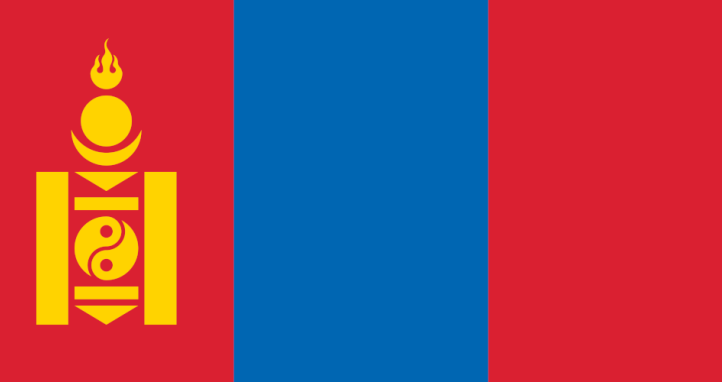
| Country code | MN |
| Area | 1,564,116km2 |
| Population | 3,610,000 |
| Capital city | Ulaanbaatar |
| Timezone | UTC+07:00 UTC+08:00 |
| GDP | $USD 25.80 billions |
| Currency | MNT (Tughrik ₮) |
| Government type | Unitary Parliamentary Republic |
| Notable people |
|
The ‘Know Your Region’ series is designed to support unit and individual professional military education on the Indo-Pacific region. It’s important for all serving members of our military to have a foundational knowledge of the countries and issues in the Indo-Pacific.
Overview
Mongolia is the world’s most sparsely populated country, with only 3.5 million people spread over an area almost as big as Queensland (which has a population of 5.6 million). Urbanisation has accelerated in recent times, leading to 1.5 million people living in the capital Ulaanbaatar, where air pollution, infrastructure strain, and informal ger (yurt) districts pose major social challenges. There are dangerous pollution levels in Ulaanbaatar due to ger households burning coal, especially in Mongolia’s long, harsh winters (where the temperature gets as low as minus 40 degrees Celsius). The remaining population are spread across a nation famous for its picturesque grassy steppes, the Gobi Desert, snow-capped mountains, and expansive lakes. It is landlocked and faces environmental concerns, especially desertification and water scarcity.
The Mongol Empire, led by Chinggis (Genghis) Khan, was the largest contiguous land empire in history, spanning from 1206 to 1368. It emerged from the unification of various Mongol and Turkic tribes under the famous conqueror in 1206 and began its gradual decline after the death of Kublai Khan (Chinggis Khan’s grandson). The empire fragmented into smaller ‘khanates’, each with its own ruler, and they fought one another for power; the Black Death plague, drought, and famine weakened the economy; the Ming Dynasty rose and ended Mongol rule in China; and there were military failures and local uprisings.
Culture/Demographics
Mongolia has a young population with a median age of only 27 years (the median age in Australia is currently 38.3 years). Most of Mongolia’s population is ethnically Khalkh Mongol, with Kazakh and Oirat people living in the country’s west and a small indigenous minority – Tsaatan (also known as ‘reindeer people’) – living in the Sayan Mountains around Lake Khövsgöl in northern Mongolia. Tibetan Buddhism is the most common faith, but the Kazakhs in the west are majority Muslim.
Some English is spoken in Ulaanbaatar, but Mongolian is the predominant language. Maps and street signs use the Cyrillic alphabet. The Mongolian government has introduced a new policy to replace Russian with English as the second language taught in Mongolian schools. Literacy is high (over 98%), reflecting the country’s strong education system.
National Psyche
Mongolia has a collective culture and ‘Asian values’ associated with societies in East, South, and Southeast Asia, emphasising the importance of family, community, respect for elders, loyalty, hard work, education, and achievement.
The legacy of Chinggis Khan, the country’s history of nomadic life and seasonal migration, and the extreme winter weather conditions (including severe winter disasters called dzuds) have shaped the national psyche of Mongolia so that survival, resilience, resourcefulness, independence, and self-reliance are valued. Australians First Nations people and Mongolian nomadic cultures are able to connect over these shared values. Mongolians are known for their friendly and hospitable nature, even to strangers.
Public Diplomacy
Mongolia is famous globally for its nomadic culture, dramatic landscapes, and its pivotal role in history as the birthplace of Genghis Khan and the Mongol Empire. It is also renowned for Tuvan throat singing; a unique and extraordinarily difficult style of singing where one performer produces multiple vocal harmonies simultaneously (including on Australia’s The Voice). Throat singing remains a strong symbol of Mongolia’s national and ethnic identity.
At the Olympics, Mongolia has historically performed well in combat sports, particularly wrestling and judo. Traditional Mongolian wrestling (Bökh) is deeply ingrained in the culture, and many Olympic wrestlers come from this background. Mongolia has won multiple Olympic medals in freestyle and Greco-Roman wrestling. Mongolia has developed a strong judo program, producing world-class athletes and Olympic medallists, including gold medallists in recent Summer Games.
Media and Internet
BBC’s Mongolia media guide reports that television is the most popular form of media, accounting for at least 60% of the market. The Mongolian National Broadcaster is one of the most watched and listened to media in the country. Two English-language newspapers are published weekly: the Mongol Messenger and the UB Post.
Press freedom is generally respected, according to Freedom House, but media ownership is opaque and many journalists self-censor to avoid offending political or business interests. Reporters Without Borders states that more than half of all the defamation cases in Mongolia are brought against journalists and media.
In 2023, about 83% of the population had access to the internet, a significant increase from 12.5% in 2011. While internet access is widely available in urban areas, access in rural areas and remote regions is more limited and more likely to be 2G or 3G.
International Fora
Multilateral international forums are an important way for Mongolia to diversify its relationships and reduce reliance on Russia and China. Mongolia is a member of the United Nations, World Trade Organisation, ASEAN Regional Forum, Asia Cooperation Dialogue, G77, and Asian Infrastructure Investment Bank. From the mid-1990s, Mongolia has pursued a ‘third neighbour’ policy which seeks to engage countries with similar views on human rights, democracy, and free markets; this includes Australia, the United Kingdom, United States, Canada, Japan, South Korea, Germany, European Union, and India.
China and Russia have long pressured Mongolia to become the 10th member state of the Shanghai Cooperation Organisation (joining China, Russia, Kazakhstan, Kyrgyzstan, Tajikistan, Uzbekistan, India, Pakistan, and Iran) but Mongolia has thus far remained an observer (alongside Belarus and Afghanistan). Russia has also invited Mongolia to join the BRICS organisation (made up of Brazil, Russia, India, China, South Africa, Egypt, Ethiopia, Iran, United Arab Emirates, and Indonesia). Originally formed in 2009 by Brazil, Russia, India, China, and South Africa; BRICS aims to bring together the world’s most important emerging economies, and act as a political and economic counterbalance to wealthier Western nations. Mongolia is currently only an observer.
Mongolia is also a member of the International Criminal Court (ICC), which caused controversy when it hosted a visit from Russian President Vladimir Putin – who has an ICC warrant for his arrest – in 2024. (See: Diplomacy).
Mongolia actively cooperates with NATO on issues such as counterterrorism, non-proliferation, and cybersecurity through an Individual Partnership and Cooperation Program; it supported the NATO-led Kosovo Force from 2005-2007 and contributed troops to the NATO-led International Security Assistance Force in Afghanistan from 2009-2014.
Mongolia’s neutral, quiet reputation in the global arena has made it a host country for bilateral discussions: between North Korea and Japan in 2007, 2012, and 2014; and it was considered as a potential site for the meeting between United States President Donald Trump and North Korean leader Kim Jong-Un in 2018.
For further information on Mongolia, see the resources below (a reminder, videos are available to view on your mobile devices or standalone laptops – not on the DPN):
- Videos
- Culture Quest – Western Mongolia (PBS, 28m13s)
- People & Culture of Mongolia (World Travel Guides, 12m40s)
- Podcast
- The Mongol Empire (Short History Of…, 53m44s)
- Travel to Mongolia (Amateur Traveler Podcast, 34m28s)
- Mongolia (BBC News - World Questions, 49m32s)
- Genghis Khan Part 1: Underdog to Emperor (Real Dictators, 50m)
- Genghis Khan Part 2: Rise of the Mongols (Real Dictators, 48m18s)
- Articles
Know your region
Know Your Region series gives you a shortcut to understanding other nations in the Indo-Pacific region.