Facts and figures
| Total military expenditure | $USD 0.18 billions |
| Military expenditure as a percentage of GDP | 0.74% |
The ‘Know Your Region’ series is designed to support unit and individual professional military education on the Indo-Pacific region. It’s important for all serving members of our military to have a foundational knowledge of the countries and issues in the Indo-Pacific.
Military Capability
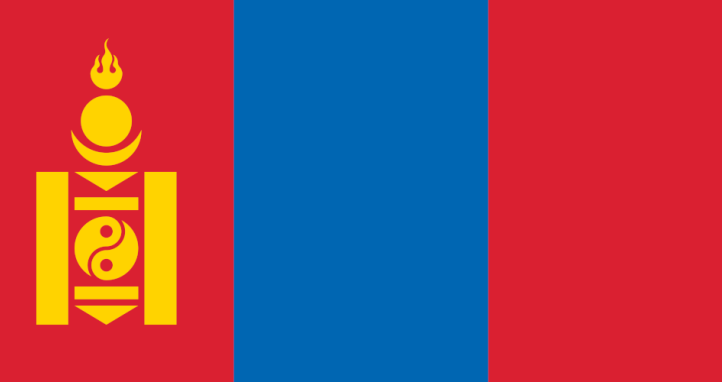
Working alongside the civilian Ministry of Defense, the Mongolian Armed Forces (MAF) consists of the Mongolian Ground Force, the Mongolian Air Force, and the Mongolian National Guard (responsible for special security tasks and ceremonial duties). There is no navy as the country is landlocked. The National Police Agency, the General Intelligence Agency, and the General Authority for Border Protection are primarily responsible for internal security.
Military spending is estimated to be only 0.7% of Gross Domestic Product. The MAF has broadly similar fighting capabilities to Chad, Zimbabwe, and Cameroon. Sandwiched between China and Russia the MAF have a limited capability to protect Mongolia’s independence should either nation choose to invade. Equipment and capabilities are modest and largely inherited from Soviet-era supply chains, although Mongolia has pursued modernisation with assistance from international partners, including the United States, Japan, South Korea, and Australia.
The MAF is a conscript and volunteer military; it is mandatory under Mongolia’s Universal Military Service Act for all male citizens aged 18 to 25 to serve for a one-year period. With only approximately 10,000 active-duty military personnel, Mongolia has used the MAF to great effect to attain diplomatic goals and strengthen international relations, including through joint military exercises and military exchanges. Mongolia has contributed to more than 20 United Nations (UN) peacekeeping missions. In January 2024, Mongolian Major General Erdenebat Batsuuri was appointed as Force Commander of the United Nations Peacekeeping Force in Cyprus; this was the first time UN forces had operated under Mongolian command.
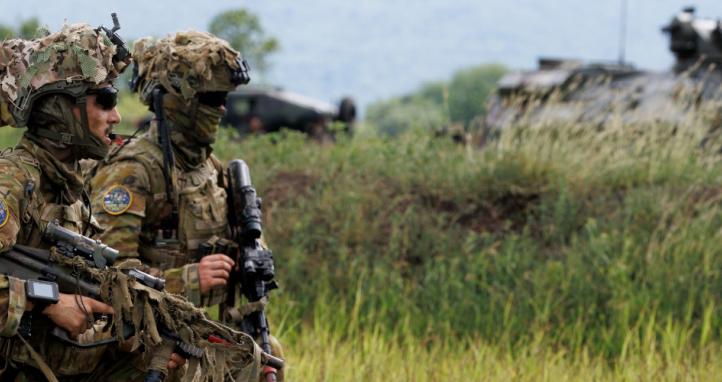
The most significant multinational joint training exercise for Mongolia’s military diplomacy is Khaan Quest, jointly organised by the MAF and the United States Indo-Pacific Command. Since 2003, this annual event has seen the participation of over 18,000 military personnel from 67 countries. It is designed to promote regional peace and security and includes both command post and field training exercises focused on UN standards. The exercise aims to enhance interoperability, build military trust, and improve skills for UN peacekeeping operations. Khaan Quest is part of the US-Mongolia Strategic Partnership, but it is also a way for Mongolia to connect with other democratic nations such as Australia, Canada, South Korea, Germany, France, and Japan.
Military Cooperation with Australia
Australia is a ‘third neighbour’ (See: Information) and considers Mongolia a partner in the Indo-Pacific region. In 2015, we signed a Defence Cooperation Memorandum of Understanding (MoU) to contribute to the advancement of bilateral defence relations and mutual understanding. The MoU provides a framework upon which cooperation in activities such as training and education, humanitarian assistance and disaster relief, and peacekeeping capacity-building is based.
Mongolia and Australia cooperate closely on defence and security, but the overall scale of this partnership is modest. This cooperation includes English language training for the MAF since 2018, long- and short-term training programs for Mongolian defence personnel in Australia; and joint deployments in UN peacekeeping operations, including South Sudan, Kosovo, and Sierra Leone; and on coalition operations in Iraq and Afghanistan. Australian defence officials regularly participate in the Ulaanbaatar Dialogue and peacekeeping and humanitarian exercises such as Khaan Quest and Gobi Wolf. Our strategic ties continue to deepen with senior officials and defence policy talks held in 2024.
We have different international experience, training, doctrine, and ways of viewing the world. Mongolia thinks more like Russia and China than Australia given its geographic location. Noting that Mongolia is dependent on Russia and China for trade, fuel and electricity; Ulanbaatar will always need to moderate its involvement in geopolitics because its national interests require it to ‘tread lightly’ around its neighbours, but Australia and Mongolia both support an international rules-based order which safeguards the interests of small-to-medium sized nations.
For further information on Mongolia’s military, see the resources below (a reminder, videos are available to view on your mobile devices or standalone laptops – not on the DPN):
- Videos
- Khaan Quest 2024 Overview (U.S. Department of Defense, 2m40s)
- Warrior Blood: the Mongolian Army in Afghanistan (NATO, 2m20s)
- Mongolian Army (Mongolian Military Channel, 3m59s)
- Mongolian Special Forces (Mongolian Military Channel, 8m10s)
- Articles
- 2025 Mongolia Military Strength (Global Firepower)
- Major General Erdenebat Batsuuri of Mongolia – Force Commander of the United Nations Peacekeeping Force in Cyprus (United Nations)
- How the Mongolians punch above their weight in military diplomacy (IntelliNews)
- Mongolia Contributions to UN Missions (United Nations Peacekeeping)
- Mongolia’s Military Diplomacy and Khaan Quest Exercises (The Diplomat)
- Foreign Minister Battsetseg Holds Official Talks with Minister for Foreign Affairs of Australia (Montsame)
Know your region
Know Your Region series gives you a shortcut to understanding other nations in the Indo-Pacific region.