



Article Summary
This article argues that NCOs and warrant officers are central to integrated ADF leadership, but that current leadership education remains too service-specific at key points in the enlisted pathway. It proposes a tri-service academy with a common integrated core, protected service-specific modules, blended delivery, and tiered pathways aligned to responsibility. It also outlines governance, assessment, credentialing and allied models that could inform implementation. The article concludes that an ADF NCO Academy would build trust, mission command, and professional standards across the joint force.
“The strength of any military lies not only in its weapons but in the character of its leaders, and that begins with the NCO.”
– General Omar Bradley
The Australian Defence Force is operating in a time of rapid technological change, intensifying strategic competition, workforce pressure, and the need to function as a truly integrated force. In this environment, leadership is our edge, and the heartbeat of that leadership are our non-commissioned officers (NCOs) and warrant officers (WOs).
It is time to match the calibre of our enlisted leaders with the institution they deserve: an Australian Defence Force (ADF) NCO Academy: a tri-service, integrated academy that professionalises and standardises enlisted leadership education, strengthens integration across domains, and builds the resilient leadership culture we need for the future fight.
Why Now
NCOs and WOs turn strategy into action. They hold standards, develop people, and lead teams in complex, high-tempo conditions. Our Services already deliver strong leadership development. However, differences in approach and limited integrated exposure at the NCO level can blunt our ability to act as one ADF.
If we expect our teams to deliver integrated effects at speed, we must build integrated literacy, trust, and mission command early – reinforcing them at every leadership tier. An ADF NCO Academy would do exactly that: provide a consistent foundation across the Navy, Army, and Air Force while protecting service-unique strengths.
The Case for an Academy
Professionalise and standardise. An integrated academy would align leadership doctrine, ethics, and warfighting principles across the Services. It would set common expectations, build shared understanding, and help leaders move across domains without losing credibility.
Strengthen integration. Integrated operations are our daily reality. We need NCOs fluent in integrated concepts, able to coordinate effects, and confident working across Services, agencies, and partners down to the team level.
Elevate mission command. Disciplined initiative thrives when leaders understand intent, risk, and responsibility. An academy would give enlisted leaders a common language for mission command and a shared standard for decision-making under pressure.
Build a resilient culture. A common academy would reinforce ethical leadership, wellbeing, standards, and accountability. It would also give NCOs and WOs a professional network across the ADF before crises demand it.
What It Looks Like
A Tri-Service Academy with an Integrated Core
A unified integrated core would cover ADF values and ethics, mission command, integrated operations literacy, communication and influence, training design, safety leadership, wellbeing, diversity and inclusion, and digital skills such as operations security, cyber hygiene, and information management. Service-specific modules would sit alongside the core to keep capability-unique content strong and relevant.
Training Format: Physical, Virtual, or Both?
Modern leadership training should adopt a blended delivery model that combines the strengths of both face-to-face and digital learning. Residential training remains essential for those elements that benefit most from direct interaction, including coaching, team building, practical leadership activities, and the development of trust and professional relationships.
These experiences are difficult to replicate in an online environment and provide opportunities for collaboration, mentoring, and the application of leadership skills in realistic settings.
By contrast, virtual and e-learning platforms are well suited to delivering pre-course preparation, knowledge-based instruction, reflective learning activities, and post-course reinforcement. This approach reduces the amount of time personnel spend away from their units while allowing them to progress through learning at a pace that suits operational demands.
E-learning also ensures consistency of instruction across the force, increases training throughput, and enables personnel to continue developing professionally while remaining engaged in their day-to-day roles. Rather than replacing residential training, digital learning complements it, creating a more flexible, scalable, and effective leadership development system.
Start Where it Delivers Most: SGT and WO2-Equivalent
Begin with SGT and WO2-equivalent cohorts. This is where responsibility for people, supervision, training, and culture is most concentrated and where the ADF will see the fastest impact. The CDF NCO Leadership Forum repeatedly shows a strong appetite from NCOs to learn together across domains. Starting at SGT and WO2 meets that demand head-on.
Over time, pathways can extend both down to the corporal equivalent and up to WO1 or tiered WO equivalents.
Curriculum Coordination Across All Domains
Leadership outcomes must be coordinated centrally and co-designed with Navy, Army, Air Force, and enterprise education authorities to ensure:
- Common language and standards across the ADF.
- Outcomes that match integrated warfighting needs.
- Protected service-specific modules so that unique capability is not diluted.
Training Time: Add or Re-allocate?
Establishing a joint leadership academy does not require additional training time; instead, it requires a more deliberate allocation of existing training effort. Leadership content that is currently duplicated across single-Service professional military education can be consolidated into a common core curriculum delivered by the academy. This approach reduces unnecessary overlap while ensuring all personnel receive a consistent foundation in leadership, regardless of Service.
The individual Services would retain responsibility for developing the technical and professional expertise unique to their operating environments, while the academy would focus on those leadership competencies common to all military professionals. The result is a more coherent and contemporary professional military education system that strengthens joint leadership development without extending the overall duration of training or increasing the burden on the workforce.
Tiered Pathways Aligned to Responsibility
A modern enlisted leadership continuum should provide progressive development aligned with increasing levels of responsibility throughout a military career. At the foundation level, equivalent to the junior non-commissioned officer stage, training should focus on first-line supervision, coaching, safety, and the fundamentals of operating effectively within integrated teams. This establishes the core leadership behaviours expected of those responsible for leading small teams and developing junior personnel.
As personnel progress to intermediate leadership roles (Sergeant equivalent), the curriculum should expand to include team leadership, the design and delivery of training, ethical decision-making, digital literacy, and the principles of integrated and joint teaming. At the senior level (warrant officer equivalent), the emphasis should shift towards unit leadership, managing organisational change, planning for integration across capabilities, and fostering positive organisational culture.
Finally, an executive enlisted program should prepare the most senior warrant officers to operate at the strategic level, equipping them to provide senior military advice, contribute to policy development, exercise enterprise leadership, and engage effectively with international partners. This progressive approach ensures leadership education remains aligned with the increasing complexity and influence of senior enlisted appointments.
Blended Delivery, Real Credentials
Exportable courses, residential intensives and online modules would enable throughput without fighting tempo. Where appropriate, the academy could align learning to Australian Qualifications Framework credentials in areas such as leadership and management, training and assessment, and ethics and governance. This would recognise learning and experience, lift credibility, and support post-service transition.
Serious Assessment, Real Performance
Leadership assessment should move beyond traditional examinations to focus on the behaviours and attributes that determine success in practice. A comprehensive assessment framework should incorporate scenario-based evaluations that test judgement and decision-making in realistic contexts, coaching portfolios that demonstrate an individual’s ability to develop others, and authentic workplace tasks that reflect the challenges leaders face in their day-to-day roles. These methods should be complemented by 360-degree feedback, providing perspectives from supervisors, peers, and subordinates to create a more complete picture of leadership effectiveness. Collectively, these approaches assess the qualities that matter most in military leadership, including sound judgement, the ability to influence others, the maintenance of professional standards, and the consistent delivery of results.
Integrated Governance, Clear Accountability
Chaired by the Commandant of the Australian Defence College, the academy board could include the Senior Enlisted Advisor to the Chief of the Defence Force (SEAC), Service Warrant Officers, Regimental Sergeant Major – Army (RSM-A), Defence education authorities, and operational commanders. An academic quality committee would safeguard standards and continuous improvement.
Listen, Learn, Adjust: Use the CDF NCO Leadership Forum
The CDF NCO Leadership Forum provides a ready-made feedback loop. Attendees have consistently asked for more chances to learn together, regardless of domain. The forum can test curriculum relevance, identify gaps, and keep the academy grounded in lived experience.
Learning from Our Allies
The ADF is not starting from a blank slate. Several close allies have already established mature enlisted leadership development systems that demonstrate the value of centralised governance, progressive education, and blended learning models.
In the United States, the US Army’s NCO Leadership Center of Excellence oversees a comprehensive professional development system that spans the entire enlisted career, from entry-level training through to the Sergeants Major Academy. The curriculum places a strong emphasis on leadership, ethics, mission command, and preparing non-commissioned officers to operate effectively within integrated and joint environments. Similarly, the US Air Force delivers its Enlisted Professional Military Education through a combination of residential and online learning, enabling large-scale delivery while maintaining a focus on leadership, communication, and joint awareness.
The United Kingdom has adopted a coordinated approach through the Defence College of People and Training, which aligns enlisted leadership education across the Services with career progression. The program emphasises interoperability, ethical leadership, and professional development, while international exchange opportunities expose participants to different operational perspectives and strengthen relationships with partner nations.
Canada employs a tiered Non-Commissioned Member Professional Development framework that integrates operational experience with leadership theory, ethics, and professional education. The program makes extensive use of blended learning and, where appropriate, provides opportunities for civilian accreditation, reinforcing the value of lifelong learning, and transferable professional skills.
New Zealand has similarly implemented a structured leadership development framework for enlisted personnel that progressively builds leadership capability throughout a career. Its approach combines residential training with online learning and places particular emphasis on integrated operations, mission command, and cultural awareness, ensuring leaders are prepared to operate effectively in modern, multinational environments.
Taken together, these examples demonstrate that allied militaries increasingly view enlisted leadership education as a continuous, centrally coordinated profession rather than a series of disconnected promotion courses. While each nation has tailored its system to its own needs, they share common themes of progressive development, blended learning, joint integration, and leadership excellence that offer valuable lessons for any future Australian model.
Key Lessons for the ADF
Several consistent themes emerge from the approaches adopted by Australia’s closest military partners. The first is the importance of providing a structured, tiered leadership pathway that aligns education with increasing levels of responsibility, ensuring leaders are equipped with the knowledge and skills required at each stage of their careers. This progressive model recognises that leadership is not mastered through a single course but developed continuously through education, experience, and reflection.
A second common feature is the deliberate integration of personnel from different Services during leadership training. Shared learning experiences build trust, foster mutual understanding, and strengthen the relationships that underpin effective joint operations. Many allied programs also enhance the credibility and attractiveness of military education through recognised qualifications and partnerships with civilian academic institutions, supporting both professional development and long-term retention.
Finally, successful leadership systems increasingly rely on flexible delivery methods that combine residential learning with online education. This blended approach allows armed forces to deliver consistent training at scale while minimising the impact on operational readiness. Many nations also incorporate exchange opportunities with partner militaries, broadening participants’ perspectives, exposing them to different approaches to leadership, and improving their ability to operate effectively within coalition environments.
Addressing the Concerns
“Isn’t this duplication?”
No. The academy delivers the integrated core and leadership fundamentals. Service schools keep capability-specific and technical mastery. Clear boundaries avoid duplication.
“Do we have the instructor capacity?”
We will need to build it through phased scale-up, train-the-trainer pipelines, secondments, visiting instructors, Reserve augmentation, and partnerships with allied academies. Instructor talent is a strategic asset; we must grow and value it.
“Will tempo and throughput suffer?”
Not if we design it well. Blended models, modular scheduling, recognition of prior learning, and virtual content reduce time away while raising standards.
“Is an integrated model realistic across three Services and five domains?”
Yes, if the curriculum is coordinated from the start and co-owned by the Services. Central governance with service-protected modules is both realistic and proven.
“Is e-learning actually viable?”
Yes, and essential. Use it for pre-work, knowledge transfer, and reinforcement. Keep high-value residential time for coaching, team tasks, and assessments that build trust and judgement.
“How do we keep it relevant?”
Use continuous feedback. The CDF NCO Leadership Forum provides direct, lived-experience feedback from across the ADF, and participants consistently ask for more opportunities to learn together across domains.
A Measured Path Forward
- Phase 1 (0-12 months): design, governance, and pilot cohorts; start with Sergeant and Warrant Officer Class 2-equivalent cohorts; build e-learning; capture lessons.
- Phase 2 (12-24 months): scale the integrated core, embed Service tracks, start credential issuance, and align with promotion or proficiency policy.
- Phase 3 (24-36 months): full operating capability, international exchanges, continuous improvement and external accreditation.
Measures of success could include better supervision quality, retention of high-potential NCOs, fewer safety incidents linked to supervision, stronger cross-Service collaboration, positive command-climate trends, and improved readiness and integrated effectiveness.
The Leadership We Need
This academy is not about bureaucracy; it is about leaders. Professionally educated, ethically anchored and operationally credible leaders who carry commander’s intent across domains; coach, correct and inspire; and make sound decisions when guidance is thin and the stakes are high.
Most of all, it is about trust: that when we place an NCO in front of a team, we have placed a leader who understands the mission, the people and the consequences, and who can act with judgement and resolve.
Our enlisted leaders have carried the burden of readiness, culture and mentorship for generations. They deserve an academy that matches their responsibility and amplifies their impact.
An NCO Academy for the ADF: it is time.
Still Interested?
Why not also read Leading at the Tactical Level by Major General (Retd.) Jake Ellwood.
Cove+ also has short learning courses on similar topics, including Project Leadership and Teams.

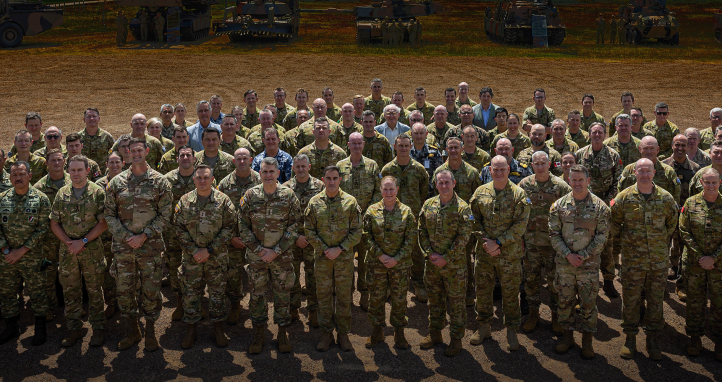
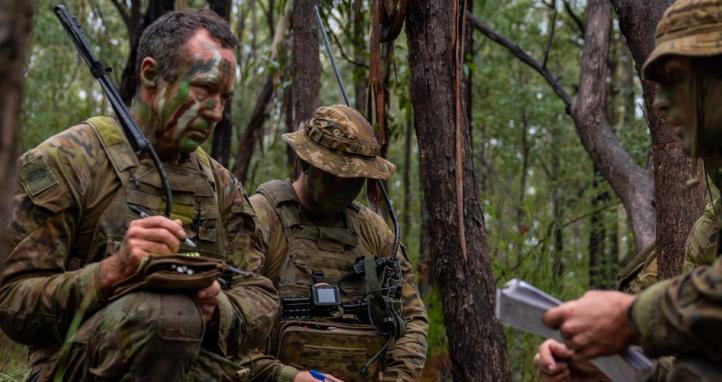

Army’s NCO and WOs are built around high‑tempo, high‑risk environments where discipline, military justice literacy, and command responsibility are exercised daily. By contrast, IGADF audits routinely highlight that RAAF has the weakest understanding of the military justice system of the three Services, largely due to its more controlled operating environment and the limited disciplinary authority exercised by Air Force NCOs. This disparity is structural, not personal, and cannot be bridged simply through shared PME.
Attempting to “integrate” these cultures at the mid‑level (SGT–WO2) risks lowering Army’s standards to meet the lowest common denominator. Instead of producing stronger joint leaders, it would create NCOs who are integrated in name only, while lacking the disciplinary and doctrinal foundations required for credible leadership in land operations.
A more realistic and beneficial approach is to focus integration at the strategic end of the enlisted spectrum, where Service cultures converge naturally. The ADF should establish a mandatory WO1 Strategic Leadership Course to lift Tier A WO1s’ strategic literacy, policy understanding, enterprise leadership skills, and joint planning competence. This is where integration delivers genuine value — not by flattening standards at the tactical and organisational levels, but by strengthening strategic capability where the Services already intersect.
History doesn’t bode well for excessive centralisation.
The premise for centralisation is the flawed belief that competition, subsidiarity and federalism are wrong. Sadly people exist on a distribution curve. They need empowerment, not cookie cutting.
The Australian Army has a strong history of innovative, which is based on a large degree of freedom of thought, word and deed. As for Army centralisation, we only have to look at the dilution of the Corps system, which has affected doctrine and training in particular.
RAAF and RAN are different and have their own unique attributes and requirements. There are more differences, than similarities between the services.
We do have a responsibility to use resources well - IAW the PGPA, effective, efficient, economically and ethically. Where efficiencies can be gained, why not, but the cost should not be diluting service cultures.
Centralisation dilutes and stymies the very virtues we need. We need to work out how to empower, rather than constrain.
The proposal also appears to oversimplify organisational complexity. Modern military organisations are generally understood to function as complex adaptive systems rather than mechanistic bureaucracies. Snowden and Boone (2007) argue that complexity is best managed through adaptation and decentralised learning rather than increased central control. Throughout the paper there seems to be an implicit assumption that central governance will naturally produce greater consistency, collaboration and effectiveness, yet this causal relationship is asserted rather than demonstrated. Large centralised organisations frequently experience slower decision-making, reduced adaptability and increased administrative burden, but these potential trade-offs are not addressed.
A related issue is the repeated assertion of causal relationships without supporting evidence. Statements suggesting that integrated education will improve readiness, that shared education will strengthen interoperability, or that central governance will improve quality are presented as conclusions rather than hypotheses requiring validation. This risks confusing correlation with causation. I would have expected to see comparative evidence, longitudinal studies or measurable outcomes supporting these claims before they are presented as policy recommendations.
I also found the absence of any discussion regarding opportunity cost noteworthy. Every significant organisational reform consumes finite resources. Creating and sustaining a central academy would require infrastructure, governance arrangements, instructor development, curriculum design and ongoing staffing. Those resources would inevitably come from elsewhere within the Services. Likewise, experienced Warrant Officers and senior NCOs assigned to the academy would no longer be available within operational units. Good public policy analysis generally evaluates not only the preferred option but also the costs of pursuing it instead of alternative approaches.
The literature selection also appears somewhat one-sided. Throughout the proposal, examples supporting centralisation are presented, but there is little acknowledgement of evidence that challenges the proposal's assumptions. There is no discussion of unsuccessful military education reforms, bureaucratic expansion, governance difficulties or cases where centralisation reduced organisational agility. From an academic perspective, this introduces confirmation bias. Robust scholarship typically seeks to examine evidence that both supports and challenges a proposed solution.
Similarly, the international comparisons raise questions about survivorship bias. Successful allied models are highlighted, but unsuccessful reforms or programs that failed to achieve their intended outcomes are absent from the discussion. Without examining both successful and unsuccessful cases, it is difficult to determine whether centralisation itself contributed to the observed outcomes or whether other contextual factors were responsible.
The governance model also appears internally inconsistent. At various points the proposal advocates both central governance and Service ownership of curriculum. These objectives are not necessarily compatible. Institutional theory suggests that organisations experience tension when authority and autonomy are distributed ambiguously. The proposal would benefit from clearly identifying who ultimately owns curriculum, who resolves disagreements between Services, who controls accreditation and quality assurance, and who holds budgetary authority. These governance questions are fundamental to the feasibility of the proposal yet remain largely unanswered.
From a systems engineering perspective, concentrating curriculum development, instructor expertise, governance and quality assurance within a single institution also introduces a potential single point of failure. Defence organisations traditionally build resilience through redundancy and distributed capability. Centralising these functions may increase efficiency in some respects but also increases vulnerability to disruption. This trade-off deserves greater consideration.
I also think the proposal underestimates the significance of organisational culture. The Navy, Army and Air Force have developed distinct professional identities, traditions and approaches to leadership over many decades. Edgar Schein's work on organisational culture suggests these characteristics are deeply embedded and not easily standardised through common education alone. While joint understanding is certainly valuable, the proposal seems to assume cultural convergence without providing evidence that such convergence would actually occur.
The proposed measures of success would also benefit from greater methodological rigour. Outcomes such as improved supervision, stronger collaboration and increased readiness are desirable objectives, but they are not operationally defined. Without measurable indicators, baseline data and a clear evaluation methodology, it will be difficult to determine whether any observed improvements result from the academy itself or from unrelated organisational changes.
The international comparisons would also benefit from greater contextual analysis. Policy transfer literature cautions against assuming that models successful in one nation will automatically succeed in another. Australia's strategic environment, force structure, personnel system and organisational culture differ considerably from those of many allied militaries. A more convincing argument would explain why those differences do not materially affect the proposal's applicability.
I also believe the proposal would benefit from considering alternative organisational models. Mintzberg's work on organisational structures suggests professional organisations often perform best when expertise remains decentralised rather than concentrated within machine bureaucracies. The proposal assumes centralisation is inherently advantageous but does not compare it against hybrid or distributed alternatives.
Another notable omission is formal risk analysis. A proposal of this scale would ordinarily identify and assess implementation risks such as instructor shortages, governance disputes, curriculum obsolescence, accreditation delays, Service resistance and budget pressures. While the proposal addresses some practical concerns, it stops short of undertaking a structured risk assessment consistent with accepted policy development frameworks.
Finally, I think the proposal would be strengthened by considering organisational resilience. Taleb's concept of Black Swan events reminds us that institutions should be designed to remain effective during unexpected disruption. Concentrating leadership education within a single academy may create efficiencies, but it also increases dependence on that institution. A distributed or hybrid education system may ultimately prove more resilient under conditions of crisis.
Overall, I found the proposal engaging and thoughtfully presented, but I remain unconvinced that it demonstrates centralisation to be the optimal solution. At present, the paper appears to advocate for centralisation first and then assemble supporting arguments, rather than systematically comparing centralised, decentralised and hybrid models against common evaluation criteria. I believe the proposal would be significantly strengthened by addressing these assumptions directly, incorporating disconfirming evidence, clearly articulating governance arrangements, undertaking formal risk analysis and supporting its causal claims with empirical evidence rather than assertion. Doing so would elevate the paper from a persuasive advocacy piece to a more rigorous and defensible policy analysis.