Article Summary
Helicopter capability is best understood as the interaction between mission requirements, payload, and operating environment rather than as a fixed property of an aircraft type. A systems-based analytical framework demonstrates how payload and environmental demands consume the performance margins that determine whether a mission can be flown safely, even when cruise performance appears ample. The piece concludes that treating capability as a system rather than a specification enables better mission planning, more informed risk decisions, and sharper judgements about future fleet acquisition for military and civilian rotary-wing operations alike.
A helicopter conducting a search-and-rescue mission along the littoral coasts of Papua New Guinea may appear to have ample performance to complete its task. At sea level, in moderate temperatures, carrying a relatively light payload, the aircraft can hover comfortably, manoeuvre freely, and retain sufficient performance margins to respond to emergencies.
Now consider the same helicopter, with the same crew, tasked to insert soldiers into a remote patrol base in the Highlands of Papua New Guinea. The mission may only be a few hundred kilometres away, but the operating conditions are fundamentally different. Higher elevation, warmer temperatures, and a heavier payload can significantly reduce helicopter performance. The helicopter may still have enough fuel to reach its destination, yet lack the power margin required to safely hover, land in a very confined area, or continue flight following the loss of an engine.
The distinction may not be immediately obvious. Helicopter capability is often discussed in terms of range or how much payload it can carry. While these factors are important, they are not always the first limitations encountered during operations. In reality, the most significant constraints are often environmental conditions and payload. As weight, temperature, and altitude increase, the performance available to the crew decreases – sometimes rapidly.
This has practical implications across Defence. Planners determining capability mission requirements, logisticians calculating resupply requirements, and Capability Operators evaluating future fleet acquisitions all influence helicopter performance through the demands they place on the aircraft. Every additional soldier, pallet, or piece of mission equipment consumes performance margin. In benign conditions, the effect may be negligible. In hot, high, or demanding environments, it can determine whether a mission remains viable.
This paper discusses that helicopter capability should be understood as the interaction between mission requirements, payload, and environmental conditions rather than as a fixed characteristic of an aircraft type. Drawing on a systems-based analytical framework and using the Airbus Helicopters EC145 as an illustrative example, it demonstrates that hover performance and one-engine-inoperative (OEI) capability (or in other words, single engine operations) are often the first performance attributes to degrade as operating demands increase. Understanding these constraints enables better planning, more informed risk decisions, and more effective employment of rotary-wing aviation in both military and civilian operations.
Why This Matters. Modern helicopters are expected to perform a wide variety of tasks, often within the same operational cycle. A single platform may conduct casualty evacuation in the morning, transport supplies in the afternoon, and conduct personnel insertion/extraction into a remote location that evening. Each mission imposes different demands on the aircraft and its crew.
The challenge for planners is not simply determining whether a helicopter can fly from one location to another. The more important question is whether it can complete the mission safely, with the required payload, in the environmental conditions that exist on the day.
Answering that question requires more than aircraft specifications and “glossy brochure” performance figures. It requires understanding the practical relationship between payload, operating environment, and aircraft performance. That relationship often determines what a helicopter can actually achieve.
Why Helicopter Performance Changes. Unlike fixed-wing aircraft, helicopters expend a significant amount of power simply remaining airborne. Every kilogram of personnel, equipment, fuel, or cargo increases the power required to hover and manoeuvre. Environmental factors such as altitude and temperature further reduce the efficiency of the rotor system and engine performance.
The result is a simple but important relationship: as payload, temperature, and altitude increase, available performance decreases.
For many military operations, this has practical consequences. A helicopter may technically remain within its certified weight limits while still lacking the performance margin necessary to safely conduct a confined-area landing, rooftop approach, high-altitude insertion, or shipboard operation. The limiting factor is not whether the aircraft can fly, but whether it can complete the mission safely while retaining sufficient performance margin to respond to unexpected events.
One area of particular importance is single engine performance, technically defined as OEI performance. During many operations, especially in populated areas or difficult terrain, crews rely on a helicopter's ability to continue safe flight following the loss of an engine. As operating conditions become more demanding, these OEI margins can deteriorate rapidly.
This means that two missions using identical helicopters may bring very different levels of operational risk.
A Practical Planning Problem. For planners, the challenge is translating these variables into an understanding of whether a mission remains feasible. The answer is not always obvious because the capability emerges from the interaction of three factors:
- What the mission requires – defined requirements.
- What the aircraft is carrying – payload.
- The environment in which it must operate.
A systems-based approach provides a way to bring these factors together.
Rather than assessing aircraft performance through a series of disconnected calculations, the framework evaluates the mission as a complete system. It considers payload, fuel, environmental conditions, and aircraft limitations simultaneously, producing a clear assessment of mission viability and highlighting the factors that most constrain performance. In addition, with modern day computing algorithms, these calculations can be defined and computed quickly and with accuracy.
Importantly, the intent is not to replace pilot judgement. Rather, it provides commanders and planners with a repeatable method for understanding aspects of operational performance risk before the mission begins.
What the Analysis Shows
When representative mission profiles were examined using an Airbus Helicopters EC145 helicopter, a clear pattern emerged.
Cruise performance generally remained acceptable across a wide range of scenarios. Range and endurance often exceeded mission requirements. However, hover performance and single engine capability deteriorated much more rapidly as payload increased or as environmental conditions became more demanding.
In practical terms, this means that a helicopter may still possess adequate fuel to complete a mission while lacking the performance margin required to safely conduct the most critical phase of flight: landing, hovering, departing, or responding to an emergency.
For example, reducing payload by a relatively small amount can restore sufficient hover performance to make a mission viable. Similarly, using a Forward Arming and Refuelling Point (FARP) may allow fuel loads to be reduced while maintaining operational reach. These trade-offs are precisely the kinds of decisions that planners and commanders need.
Conclusion
Helicopter capability is not a fixed characteristic of an aircraft published through slick marketing. It is a product of the mission being flown, the payload being carried, the environment in which the aircraft operates, and the mathematical interaction of these factors.
A systems-based assessment framework helps translate these interacting factors into practical operational decisions. More importantly, it reveals an insight to the proposed mission: hover performance and one-engine-inoperative margins are often the first capabilities to degrade as payload, temperature, and altitude increase.
For military planners, this means that the critical constraint on helicopter operations is often not how far an aircraft can fly, but whether it can safely perform the task once the mission is underway.
Recognising this distinction leads to better planning, more informed risk decisions, and ultimately more effective use of rotary-wing capability.
Technical Annex: Analytical Concept Model
The annex is intended to show the fundamentals of the analytical basis and the systems engineering methodology of the decision-support framework.
Purpose of the Model
The model combines three variables:
- Mission Requirements (people, equipment, fuel, range, loiter time).
- Environmental Conditions (temperature, altitude, air density).
- Aircraft Capability (weight limits, available power, OEI performance).
The objective is to determine whether a helicopter can safely conduct a mission and, if not, identify the mathematical factors driving any potential performance shortfall, using classical helicopter aerodynamic equations and performance modelling.
Core Analytical Logic
All-Up Weight (AUW)
The starting point is determining aircraft weight:
Mission feasibility requires:
where:
- AUW = All-Up Weight
- MTOW = Maximum Take-Off Weight
Exceeding MTOW immediately results in a no-go outcome.
Hover Power
Hover flight represents one of the most demanding flight conditions. It is simply computed as the sum of the induced and profile power values.
where:
- Induced Power supports aircraft weight, and is simplified mathematically as:

- Profile Power overcomes rotor blade drag, presented in equation form as:

where:
 = Aircraft weight
- ρ = Air density
 = Rotor disc area
This relationship explains why altitude, temperature, and weight significantly influence hover performance.
Hover Margin
The framework evaluates the remaining power available after hover requirements are met.
Typical planning assumptions:
- ≥ 10%: acceptable margin
- < 10%: increased operational risk
- ≤ 0%: hover impossible
Representative Hover Performance Trend
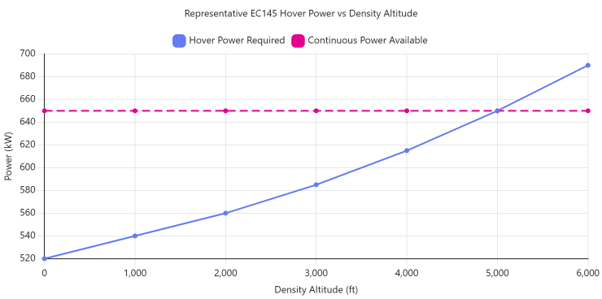
Figure A-1: Representative Hover Performance Trend
Interpretation
As density altitude increases, hover power required rises while available engine power remains relatively constant.
The helicopter may still have fuel to complete the mission, but may no longer possess sufficient margin to safely hover, land in a confined area, or recover from an unexpected event.
The graph illustrates why mountain operations and "hot-and-high" environments often become performance-limited before range-limited.
One Engine Inoperative (OEI)
For many military and emergency-service operations, OEI capability is a critical safety consideration.
The assessment compares the required power determined mathematically versus the available power produced by the helicopter, in either ‘normal’ or ‘OEI’ operating conditions.
If this condition is not met, OEI performance becomes the limiting factor.
This is particularly important for:
- Urban operations
- Rooftop landings
- Shipboard operations
- Mountain approaches
- Tactical insertion and extraction
Forward Flight Performance
Like Hover Power, Forward-flight power consists with the addition of Parasite drag power, which is caused primarily by the helicopter shape moving through the air.
where:
- Induced power decreases as speed increases.
- Parasite drag power increases rapidly with speed.
- Profile power remains relatively constant.
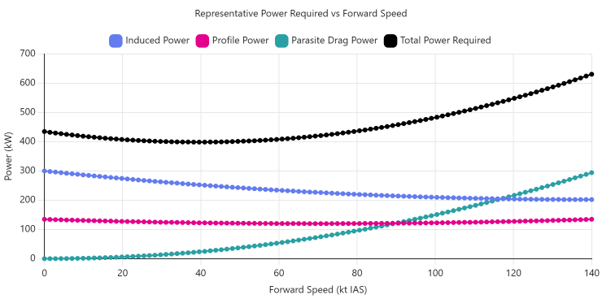
Figure A-2: Representative EC145 Power Curve
Interpretation
The familiar "bucket" shape of helicopter performance.
This curve illustrates:
- The speed for best endurance.
- The speed for best range.
- Significantly higher power requirements at high airspeeds.
Most importantly, the figure demonstrates why cruise performance often remains acceptable even when hover margins are becoming critical.
Decision Rules Applied by the Model
| Metric | Assessment |
| AUW vs MTOW | Go / No-Go |
| Hover Margin | ≥10% preferred |
| OEI Capability | Mission dependent |
| Range | Must satisfy task plus reserves |
| Endurance | Must satisfy task plus loiter |
| Reconfiguration Time | Mission dependent |
Key Technical Finding
The analytical model consistently shows that:
- Payload increases reduce hover and OEI margins first.
- High temperature and altitude accelerate performance degradation.
- Range and endurance often remain acceptable after hover margins have become limiting.
- Payload and environment are therefore the dominant operational constraints on helicopter capability.
Helicopter performance should not be viewed as a fixed platform characteristic. It is the result of the interaction between mission requirements, payload, and operating environment. The first question for planners should not be "How far can it fly?" but rather "Can it safely perform the task once it gets there?"