
The Australian Army exists for one purpose: to fight and win Australia’s wars. That purpose ultimately demands organised, lawful violence; the capacity to seek out, close with, and kill the nation’s enemies on land.
In recent decades, however, it has become easier to talk about modernisation, preparedness, and resilience than to speak plainly about what soldiering is for. Essentials of Land Warfare Volume 1: The Soldier cuts through that ambiguity. It is a deliberate reminder of why the Army exists, what it demands of its people, and why warfighting, not comfort, process, or abstraction, must remain the foundation of the profession.
Overview and purpose of The Soldier
Essentials of Land Warfare Volume 1: The Soldier is a foundational professional military text produced by Army Headquarters, recently released in March 2026, under the authority of the Chief of Army and the Regimental Sergeant Major of the Army. It is designed to articulate, codify, and reinforce what it means to be an Australian soldier, with an explicit and unambiguous emphasis on combat, killing, discipline, cohesion, and moral responsibility in war. The document is not a tactical or technical manual; rather, it is an institutional statement of identity, ethos, and professional obligation, written for soldiers of all ranks but particularly directed at officers and non‑commissioned officers as custodians of the profession.
The handbook emerges at a time of strategic recalibration, responding directly to the National Defence Strategy and to the findings of the Royal Commission into Defence and Veteran Suicide. Its purpose is twofold: to prepare soldiers mentally, morally, and socially for the realities of high‑intensity land warfare, and to do so while strengthening resilience, ethical conduct, and long‑term psychological health across the force.
The Soldier is appropriately laced with quotes and references to Australian Army histories and war diaries. These first-hand accounts of war, of soldier’s human reactions to violence of war, provide a real and tangible connection of legacy to the reader. They invoke images that help us to understand and relate to their experience in conflict. More importantly, these experiences also help present-day soldiers prepare themselves for the next conflict.
The Battlefield
The opening thematic section, The Battlefield, establishes the irreducible reality of land warfare: it is violent, lethal, exhausting, morally confronting, and psychologically corrosive. Drawing heavily on Australian operational history – from Gallipoli and Kokoda to Korea, Vietnam, Afghanistan, and Iraq – the text reinforces that technology does not remove brutality from war, nor does it negate the centrality of close combat and killing.
“The Soldier” also reminds of previous relevant lesson learnt for example T.R Fehrenbach, the Korean war historian, reminds us that:
You may fly over a land forever; you may bomb it, atomise it, and wipe it clean of life – but if you desire to defend it, protect it, and keep it for civilisation, you must do this on the ground, the way the Roman Legions did – by putting your soldiers in the mud.
This section is presently particularly relevant where advanced technology, remote systems, and information warfare risk obscuring Army’s core function. The document forcefully asserts that the purpose of the Army is to seek out, fight, kill, and defeat Australia’s enemies on land, regardless of enablers or domains. In doing so, it re‑anchors the profession in physical, human conflict rather than abstraction or management theory.
The Soldier as a Moral Actor; Killing, Fear, Death, and Moral Injury
Throughout The Soldier, one of the most striking and professionally important themes of the handbook is its direct engagement with killing as a soldier’s duty. Unlike many contemporary military publications that sanitise or euphemise violence, this text states plainly that killing is the essence of battle and an unavoidable obligation of soldiering. This is important for many of us who came of age as Army leaders during an age of counterinsurgency or later generations of training-centric Army life. This theme reasserts that no amount of technological advancements can remove the Army’s core function required by Australia: organised and lawful killing on land.
This responsibility is articulated in The Soldier by describing the contract for unlimited liability; the lawful obligation to kill and risk death. This is framed not as personal heroism or elitism, but as the basis for the unique moral authority and public trust granted to soldiers by Australian society. It positions the soldier as a servant of the nation, morally constrained, politically neutral, and accountable. This distinction – between a disciplined soldier and an unconstrained warrior – is one of the document’s most important theoretical contributions at a time when military identity risks drifting toward either corporate managerialism or romanticised violence.
Importantly, The Soldier does not glorify killing; instead, it treats it as a profoundly moral and psychological act that demands preparation, ethical framing, and disciplined restraint. The sections on atrocities, lawful killing, and the laws of armed conflict emphasise that uncontrolled violence corrodes the individual, the unit, and the legitimacy of the Army itself. I particularly found resonance with a quote from WO2 Tommy Munyarryun:
Every soldier is a warrior (that should be expected), but not every warrior is a soldier. A soldier lives by a code and serves a higher purpose; there are many warriors who do not.
Additionally, The Soldier reminds us that just because we are soldiers, that in itself does not make use special.
You are not elite, and you are not better than Australians who do not serve and who have not served.
This is a clear corrective to both moral relativism and warrior romanticism, reinforcing the Army as a profession governed by law, honour, individual discipline, humility, and national trust rather than raw aggression.
The soldier as a disciplined and self‑controlled actor, with character
A recurring theme throughout the handbook is that discipline is not blind obedience, but cultivated self‑control reinforced through routine, standards, and repetition. Drawing on historical examples and ethical philosophy, the document argues that discipline is the first line of defence against both battlefield failure and moral collapse.
The emphasis on discipline, austere training, and the rejection of unnecessary comfort reflects a deliberate counter‑cultural stance. In an era when organisational culture often prioritises comfort, risk avoidance, and wellbeing as ends in themselves, the text makes the case that hardship is protective, morally formative, and essential to preparing soldiers for the stress of killing and potential trauma. Soldiers are expected to think, act, and accept responsibility especially in ambiguity and chaos. The axiom of “if in doubt, do something” is not a call to recklessness, but an affirmation that decisive initiative grounded in purpose and trust is central to Australian land warfare success.
For my own reflection on how this is relevant, I read that the soldier is not a passive executor of system‑generated tasks, but an active moral agent whose judgment can determine success or failure in lethal circumstances when trusted to act with disciplined initiative.
The Soldier for life; Fraternity and Cohesion
The themes of mateship, trust, confidence, and unit identity articulate a distinctly Australian conception of military cohesion. Cohesion is shown not as sentimentality, but as a practical combat multiplier sustained by shared hardship, competence, and mutual accountability.
The document also offers cautionary guidance, noting that cohesion can become toxic when loyalty to mates supersedes loyalty to mission, law, and commanders. This balance is critical in addressing lessons from recent conflicts and inquiries and reinforces the Army’s identity as a self‑regulating profession rather than a tribal collective.
The Soldier also describes the protective aspects of identity. The concept of soldiering beyond service can be helpful but does require balance. The Army is both a war‑fighting institution and a contributor to national character, producing citizens capable of leadership, service, and moral courage long after uniformed service ends. One need only see our Australian community every 25th of April or every 11th of November to understand that soldiering offers a paradigm of national identity for Australian society.
What The Document Is
This document is:
- A foundational text, useful for PME, on the nature of soldiering and land warfare. It provides a strategic cultural document aligned to national defence priorities and professional renewal.
- A clear institutional statement of Army’s purpose: to fight and kill Australia’s enemies lawfully and decisively. This appears to be a landmark to provide correction against drift away from distractions and back towards warfighting as Army’s central reason for being.
- A moral and cultural guide for professional identity, discipline, cohesion, and ethical violence.
What The Document Is Not
This document is not:
- A tactical, technical, or procedural manual.
- A comprehensive doctrine publication on operations or combined arms.
- A wellbeing or mental‑health policy document, despite engaging deeply with resilience and trauma.
- A recruitment brochure or public relations product.
- A romanticised or sanitised account of war; it is deliberately confronting.
Relevance to the Army at a Moment of Re‑Clarification
At a time when the Australian Army is seeking to re‑clarify its purpose as both a profession and as the national institution responsible for delivering decisive land combat power, this document is profoundly relevant. It answers, directly and unapologetically, why the Army exists: to prepare citizens to fight, kill, and win wars for Australia, while doing so within the bounds of law, ethics, and national trust.
Each chapter offers its own “key takeaways”; however, on my own reflection after reading, I found three key takeaways:
- Land warfare is inherently violent, lethal, and intimate; technology changes context, not the human reality of combat. Killing is the essence of battle and a soldier must be psychologically and ethically prepared to do it lawfully.
- Fear, death, fatigue, discomfort, and boredom are normal and unavoidable features of battle that must be anticipated and trained. The battlefield is often confusing and “empty”, requiring soldiers to fight unseen enemies while under constant threat.
- Realistic, hard training builds the resilience, discipline, and trust required to survive and win in combat.
In this sense, Essentials of Land Warfare Volume 1: The Soldier is less a handbook than a professional manifesto – a recalibration of Army identity toward warfighting first principles, intended to anchor PME, leadership development, and cultural renewal for the foreseeable future.
We, as soldiers, would do well to read it and think well upon it.

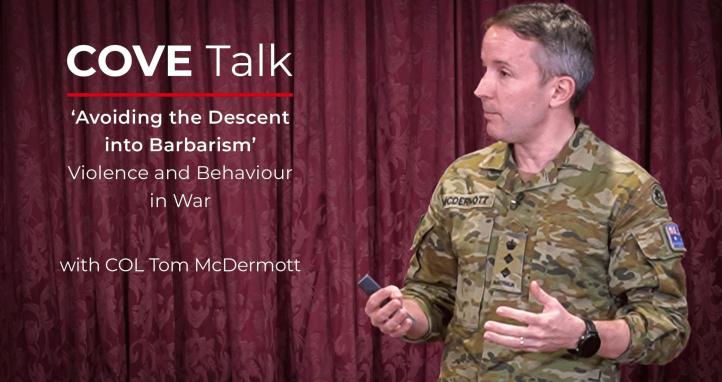
Grateful for his time reviewing the publication and illustrating why we should be putting it on our reading lists.
This is who we are; I can't find a better book that describes the Army to ourselves and to others.
Thanks for reading.
That said, I wonder if a future edition might benefit from slightly deeper engagement with some of the harder chapters of our history. The handbook does acknowledge the risks of atrocity, misplaced loyalty, groupthink, complacency, and moral collapse, but more as theoretical possibilities than recurring historical realities. Some of our most enduring professional lessons come not from when we lived up to our ideals, but from those moments when we fell short.
Pride comes from our achievements; judgement (and professional mastery) from understanding both our successes and our failures. Any profession confident enough to study its triumphs should be equally confident in studying its shortcomings; professional mastery demands we understand both.