Facts and figures
The ‘Know Your Region’ series is designed to support unit and individual professional military education on the Indo-Pacific region. It’s important for all serving members of our military to have a foundational knowledge of the countries and issues in the Indo-Pacific.
On this page:
- A short political history
- Government
- International diplomacy
- US
- Japan
- Australia
- International forums
A short political history
Long before European contact, Marshallese society was already well connected through trade, travel, and shared culture. The Austronesian settlers introduced Southeast Asian crops, including coconuts, giant swamp taro, and breadfruit, as well as domesticated chickens.
The Spanish first sighted the island in the mid-16th century; however, most Spanish vessels avoided the area, preferring Guam as a waypoint to replenish supplies when travelling between the Americas and Asia. Despite no immediate interest in the islands, Spain formally declared ownership in 1592. In 1788, captains Thomas Gilbert and John Marshall passed through the archipelago taking convicts from England to Botany Bay in New South Wales (Australia). They briefly traded with islanders at Mili Atoll, making it the first European contact in nearly 200 years. Subsequent navigational charts and maps named the islands for John Marshall.
From the 1830s through the 1850s, the Marshallese became increasingly hostile to western vessels. Many islanders were abducted and sold into slavery on Pacific plantations. This continued well into the 1870s in a trade known as ‘blackbirding’. In 1899, Spain sold the Marshall Islands to Germany, where they were incorporated into Germany’s Pacific holdings and used for commercial purposes.
Germany’s defeat in World War I ended its Pacific empire. In 1914, Japanese naval forces occupied the Marshall Islands, and in 1920 the League of Nations awarded Japan the South Seas Mandate. Japan expanded infrastructure, introduced formal schooling, encouraged Japanese settlement, and integrated the islands into its imperial economy and strategic planning. By the 1930s, the Marshall Islands had become part of Japan’s outer defensive perimeter. Airfields, naval facilities, and garrisons were constructed across several atolls, transforming them into fortified military spaces.
Following Japan’s defeat in WWII, American military administration replaced Japanese rule. In 1947, the newly formed United Nations (UN) designated the Marshall Islands a part of the Trust Territory of the Pacific Islands (TTPI), placing them under US administration. Under Article 76 of the UN Charter, the U.S. assumed a legal obligation to promote self‑government, economic development, and the political advancement of the indigenous population alongside its strategic interests.
Between 1946 and 1958, the US conducted 67 nuclear tests at Bikini and Enewetak atolls. As a result of the tests entire communities were displaced, land and lagoon ecosystems were contaminated, and the indigenous people were exposed to harmful radiation that produced a short and long-term health crisis. By the 1970s, the Marshallese were demanding constitutional self‑government, accountability for nuclear harm, and political autonomy.
In a 1978 referendum, the Marshallese people made the decision to separate from the broader Micronesian territories and seek independence. On March 1, 1979, the Constitution of the Republic of the Marshall Islands (RMI) entered into force, creating a sovereign state with its own institutions of government while negotiations with the US on future status continued.
A Compact of Free Association (COFA) was signed in 1982-1983 and approved by plebiscites in the Marshall Islands. US Congress enacted the Compact in 1986, at which point it entered into force. Under the agreement, the US has full responsibility and authority for defence in the Marshall Islands, including the right of denial for third party military access to RMI territory. In return, the Marshallese receive substantial economic assistance and can travel, work, and reside in the US without a visa.
Government
The 1979 Constitution (as amended) declares itself the supreme law, guarantees a robust bill of rights, and organises government into three branches – legislative, executive, and judicial. The head of state and government is the President, elected from among the 33 senators of the Nitijela (parliament). The Council of Iroij (traditional leaders) advises on customary issues, including land and traditional practices. Elections are held every four years.
Law
The legal system draws from Trust Territory statutes, Nitijela acts, regulations, common law, and customary law. It includes several levels of courts:
- Supreme Court – the highest court, with final authority over appeals and constitutional interpretation.
- High Court – handles most serious civil and criminal cases and reviews government decisions.
- Traditional Rights Court – decides disputes that depend on customary law, especially land ownership and inheritance.
- District and Community Courts – deal with minor local cases.
International Diplomacy
The Marshall Islands occupies a strategic position in the Central Pacific that has prompted major powers to take an interest. In 2026, RMI diplomacy is defined by a "Large Ocean State" identity, leveraging its geographic importance to secure existential guarantees. The core of its foreign policy rests on three pillars: the COFA agreement with the US, an unwavering diplomatic alliance with Taiwan, and a global leadership role in climate diplomacy.
United States
The relationship with the US is the cornerstone of Marshall Islands diplomacy and the most consequential bilateral partnership the country maintains. The relationship is formalised under the COFA, which recognises the Marshall Islands as a sovereign state but grants the US full responsibility for defence and strategic access in return for financial assistance, access to US federal programs, and migration rights for Marshallese citizens.
From a diplomatic perspective, the US is both a security guarantor and a dominant influence on Marshallese foreign policy. The defence provisions of COFA mean that the Marshall Islands does not maintain a military and does not pursue independent defence diplomacy. This has allowed the country to concentrate resources on development, climate advocacy, and legal issues, but it also creates a loss of autonomy by deferring to US strategic priorities in the Pacific.
The financial dimension of the relationship is equally significant. COFA grants have underwritten the Marshall Islands’ public sector, health system, education services, and infrastructure for decades. Although these grants are transitioning to trust-fund-based arrangements, continued US financial support remains essential. As a result, Marshallese diplomacy places a high premium on maintaining strong support in Washington.
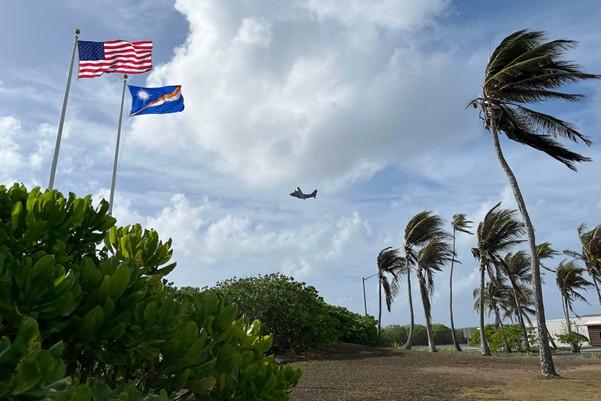
At the same time, the nuclear testing legacy has been a point of friction. While the US has acknowledged responsibility and provided compensation, Marshallese leaders continue to argue that remediation and health support remain inadequate. Diplomatically, the Marshall Islands balances gratitude for US support with persistent advocacy on nuclear justice, often raising these issues in international forums rather than bilaterally to avoid direct confrontation.
In October 2023, The COFA was renewed from fiscal year 2024 to 2043. Under the new agreement, the US has committed approximately US $2.3 billion in economic assistance, which represents a significant increase from prior support. US officials acknowledged that China’s expanding influence in the Pacific was an important – if unstated – factor in background discussions when negotiation and renewing commitments to its Freely Associated States (FAS) partners.
China
The Marshall Islands’ relationship with China is one of caution, and economic pragmatism. The RMI is one of a small number of countries that recognise Taiwan (the Republic of China) rather than the People’s Republic of China. As a result of this recognition, the Marshall Islands does not maintain formal diplomatic relations with Beijing. Marshallese leaders have consistently framed the decision as one of principle and sovereignty rather than transactional diplomacy.
Australia
Australia is a regional security and development partner for the Marshall Islands, secondary to the US. The relationship falls under a broader Australian Pacific engagement strategy that emphasises regional stability, maritime security, climate resilience, and institutional capacity building.
From the Marshallese perspective, Australia is valued for its role in maritime security cooperation. Through regional programs, Australia supports the Marshall Islands’ Maritime Surveillance Division with patrol vessels, training, and technical assistance. This support strengthens the RMI’s ability to police its EEZ, deter illegal fishing, and assert maritime sovereignty, which are critical economic and security objectives.
Australia also plays a role in humanitarian assistance and disaster response, an increasingly significant dimension of security in the Marshall Islands given the highest point of the islands is only several feet above sea level. While differences have occasionally emerged, particularly over the pace and ambition of climate action – the relationship remains positive. Marshallese leaders have used diplomatic channels to push Australia towards stronger climate commitments, framing climate change as the primary security threat facing the Pacific.
Japan
Japan plays a similar role to Australia in providing economic cooperation, maritime support, and development assistance rather than Defence. Japan has long been an important partner for Pacific Island states and is viewed as a reliable, non-coercive actor that respects sovereignty and local priorities.
Fisheries cooperation is a particularly important aspect of the relationship. Japan is a major player in the Pacific tuna industry and collaboration on sustainable fisheries management helps protect a key source of Marshallese government revenue. This economic stability is viewed by Marshallese policymakers as a foundation of national security.
International Forums
Multilateral diplomacy is essential to the Marshall Islands’ international strategy, allowing it to amplify its voice and compensate for limited bilateral power. The country is an active member of the UN, where it has focused on climate change, nuclear disarmament, and human rights. The Marshall Islands has used the UN General Assembly and related bodies to frame climate change as a legal and moral issue, not merely an environmental one.
The Marshall Islands has also been influential in global nuclear diplomacy. Its legal action against nuclear-armed states at the International Court of Justice, though unsuccessful on jurisdictional grounds, highlighted the humanitarian consequences of nuclear weapons. The RMI continues to support the Treaty on the Prohibition of Nuclear Weapons and related disarmament initiatives.
Regionally, the Marshall Islands is an active participant in the Pacific Islands Forum and engages in specialised regional organisations dealing with fisheries, climate adaptation, and development finance.
For more information on Marshall Island diplomacy, see the resources below:
Videos
- Marshall Islands: A third of the nation has left for the US (11:48)
- “We Bear the Nuclear Scars”, Marshall Islands President’s Emotional UN Speech | AC1G (18:00)
Articles
- Nitijela
- The Embassy of the Republic of the Marshall Islands, Washington D.C.
- U.S. Partnership with the Republic of the Marshall Islands – United States Department of State
- Republic of the Marshall Islands NDC 3.0.pdf
- Marshall Islands – Heads of Government | Australian Government Department of Foreign Affairs and Trade
Know your region
Know Your Region series gives you a shortcut to understanding other nations in the Indo-Pacific region.