
Article Summary
The article argues that current Army Health models – built around single-patient evacuation, uncontested airspace, and a centralised casualty regulation cell – fail whenever they are tested against the casualty volumes and degraded conditions of peer conflict, as recent major exercises have demonstrated. It offers a new model – a mass-casualty evacuation system, a Role-2 Forward surgical team, and critical care transfer teams, enabled by decentralised casualty regulation and a standardised trauma logistics system, that can clear a brigade's expected casualties in a single lift. The piece concludes that these capabilities already exist, require minimal capital investment, and now need to be embedded in doctrine, exercised as a system, and scaled across the force before the next major conflict makes the gap fatal.
Executive Summary
The Australian Defence Force (ADF) faces critical gaps in both capability and doctrine to effectively execute a Land-Based Trauma System (LBTS) suitable for Large-Scale Combat Operations (LSCO).1 Current Army Health models for treatment and evacuation remain anchored around systems that carried Australia through operations in Timor Leste and the Middle East Area of Operations. These models relied on small patient volumes, single-patient transport assets, minimally contested environments, and evacuation coordinated by a central Casualty Regulation Cell. Failure occurs every time this model is tested to simulate a peer or near-peer conflict where casualty volumes are higher, air superiority is contested or absent, and communications are degraded. Similarly, this model is not suitable for littoral operations, the ADF’s primary strategic direction.
To preserve the force, maintain morale, and ensure operational resilience, Defence must rapidly shift from a "single-patient, single-practitioner" model to a flexible, scalable, and multi-casualty framework.2,3 We must tackle four major issues: the ability to move large numbers of stretcher-bound casualties, the capability to treat and evacuate surgical patients in the pre-hospital space, a rapidly scalable system of logistic resupply, and doctrine that articulates how to manage a LBTS with these adaptations, fit for modern warfighting. This essay outlines the strategic problem, analyses current progress, and proposes a solution that leverages a range of newly developed capabilities.
1. The Strategic Problem: Higher Casualty Volumes in Contested Environments
For three decades, ADF casualty evacuation has occurred largely in semi-permissive environments. Operations in Timor Leste, Iraq, and Afghanistan allowed for rapid, rotary-wing aeromedical evacuation (AME) and dedicated single-patient land-based transfer. Health assets were rarely threatened and the "Golden Hour" of trauma care was largely guaranteed. Our capabilities and doctrine have been optimised significantly for this operational paradigm.1
The key problem when employing this model for LSCO is casualty volume. Historical modelling fused with the most up-to-date battle casualty calculators indicate that in a fight against a near-peer enemy, a brigade assault against a fixed position can generate 80−100 casualties, with a far higher burden of penetrating injury than was experienced during the Global War on Terror.4,5 These patients are moved to a Casualty Collection Point (CCP), triaged, and then evacuated to higher echelons of care for Damage Control Resuscitation (DCR) and/or Damage Control Surgery (DCS).1
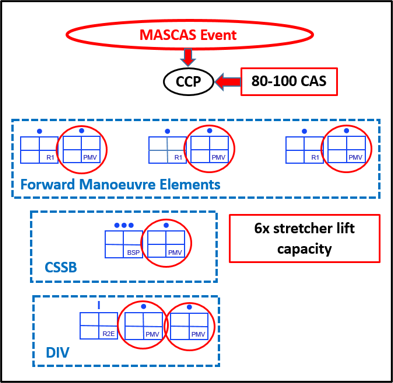
Figure 1: The arrangement of health assets currently deploying into the field to support a combined arms brigade, with the evacuation assets circled in red.
This discrepancy between the number of casualties requiring lift and the stretcher capacity of the MEDEVAC fleet illustrates why the current evacuation model cannot surge to the volume required for high-end warfighting. This truth is regularly illustrated on major ADF exercises. On Talisman Sabre 2025 the final brigade assault generated 130 casualties, of which 28 were able to be moved rearwards from the CCP over the course of a day.
The second challenge is the profoundly negative impact of delay to treatment on casualty mortality.6 Historically, the first point in the LBTS where casualties have access to a surgeon is the Role-2 Enhanced (Role-2E) hospital. This facility is a vulnerable and highly-targetable asset that rightly belongs outside the threat envelope. In a littoral context that may mean on another island. How, then, do we sustain both morale and combat power by preserving access to surgical-level care when contested evacuation is the norm? 2,5 This paper will offer an approach to address these problems, describing a method to achieve the required volume of casualty movement, and a way to position capabilities on the battlefield to provide life-saving surgery for those who will not survive evacuation to divisional assets in depth.
2. The Components: New Pieces to Solve the Puzzle
The 2nd Health Battalion is home to the Army’s largest forward deployable hospital, and is the testbed for a range of enhanced capability projects. The following new capabilities play central roles in addressing the problem of the provision of evacuation and healthcare in contested environments.
Role-2 Forward (Role-2F)
The Role-2F capability has been developed to address one of the most significant challenges facing the LBTS: delivering life-saving surgery within clinically relevant timelines during LSCO. The current health architecture relies on evacuation from Role-1 facilities to a centrally located Role-2E hospital for surgical care. This model becomes increasingly vulnerable when operating across dispersed archipelagic terrain, with degraded communications, and contested evacuation. Under such conditions, critically injured casualties are unlikely to reach definitive surgical care in time to survive. The Role-2F was developed to meet the need to project surgical capability closer to the point of injury.3
The Role-2F is a small, highly mobile, and rapidly deployable treatment facility capable of pushing far forward into austere environments. The capability is built around a multidisciplinary team, comprising emergency physicians, nurses, medics, anaesthetists, and surgical specialists. Their purpose is not to provide prolonged hospitalisation or definitive treatment. Rather, the Role-2F performs resuscitation and DCS on casualties suffering from otherwise unsurvivable injuries, controlling haemorrhage and stabilising physiology; creating the conditions necessary for safe onward evacuation. This capability is critical in LSCO, where the distances between CCP and higher-level hospitals may be substantial and evacuation timelines significantly extended. By positioning life-saving surgical expertise closer to the point of injury, the Role-2F reduces dependence on AME, increases survivability among the most injured casualties, and creates greater freedom of manoeuvre for ground commanders.5 The Role-2F forms a critical component of an integrated approach to casualty management, specifically designed to meet the demands of future LSCO and littoral operations.
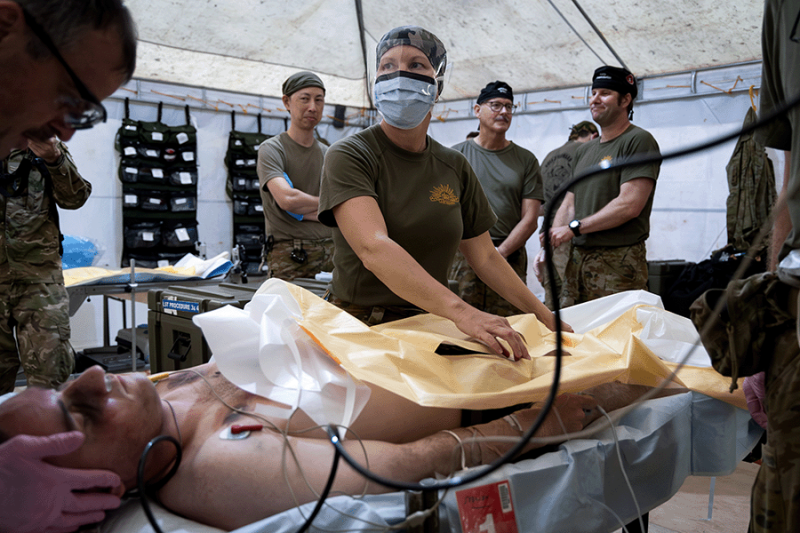
Figure 2: Australian Army Role-2F Nursing Officer treats a patient as part of a casualty evacuation scenario.
Critical Care Patient Transfer (CCPT)
The CCPT team was developed to bridge the capability gap between forward DCR / DCS and higher-level hospital care. Role-1 facilities provide initial resuscitation and stabilisation, and a Role-2F extends the surgical capability towards the point of injury. In both cases, limited patient holding and reliance on retrieval pose significant constraints on their effectiveness. When AME is unavailable, or prevented by a contested operating environment, the safe transport of critically injured and post-DCS patients becomes a significant challenge.
Historically, the ADF has conducted ground-based critical patient transfer on an ad hoc basis. The use of untrained teams employing disparate equipment and unfamiliar platforms poses significant risk to both the patient and the evacuation team. CCPT provides the clinicians, training, and equipment to facilitate safe and effective high-level-care transfer. This enables forward medical elements to maintain operational viability by rapidly decanting their most critically ill patients rearwards.
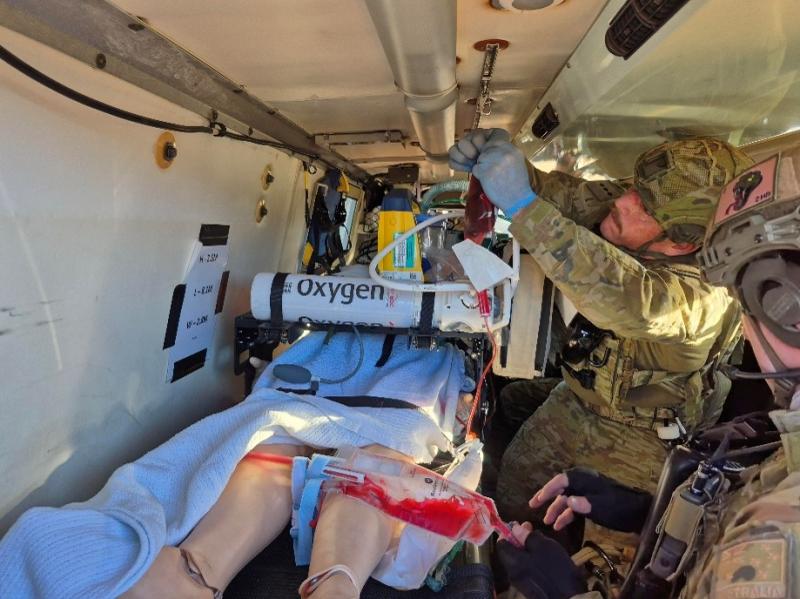
Figure 3: The core CCPT team comprises a critical care trained Medical Officer, Nursing Officer, and a Health Technician who serves as the tactical team leader.
CCPT provides specialist-level decision-making and delivers interventions normally associated with an intensive care environment. These include advanced airway management, mechanical ventilation, invasive monitoring, administration of warmed blood products, and critical care medications. It performs these functions using existing, in-service equipment. It can utilise a wide range of ADF vehicle platforms, depending on availability and required level of protection, including the PMV-A and G-wagon ambulance. This flexible design minimises the overheads on resourcing and logistics required to put teams into the field.
The capability provides critical care evacuation that enables forward surgical elements to continue operating when AME is unavailable, and safely transport complex multi-system trauma from Role-1 facilities to definitive care. It offers a flexible solution that is integral to the broader system-of-systems approach necessary for casualty management in LSCO.
MASCAS Evacuation System
MASCAS (Mass Casualty) scenarios are defined as situations in which casualties exceed available treatment and evacuation capacity, and require deployed health services to rapidly surge evacuation volume with little or no warning.1,2,3 A key feature defining this system’s design paradigm was the requirement to be vehicle agnostic; effective MASCAS surge must use transport assets available in the battlespace and not add to logistic burden.3 The system utilises parts from the RAAF C-130 aircraft patient evacuation module. These components are integrated into a cube structure which secures onto the flatbed of any suitably sized truck. The result is a scalable evacuation system that supports six casualties on standard NATO or folding talon stretchers. When used in the Army’s Rheinmetall 40M truck, the rear deck space supports another six ambulant patients and combat equipment and accommodates a medic for treatment whilst in transit.
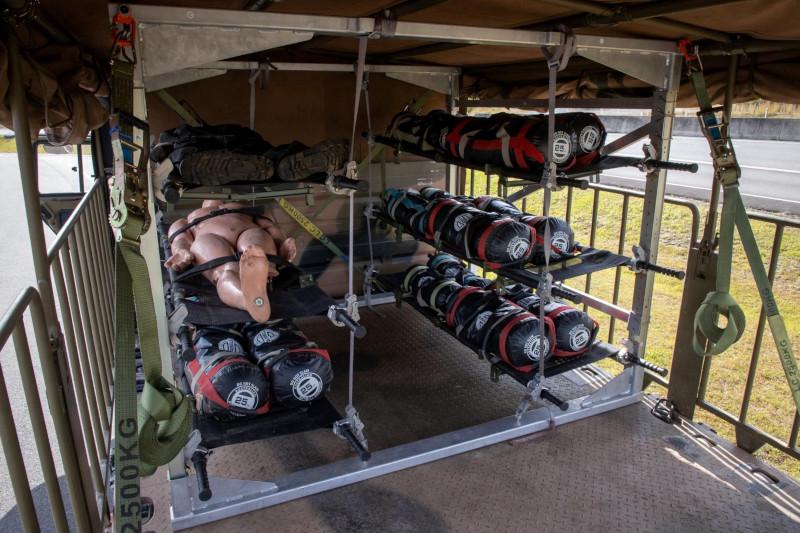
Figure 4: The assembled MASCAS evacuation system, installed within the Army Rheinmetall 40M truck. The project was developed and funded by the RAAF EDGY High Priority Projects program, the ADF incubator for grass-roots innovation projects.
The system can be set up by an untrained team in less than 30 minutes. It can be loaded with six casualties in two and a half minutes, comparable with the time to load a single patient into the in-service PMV ambulance. Testing has clearly demonstrated that it can rapidly clear patients from a CCP far quicker, and at much greater scale, than anything currently in service. Multiple frames can be used in the HX77 heavy rigid vehicle, or in locally acquired commercial trucks, facilitating rapid surge. It can be used for short-term patient holding, in either tents or shipping containers, to supplement bed spaces within other deployed facilities. When not in use, the frame can be flat-packed, taking up only a small fraction of the truck’s overall combat load.
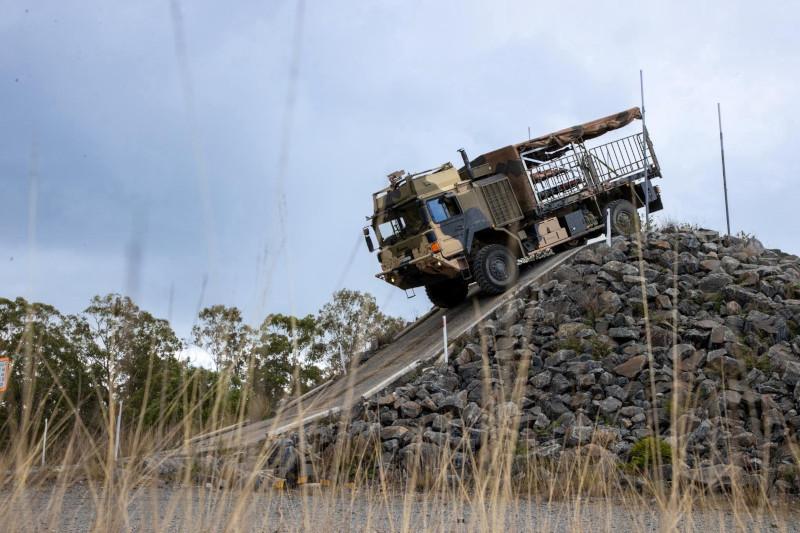
Figure 5: The MASCAS evacuation system undergoing load stability testing.
Testing has demonstrated that the mounted frame loaded with 80 kilograms per stretcher can be used on a 30 percent incline and decline, during off-road movement, and under emergency braking from 80 km/h, safely, and with no significant movement. The system has currently undergone evaluation using weighted bags and patient mannequins. Further use, including carriage of live casualties, will be dependent on the conduct of land materiel certification.
3. The Evacuation Matrix: A System-of-Systems, Ready to Fight Tonight
The fusion of six MASCAS evacuation systems, one Role-2F, and two CCPT teams provides the architecture to address the problem of MASCAS patient evacuation. The primary hub for logistic support and temporary patient holding for a combat brigade is located 10-50 km behind the forward edge of battle area. This node is formed by the Combat Service Support Brigade (CSSB), and the Brigade Support Platoon (BSP), a Role-1 treatment facility with integrated patient holding. Two Rheinmetall 40M trucks provide lift to the BSP into the field. Each would carry one flat-packed MASCAS frame, with the remaining four systems distributed among the vehicles of the CSSB. When a MASCAS event is anticipated or occurring, the six trucks are rapidly reconfigured with the MASCAS evacuation frames, to provide lift for 36 stretcher-bound casualties and 36 ambulant casualties.
Simultaneously, the recognition of a MASCAS event triggers the forward deployment of the Role-2F and the first CCPT team to the CSSB site. Amalgamation of these assets creates a temporary forward surgical node, sited within a protected perimeter, that can utilise the patient holding capacity of the BSP. The Role-2F provides life-saving surgery to patients who may not survive the journey to the Role-2E. Following surgery, the CCPT takes over care of the patient, and provides the retrieval service back to the Role-2E Intensive Care Unit (ICU) in depth. The second CCPT team swaps in and out of the forward node, ensuring minimal holding time.
Patient flow within this model works as follows. The six most critical surgical cases who will not survive the journey to the Role-2E are sent using the PMV ambulances to the forward surgical node for damage control surgery. These ambulances can simultaneously backload 24 seated casualties. Lower acuity patients are managed by the BSP holding team. Three 40M trucks evacuate to the forward Role-1 teams and the BSP. The remaining three trucks carry a mixture of non-urgent surgical and ambulant casualties directly to the Role-2E.
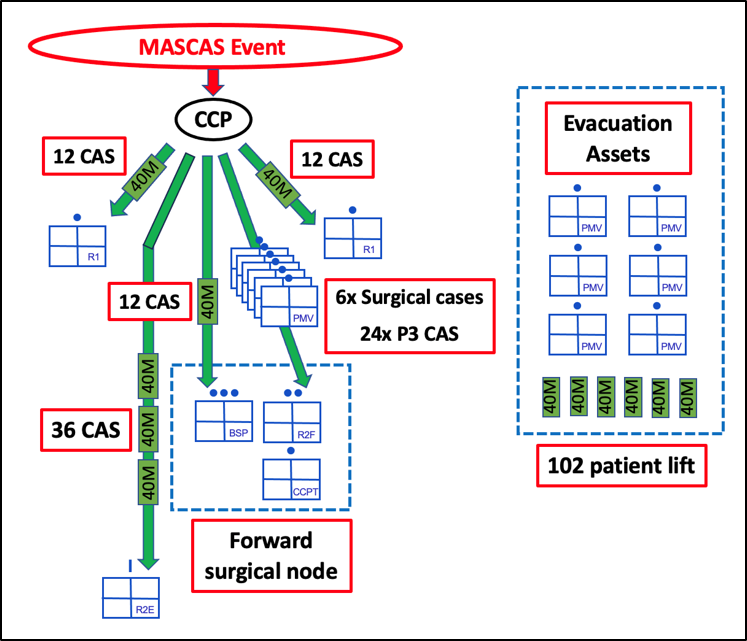
Figure 6: Wire diagram depicting the patient flow following a MASCAS event, and the capability of the evacuation fleet.
The end state is a system that has the capacity to clear and treat:
- 6 x urgent surgical casualties to the Role-2F
- 36 x casualties within the Role-1 facilities
- 24 x ambulant casualties to BSP holding
- 18 x delayed surgical cases and 18 x ambulant casualties directly to the Role-2E
The battlefield can be cleared with a single lift of the evacuation chain. The most urgent cases get to a surgeon in the quickest time possible, and trauma specialists transport these critical casualties rearward to higher-level care.
4. The Enablers: Critical Interdependencies
The fusion of the Role-2 Forward, CCPT team, and MASCAS evacuation system addresses the physical challenge of treating and moving large numbers of casualties. Their collective function can be enhanced with a range of enabling concepts that transform these capabilities into a coherent and scalable trauma system.
Decentralised Casualty Regulation (CASREG)
Health capabilities on the modern battlefield must be mobile and capable of operating independently, organised as a decentralised and dispersed model wherever possible.1,3 In practice, casualty regulation is currently conducted by a centralised CASREG cell, which is reliant on persistent communication. This link is vulnerable to failure in the frictions of combat. When this occurs, the CASREG node loses visibility of the location of evacuation assets and the evolving condition of bedspaces, and ambulances sit idle at forward positions. Aligning our practices with modern doctrine on mission command requires a subtle shift to a more diffuse model of command authority.3,7 When a forward node has the greatest situational awareness, authority for tasking and release of evacuation assets should be pushed down to the tactical level.3 Centralised oversight remains optimal when it can be achieved, but the system must be practised and capable of functioning when disconnected from higher headquarters. Decentralisation provides structural resilience by diffusing decision-making authority to the point where quality of information is highest, allowing patient flow to continue despite degraded communications or rapidly changing battlefield conditions.3,7
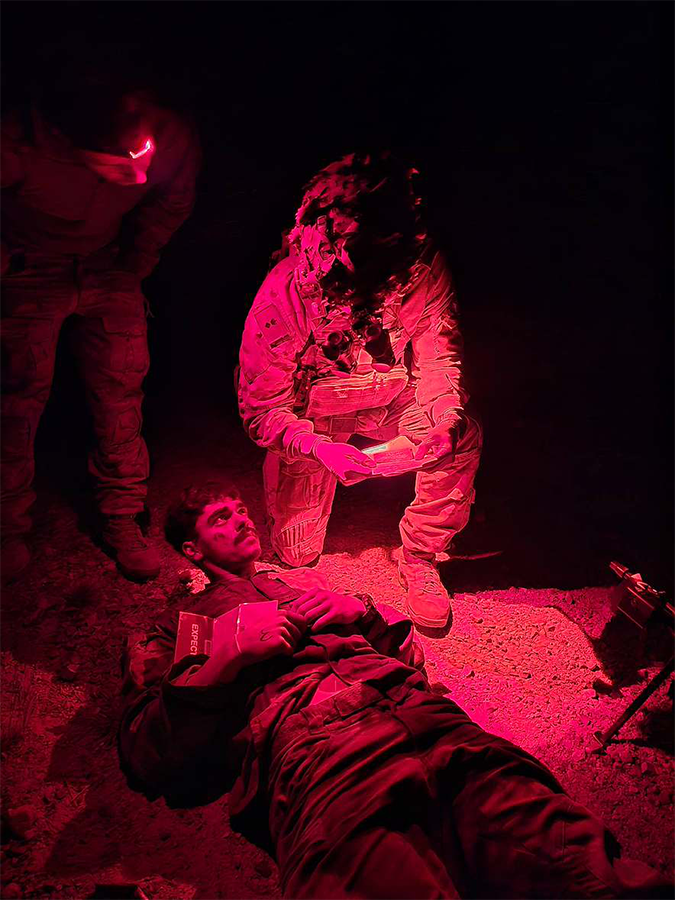
Figure 7: Medical Officers from 2nd Health Battalion treat simulated casualties under tactical conditions at the forward triage facility following a night attack.
The MASCAS Triage Node
The MASCAS node is a new concept under development at the 2nd Health Battalion, designed to enhance triage and optimise casualty flow from the CCP. When a MASCAS event is anticipated, the best positioned Role-1 within the battlespace is moved forward to the CCP. This node contributes three critical functions. First, it provides Medical Officer-led clinical decision-making enabled by ultrasound diagnostics – optimising triage and ensuring casualties are directed to the most appropriate destination within the network. Second, it provides forward CASREG capability with a dedicated health commander responsible for managing tactical communications and evacuation coordination. Third, it provides senior medic oversight of casualty staging and loading of evacuation platforms. Importantly, the MASCAS node also brings a much larger quantity of blood and trauma consumables as far forward as possible. By collocating triage, transfusion capability, and evacuation coordination, the node becomes the command-and-control hub around which the entire mass casualty response is coordinated.
Standardised Trauma Components and Resupply
Effective and responsive logistic sustainment is one of the key decisive factors in LSCO and essential to achieving a high volume of casualty throughput within the LBTS.3,8 Current health resupply uses line-by-line ordering that is largely unchanged in both form and function to systems dating back to World War II.9 The 2nd Health Battalion has led efforts to develop a system suitable for high-end warfighting, by completely standardising Role-1 level care. Rather than viewing consumables and medications as individual items, treatment capability is built around modular components with known casualty treatment volumes. Built from roll-bags and front-loaders, the system offers consistent item layout in all forward echelons, reducing cognitive burden on clinicians operating under pressure. It is supported by an automated accounting tool that tracks readiness, generates replenishment requests, and aggregates stock requirements.
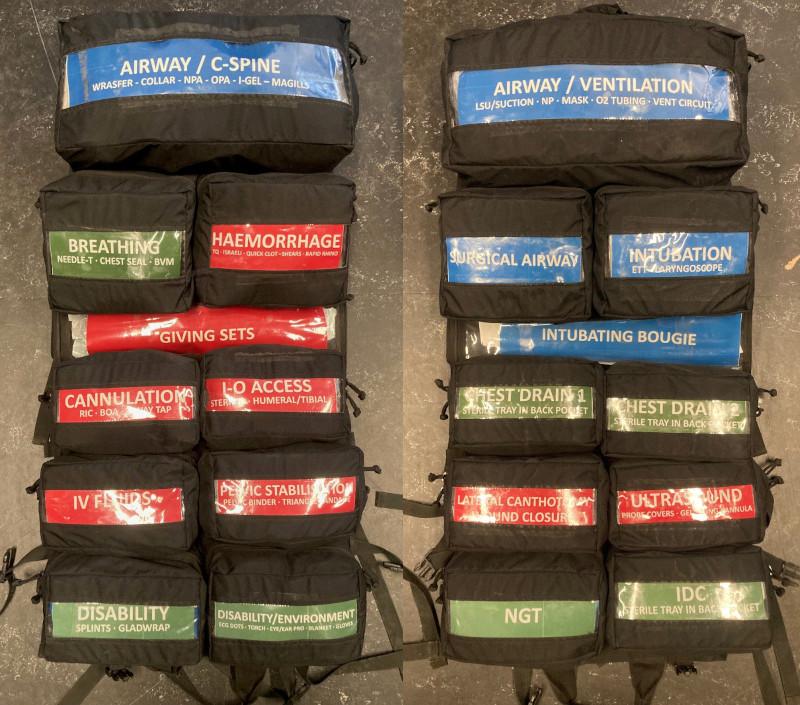
Figure 8: The Medic and Procedural roll-bags that form the backbone of the standardised system of medical consumables across Role-1 care in Army Health Services.
This system has been codified by 2 Brigade as the standardised Role-1 across Army. The next challenge is to assign stock numbers (NSNs) to these components, so they can be produced at scale and held at Joint Logistic Units. The final body of work is to completely standardise the LBTS, by integrating these components into the Role-2E hospital, and the broader tri-service deployed health environment. This will massively reduce logistic burden, facilitate automated push systems and forecasting, and will allow trauma capability to be regenerated rapidly following MASCAS events, truly enabling theatre-level health operations.
5. Recommendations and Conclusion
Our ability to evacuate and treat the volume of trauma casualties anticipated in LSCO is hampered by systems optimised for the last war.1 However, the development of new capabilities places us on the cusp of being able to deploy a LBTS aligned with contemporary health doctrine and suitable for high-end warfighting.1,3,10
Once we can field a system that works in its most basic orientation, we can apply and refine it for the challenges of littoral conflict that we must be ready for in our near region. The MASCAS evacuation system represents a viable and multi-platform way to evacuate large numbers of patients. The Role-2F may provide the only surgical capability that can save the most critical patients on the battlefield and may represent the only operative care available within an island chain. CCPT allows the most severely injured casualties to survive the journey to higher-level care. Doctrinal changes to CASREG and MASCAS triage will optimise the system for the frictions of war. And standardisation of the trauma system sets the conditions to build a health logistics chain that is fit for purpose.
This fused system-of-systems enables deployed health services to rapidly surge capacity during periods of intense fighting. It does so with minimal capital investment. Establishing these capabilities within doctrine, expanding their use to the other health battalions, codifying and mass-producing the logistic components, and exercising these systems in the fused manner described in this paper will significantly improve the provision of Close Health to integrated forces in the land domain. It will preserve the force, maintain morale and trust, and ensure operational resilience in the next major conflict.

Thank you for an insightful paper. The proposed evacuation and treatment matrix provides a valuable framework and warrants consideration as a foundational element of our operational planning.
I would be interested to explore how the model could be refined to incorporate joint force capabilities within an Amphibious Task Force construct, particularly in relation to the integration of command and control, medical, aviation, and maritime support functions.
It’s a really important question – How do we take the model that we choose to articulate in doctrine and then apply it to the practical problem at hand, in this case amphibious assault and littoral operations.
To my mind, the core tenets remain the same, at least back to the beachhead – A rapidly scalable system, with redundant and practiced forward C2 capabilities, with zero reliance on aeromedical support on or near the FEBA. This, enabled by a completely standardised system of resupply back to the LHD is the backbone of the system.
If Army can execute the land-based elements reliably, then integration of the model into the amphibious context is an exercise in fine-tuning, or minimally evolving, a mature and functional system, not reinventing the wheel.
Keen to hear other perspectives from those with contemporary experience in this space!