
Article Summary
The article argues that Army risks learning the wrong lessons if advanced training does not routinely occur in a degraded electromagnetic environment. It makes the case that electronic attack should be treated as electromagnetic weaponry, with some scalable applications available to soldiers beyond a single specialist employment category. It also discusses the practical challenges of training, policy approval, domestic spectrum management, and equipment scale. The article concludes that the Army should change its mindset so it can train more realistically and employ electronic attack more credibly in future conflict.
Electronic warfare (EW) has been a dark art in the Army for too long. EW consists of electronic protection (EP), electronic support (ES), and electronic attack (EA); the latter of which will be the focus of this article.
EW has existed for over 100 years.
The likely first occurrence of EA was in the Second Boer War, with accounts stating that the British would employ searchlights for Morse communications, with the Boers using their own searchlights to disrupt these transmissions.[i] A few years later, the Russians reportedly disrupted Japanese naval communications during the Russo-Japanese War (Semenoff 2014). EA and other categories of EW accelerated after World War I, and today there is a wealth of data and observations on the modern utility of EW.
While I personally do not believe actions in the cyber domain will ever be as pivotal or decisive as kinetic actions, I do believe the domain’s increased use and developing methods of employment have changed the character of war.[ii]
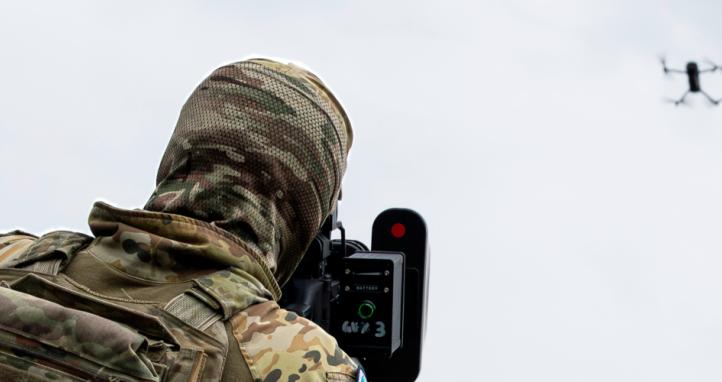
This increase has potentially been driven even further in the past five years by the proliferation of unmanned aerial systems that are currently difficult to destroy by kinetic means, and by the growing prevalence of ‘prototype warfare’.[iii]
Unfortunately, EA is still not well understood by all Army commanders and planners for several reasons. One reason is possibly a historically high level of gatekeeping. In fact, there may be people reading this right now thinking to themselves, ‘Surely writing about EW should be classified.’ However, times have changed, and EA, both in training and operationally, can be delivered much more easily than in the past.
In this article, I argue that EA concepts and their application should be democratised and more widely adopted within the land force. I will first describe why Army training may not be producing accurate lessons by failing to train in an electromagnetically degraded environment. I will then highlight why EA could be more widely employed operationally by soldiers across multiple employment categories, while also noting some practical challenges. I will then analyse domestic training considerations to illustrate why my argument for operational use is feasible.
Article after article describes how EW is prolific in modern battle (see Kilavuz 2024, Summers 2024, Thompson 2023). Unfortunately, the Australian Army has struggled to incorporate EW into training in a consistent manner.
Some years, there appears to be an increase in training in a degraded electromagnetic environment, but the following year, there is less. There is sometimes reluctance to allow training in an electromagnetically degraded environment where communications and some weapons would be difficult to employ.
The concerns seem to fall into two categories. The first is the safety risk and a desire to ensure all training elements receive sufficient lead-up training before training in such an environment. The second is a desire to ensure that exercising forces can achieve their training outcomes, and rests on the assumption that degraded communications or precision weapons will result in an inability to train.
Both of these positions are understandable, but the risks can be managed effectively.
To address the first point, risk analysis and management are not new concepts to the Army. Risks for training in a degraded electromagnetic environment should be assessed and mitigated in similar ways to all other risks. The principles of operational risk management are the same.
Regarding the perceived requirement for lead-up training, this is the most concerning point to me. As described in the introduction, EW has existed for over 100 years. There has been limited EA occurring in training since 2014, when I commissioned, and I imagine long before; however, there’s still limited opportunity to train in a properly contested electromagnetic environment.
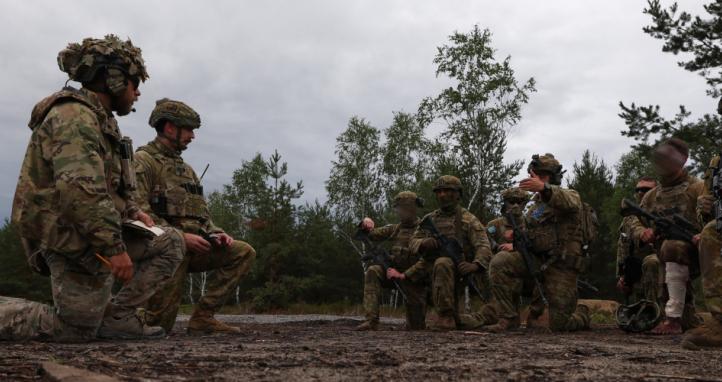
Training in an electromagnetically degraded environment should be the norm and the status quo for advanced collective training activities. It should probably be concentrated mostly on Army Training Tier A, but we cannot afford for it to be such an unusual and irregular event in training that it requires significant additional lead-up training.[iv]
Recent operational experiences were in environments where Australia and its allies had significant freedom in the electromagnetic spectrum. Until an electromagnetically degraded environment is facilitated in advanced collective training, I do not believe the Army will be able to overcome this mindset.
The position some people take regarding achievement of training objectives also holds the Army back. Some may assert that denying communications or disrupting the employment of precision weapons in a training audience will result in them being unable to achieve their training objectives.
While I agree exercise planners and facilitators need to support the achievement of directed training objectives, what actually happens in practice is we allow the force to train to their objectives in an unrealistic environment and thereby learn wrong and dangerous lessons.
For example, allowing unhindered communications, intelligence collection, and precision munition employment for a brigade attack ensures that the brigade commander, the staff, and all subordinate elements learn a number of inaccurate lessons and do not develop an understanding of modern battle. Disrupting the brigade’s use of the electromagnetic spectrum in a realistic fashion would allow the brigade to adapt their tactics and ‘train hard’ to fight easier in the future. The brigade may fail the first few times they execute tactical actions in degraded environments; however, this highlights the value of repetition in training.
The attitude regarding training objectives needs to be overcome so soldiers and officers are learning accurate lessons before they are in real combat. I believe these will be overcome if Army maintains consistent year-to-year delivery of degraded electromagnetic spectrum in advanced collective training, and that training audiences arrive at these advanced activities rehearsed and ready for the operationally realistic challenge.
While there are projects within the Army to bring new EA systems into service, these are far too small in quantity, too expensive to procure in large quantities, and still use a traditional mindset of employment only by a single ECN.
Defence could mature its approach by allowing elements of EA employment to become an all-corps skill. There are plenty of cost-effective EA options available on the market that could be used by close combatants in a coordinated manner. This is not to say that large, high-power and longer-range EA systems shouldn’t be procured, but that we need to more readily consider smaller capabilities being employed at greater scale.
The Army needs to think about EA as analogous to a weapon, because that’s what it is. Small arms exist and so do low-size, low-weight, and low-power EA hardware. Force Protection Electronic Countermeasures have been employed at the small team level for decades and these are essentially EA designed for a specific purpose. Some counter-UAS capabilities are likely to fall into a similar category. We need to use the same, or similar equipment, to think bigger and not just about self-protection.
I foresee a short-term future where mechanised forces, special forces, and perhaps even dismounted combatants utilise EA at scale in a coordinated manner to degrade enemy sensors and communications. This could be facilitated through pre-programming initiation and shutdown criteria, remote-controlled initiation by a specialist, or could be manually executed through traditional methods such as fire control orders.
Australian doctrine has seen the employment of small arms held at a certain level of authority, such as machine guns only being employed on the order of the company commander in a defensive position. The same sort of command-initiated firing occurs in ambushes and other tactical actions.
In short, we can apply existing Army procedures and drills to employ EA.
Despite the clear requirement for wider operational use, I still see a number of challenges before this could become a reality. Using a rifle or a machine gun requires training in how the weapon works, and in how to understand when or when not to fire. The same goes for EA. Individual operators require an understanding of the way EA operates, including how targets are identified, indicated, and targeted.
These individual training requirements could be quite small if you assume the individual soldier or vehicle are only ‘carrying’ the EA equipment and the actual operation is remotely controlled or pre-programmed. On the other hand, if the deployed soldiers and vehicles are actually operating the EA similar to their small arms, then more in-depth training would be required.
While Ukrainian sources have claimed that training on EA systems can be as short as 15 minutes (Syngaivska 2024), the training could realistically take a significant amount of time and risk becoming burdensome. An additional and problematic consideration is the already taxing training requirements for Australian soldiers.
Using Royal Australian Electrical and Mechanical Engineers (RAEME) soldier trades as an example; maintenance and potentially enhancement of EA hardware would likely fall predominantly on them, under current Defence policies and procedures. They anecdotally already spend an insufficient amount of time working their trade, as they are additionally required to be a drone operator, need communications training, need Army First Aid training, need a driver and perhaps recovery qualification, employ their personal weapons to a specific standard, be trained on the use of body armour, and conduct CBRN training.[v]
I am not arguing for or against the merit of each of these parts of training; however, Army, and likely Defence overall, needs to continually refine and reconcile training to the levels that are actually required. Perhaps looking to how units such as the 1st Armoured Regiment approach this challenge would provide a starting point.
An additional area to consider for technology such as drones and EA is prototype warfare. There are cheap sovereign jammers available in Australia and with additional development resourcing these would likely be very cost-effective.[vi] Basic jammers are quite easy to fabricate, which underscores the concept of prototype warfare.
Taking this a step further and tying back into individual training, prototype warfare assumes that Army allows soldiers to more readily improve and maintain equipment themselves. Blurring the lines between trades would be essential for this to be successful. Beyond individual training and other practical challenges, there are also policy hurdles to overcome for employment of EA in collective training within Australia. However, these hurdles are again not really any different to the hurdles we need to go through to fire rifles and launch explosives.
Safety requirements and timelines for approvals exist for both kinetic and non-kinetic weapons. Some will argue that we need approvals to conduct EA. This is correct, but we also need approvals to fire small arms and do so under Rules of Engagement (ROE) etc, even in training. EA employment is usually covered in ROE but the legislation and policy surrounding domestic employment is a challenge.
Chapter 5 of the Defence Electromagnetic Spectrum Management Procedures (DEMSMP, 2025) describes the minimum request timeframes for EA training in Australia. In short, GPS jamming requires 60 days, and all other jamming requires 30 days with repeatable activities potentially having shorter timeframes.
These lead times are similar to lead times for explosive ordnance, so they could be built into exercise planning to enable more widespread EA to occur. At present, only a very small number of Army units are stepping through this process and training to execute EA, or training in an environment where they are victims of EA.
Under the DEMSMP, Army could work with the Defence Spectrum Office (DSO) to develop ‘standing plans’ for EA within Defence Training Areas, making the process more streamlined with shorter timeframes. Additional work would be required for GPS jamming, EA in non-Defence training areas, and capability development and training with new technology, techniques, or frequencies. These training authorities are not too overbearing and would become more streamlined with repetition.
Conclusion
It is essential that Army increase training within a degraded electromagnetic environment. This includes not only operating communications and weapons in this degraded environment, but also increased offensive planning and employment of EA. To make this possible, we must first overcome the sometimes-self-imposed gatekeeping of EA and accept it is simply electromagnetic weaponry.
Developing an individual training process and introducing sufficient quantities of equipment into service are the chief practical challenges, but they can be overcome. While it is true we need approvals and coordination to conduct EA, these are similar in principle to many other areas of planning.
Some processes may be different, but some will be the same or at least conceptually the same. When the Army changes its mindset about EA, we will be in a position to train more effectively, learn more accurate lessons, and fight more credibly.
Still Interested?
Why not also read: Lessons from the Eastern Front by David McCammon.
Cove+ also has short learning courses on similar topics, including Introduction to Information Warfare.
End Notes
[i] Churchill 1900 appears to be the most descriptive source, but there are other accounts that support this evidence.
[ii] The electromagnetic spectrum and cyberspace combined make up the Cyber Domain as defined in ADF-C-0 Australian Military Power
[iii] Prototype Warfare is described in many articles, see Hoijtink 2022
[iv]Army Training Tiers are described in The Army Training Manual, Part 2, Chapter 1. Training Tier A is collective training where proficiency in tactics, techniques and procedures is demonstrated (as opposed to practiced or developed) under conditions emulating selected operations.
[v] The overheads and requirements for this trade to conduct other parts of their work are immense and EA is really a distraction from where they should focus their efforts under current policy.
[vi] But require approval through the Defence Spectrum Office (DSO) or if developing it privately, through the Australian Communication and Media Authority.

I believe your comment on "smaller capabilities being employed at a greater scale" is particularly pertinent, especially when one considers the often extended timeframes for procuring larger capability systems and the pricetag that goes along with them. The conflict in Ukraine has demonstrated how smaller, cheaper, and more readily available capabilities that are able to be deployed quickly and in larger numbers can be effective, particularly when you're already "in the thick of things".
Policy hurdles are a major bottleneck for EA development during capdev, let alone training & deployment; spectrum authority policy is impeding the 'adapt, test, and deploy' cycle when speed is essential.