
In November 2025, we travelled to Germany to attend the inaugural Armed Forces of Ukraine (AFU) Combined Joint Logistics Lessons Learned Conference (CJL3C) hosted by the NATO Security Assistance and Training for Ukraine (NSATU) command. This conference saw members from across AFU tactical and operational level logistics[i] organisations provide unique insights into their lessons learned as they approach the fourth year of Russia’s invasion. Whilst the Australian Army should always be careful in adopting lessons from ‘The (current) War’ as it prepares to fight ‘A War’[ii], the resilience and longevity of the AFU in the face of a numerically superior enemy is noteworthy.
Introduction
We identified five topic areas from the CJL3C that all levels of the Army’s tactical force elements (section to division) can learn from the AFU. Arguably, these topics are not new; however, their universal applicability to commanders at all levels and across combat, combat support, and combat service support functions is worth reminding. So, whilst this is an article on logistics lessons, we would encourage commanders and staff to read it more broadly, as the observation from NSATU is that AFU’s logistics capability has been decisive in enabling operational tempo.
The five topics are:
- Command, control, communications, computers and intelligence, surveillance and reconnaissance (C4ISR)
- Camouflage and concealment
- Agility and innovation
- Dispersion
- Evacuation and recovery
Each topic uses examples from the AFU and recommendations for how Army force elements could apply/adopt them. All of these focus on providing dependent combat force elements with freedom of manoeuvre by ensuring logistics support.
C4ISR
Following the seizure of Crimea in 2014, the size, scale, and speed of Russia’s invasion in 2022 forced Ukraine’s national mobilisation. This resulted in a force of approximately 200,000 expanding to nearly 1,000,000 in a few months. Since then, rapid modernisation, a heavily contested electromagnetic spectrum that degrades communications, and pervasive surveillance have forced significant changes in how the AFU manages C4ISR.
At the tactical level, these changes include gradual moves towards NATO interoperability, establishing common structures across formations, adoption of digital information management, and use of Uncrewed Aerial Vehicles (UAVs) for ISR as part of all movements within range of Russia’s offensive support – now approximately 20km from the Forward Line of Own Troops (FLOT).
From a logistics perspective, the move from Soviet-era structures and equipment to NATO interoperability is a significant challenge for the AFU, one that is unlikely to be completed while the war persists. However, adopting NATO-aligned doctrine and structures has been a vital enabler for developing commonality with Western forces and supporting mission command, which enables agility. This has been crucial, as teams may go days without communication or logistical support, making autonomy and survivability essential. These adjustments are enhancing support to commanders and boosting the efficiency of sustainment and reconstitution.
Interoperability and commonality are aspirations many in the Australian Army would be familiar with. As an organisation, we are taking steps to become part of the integrated and focused force, as well as making continual efforts under initiatives such as the ABCANZ Armies Program. However, as our combat formations become specialised, it is important to remember that the principles of logistics are universal, even if they are not always fully understood.
This is especially important for tactical logistics personnel who will serve in various unit types throughout their careers. Therefore, it is advantageous to ensure that the delivery of logistics effects remains as standardised as possible, permitting deviations only when absolutely necessary. This will likely require additional effort to update, maintain, and strictly adhere to doctrine. The outcome will be a reduction in unit or formation-specific practices, which will facilitate the quicker induction of new personnel and enhance the ability to form task-organised teams.
The other important lesson the AFU has learnt is to develop C4ISR redundancy and flexibility at the lowest levels, given the high threat level and degraded communications environment. As fighting echelons may go days without resupply, a ‘territorial principle’ has been adopted, under which support is provided by the nearest logistics unit, which may not have a dedicated C2 connection. These factors collectively restrict the visibility of tasks and stock holdings that Australian Army HQs are used to. However, for the AFU, this level of risk acceptance is driven by necessity and remains a key element in maintaining their operational tempo.
Camouflage and concealment
The pervasive surveillance across the FLOT is such that the ‘kill zone’ is now described as being 20-25km wide. This has increased significantly over the last 12 months of conflict due to Russia’s ISR and drone-enhanced capability. For the AFU this has demanded that camouflage and concealment become a singular focus for every soldier, the teams they form, and – for the logisticians – the stores and equipment they use when providing support. In most cases resupply, recovery, and CASEVAC tasks are at night or in poor weather to limit the chance of being seen by a drone.
Stores close to the FLOT are either constantly moved between existing buildings, held in dug-in positions, or kept on trucks with anti-drone cages (more on that below) hidden in the forest. Where time permits, the AFU will also establish drone netting over dedicated vehicle and personnel supply routes, some of which are kilometres long. The AFU have learnt that if something is not hidden, it will be found, and if it is found, it will be targeted; with food, fuel and ammunition storage locations high on the enemy’s target list.
The Australian Army has well-developed tactics, techniques, and procedures (TTPs) regarding the use of camouflage and concealment. However, it is arguable that for most force elements, this is mainly focused on 2D and some 3D threats, which limits the chance for an adversary to observe or engage from ground level or from a nearby high feature.
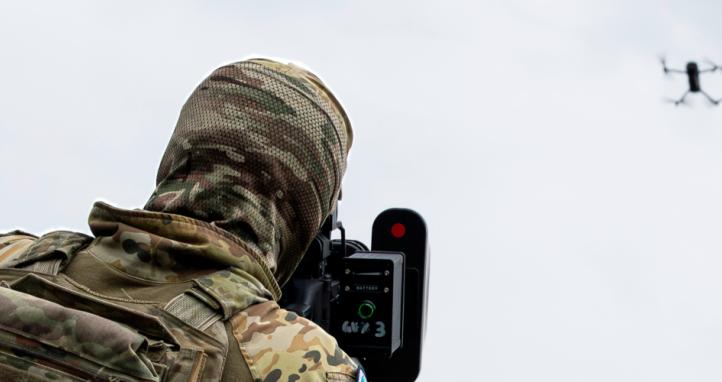
With the AFU facing multiple layers of UAV reconnaissance linked to various offensive fires, remote and optical fibre drones (the latter of which cannot be jammed), the AFU now assume they are being watched and have adapted accordingly. Examples include no longer conducting distribution or exchange point tasks in the open, using overhead cover whenever possible for stores and personnel in the kill zone, employing a mix of civilian and military vehicles for stores movement, and the disciplined use of camouflage as part of every movement.
Agility and innovation
To complement camouflage and concealment, necessity has driven the AFU to become more agile and innovative. The ability of Russian weapons to reach most of the country has made large stockpiles and maintenance areas outdated. In the kill zone, stores must be mobile; not only to lower the risk of being targeted, but also to seize opportunities to provide support at short notice.
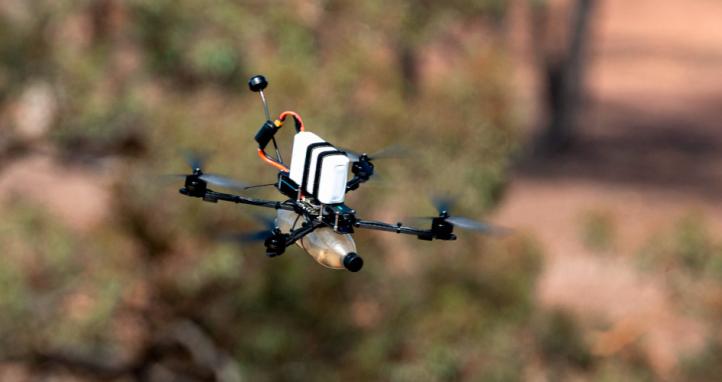
This indicates that if they are not kept on wheels, they are moved regularly. Likewise, units are granted considerable flexibility to decide what equipment is used, when, and how. Examples include installing tanks and pumps inside civilian vans as ‘undercover’ refuelling vehicles, and the diverse development of drone cages on nearly every type of vehicle. However, the most notable change has been the increasing use of maritime, air, and ground unmanned vehicles to carry out a range of logistics tasks.
The widespread use of drones (UAVs, UGVs, UMVs, and USVs) for ISR and strike missions has been discussed in various forums. However, their innovative application in supporting logistics functions is becoming a significant force multiplier for the AFU. By reducing the risk to logistics personnel and offering more options to the supported force, using drones for logistics is a vital enabler of the AFU’s operational tempo.
Aerial resupply is not new; Australia’s General Monash famously used aircraft to dispatch ammunition during the Battle of Hamel in 1918. However, the AFU’s 21st-century approach to this method is one the Australian Army can learn from. Specifically, the use of UAVs to deliver food, water, fuel, ammunition, and spare parts. In many cases, prepackaged loads can be prepared, stored, and then quickly distributed to make supply support more reactive – essentially achieving a ‘push’ logistics effect – rather than waiting to respond to a demand for specific items (‘pull’ logistics). This isn’t to say AFU logistics units can’t or don’t respond to demands, but this innovative approach is directly enabling additional resupply options and enhancing operational tempo. Adopting a similar capability in the Australian Army will likely raise questions about which corps and units will use these drones, where the operators will be trained, and what governance or oversight will govern their use.
Dispersion
Another hard-earned lesson has been the importance of ‘spreading out.’ Dispersion is a term familiar to anyone who has attended a course at the Army Logistics Training Centre. However, similar to the need for camouflage and concealment, the threat of being observed and targeted by Russian offensive support has compelled the AFU to disperse their logistical assets. This involves reducing both the size of physical sites where logisticians and equipment operate and the quantity of stores stored at any single location. As larger units are divided, challenges in command and control (C2) and maintaining situational awareness emerge, but these risks are outweighed by improved survivability and greater support options for dependent force elements.
The same considerations also apply to managing a greater number of stores but in smaller quantities across a tactical area of operations. In these cases, some storage locations or caches may be destroyed, but there is sufficient redundancy nearby to ensure essential quantities can still be resupplied.
One of the key ways the AFU is achieving dispersion is by providing maintenance as far forward as possible. The combination of risks involved when vehicles are in motion and the urgent need to repair has led to more dispersed repair efforts. This approach involves task-organised repair teams, sometimes temporarily occupying buildings or working in the field, to perform tasks that would typically be carried out in rear administrative areas.
One of the key challenges for the Australian Army is that most field training exercises are relatively short; for example, the largest recent activity – Exercise Talisman Sabre 2025 – only lasted three weeks. With limited immediate benefits and additional costs for relocating surplus stores and complex maintenance equipment, opportunities to rehearse the various aspects of dispersion are few. This remains a training challenge for logisticians and logistics units. Realistically, there is no simple way to overcome this, but simulation, using ‘dummy stocks', and table-top exercises all provide methods to practice and rehearse it.
Evacuation and recovery
With every person and platform on the battlefield being crucial, the AFU has invested significant effort to adapt and enhance its evacuation and repair capabilities, especially casualty evacuation (CASEVAC). Initially, whether it involves a wounded soldier or an immobilised vehicle, UAVs are used for technical reconnaissance. For vehicle evacuation and recovery, this allows specialists to closely examine the complexity of the issue without exposing themselves. In CASEVAC, this may extend to remote engagement with the patient to assess the extent of their injuries and to guide them through self-aid steps.
In addition, for CASEVAC, where time is of the essence, and there is often an ongoing threat, UGVs are increasingly used in the first phase of rearwards movement. On departure, these platforms are usually deployed with an accompanying UAV that monitors the vehicle, manages the loading of the casualty, and then returns to an exchange point. As with resupply tasks, this reduces the likelihood of being observed and diminishes the risk to the soldiers and platforms (in this case ambulances) involved. In some instances, the two activities are combined such as when an injured soldier was recovered after a drone delivered an e-bike to help him escape the initial and most dangerous part of the route.
Previous announcements indicate the Australian Army engaged local industry to develop drones for logistics use, including a trial conducted with UGVs. However, current projects are mostly focused on counter-drone, strike, and ISR capabilities. So whilst logistics soldiers and units may not be getting specific cargo drones in the near future, there are still numerous opportunities for logisticians to use existing small platforms, such as the Wasp, Puma and Black Hornet, for a broader range of technical / logistics reconnaissance.
Conclusion
The ADF and Army continue to learn and apply lessons learnt from broader conflicts and reaffirm current doctrine. The Ukraine – Russia conflict is providing military forces with key insights about near-peer modern conflict and the impact that new and evolving technology can have on improving logistics effects. Across the five topics discussed above, the CJL3C emphasised the following:
- Changes to logistics delivery are evolutionary, not revolutionary.
- You don’t need to be deployed on a large-scale combat operations exercise to test / trial TTPs.
- Improving the delivery of logistics directly enhances the generation of operational tempo.
End Notes
[i] The AFU use NATO’s definition of logistics: ‘The science of planning and carrying out the movement and maintenance of forces’. This comprehensive definition encompasses the design, acquisition, storage, transport, distribution, maintenance, and disposition of materiel; the transport of personnel; the construction and upkeep of facilities; the provision of services; and medical and health support (NATO Logistics Handbook). Of note, in August 2025 NATO changed from logistics to using sustainment, which is defined as: ‘the provision of personnel, logistics, medical support, military engineering support, finance and contractor support necessary for Alliance operations and missions’ (Allied Joint Doctrine for Sustainment of Operations).
[ii] ‘The War’ verses ‘A War’ thinking describes the risk of only focussing on and making changes related to a specific conflict; as opposed to analysing how the current use of technology and various TTPs could affect war fighting functions more generally. The Chief of Army’s direction on the overall role of the Australian Army is in the Australian Army Contribution to the National Defence Strategy 2024.

The conclusion sums up the lessons nicely. The innovation piece is important and one way to make the log fight more 'real' in peace time. Achieving the balance between 'push' and 'pull' will be critical in dispersed littoral operations across our northern arc, as we will be challenged to get any volume of stores into our 'close rear' that can then be issued forward. So bespoke supply solutions (is it an 'Amazon Green' or 'UberSpares?) will be essential to husband those scarce spares, medical supplies and ammunition.
I hope you have some follow up articles. Great stuff!