



The 2024 National Defence Strategy (NDS) and 2023 Defence Strategic Review warned that Australia is experiencing its most challenging circumstances since WWII, with contest taking place across diplomatic, economic, military, and strategic levels. Traditional methods of kinetic warfare are increasingly being replaced by or complemented with hybrid tactics, including the use of paramilitary, cyberattack, foreign interference, influence on public opinion, and cognitive warfare. Climate change and technologies such as artificial intelligence (AI) and quantum represent further compounding factors to Australia’s security climate.
Within this complex security environment, the NDS tasks the Australian Defence Force (ADF) with defending Australia and its northern approaches, a littoral region to our near north. A primary means by which Army can best meet this mission is through a strategy of asymmetric deterrence involving what I conceptualise as rapid, agile, and deceptive (RAD) littoral manoeuvre, enabled by combined arms, logistics, training, and unconventional warfare.
Australia’s Strategic Environment
The Indo-Pacific is experiencing the effects of United States (US)-China great power competition in a landscape whereby the character of modern warfare is said to be evolving faster than at any comparable period in history. Nations across our region have looked towards building military capacity in a world that strategist Hugh White describes as experiencing a deterioration of good order and its most conflicts since 1945. The 2024 Independent Intelligence Review and Annual Threat Assessment 2025 describe a future where our nation confronts more threats, complexity, and strategic surprise.
Australia no longer enjoys the benefit of a ten-year window of strategic warning time for conflict, with Mike Pezzullo refining defence preparedness timelines to as little as two years. Threats to Australian security now include misinformation, foreign interference, and challenges to social cohesion and trust in Australian institutions.
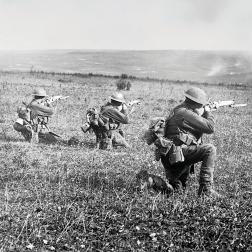
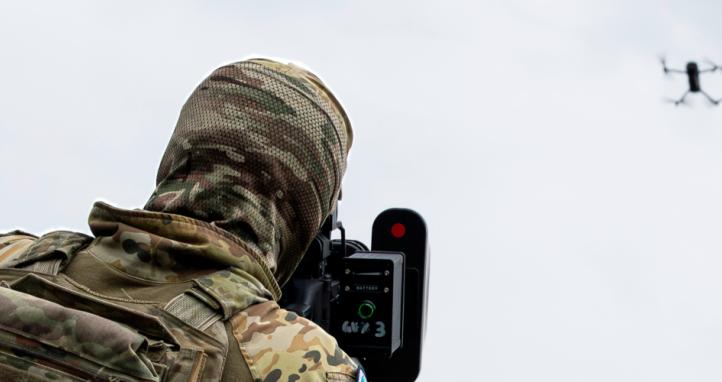
Major General Chris Smith has described how modern warfare is evolving to incorporate new and emerging technologies in drone capability, satellites, and long-range strike. At the same time, conflicts in Ukraine and Gaza illustrate that war has not changed its primary character. Close-quarters trench warfare, the use of artillery, minefields, and the cooperation of armour and infantry still represent contemporary combat strategy. Images from battlefields at Kharkiv and Gaza look little different from 1943 Stalingrad or the Western Front in 1916, reiterating the primacy of land warfare; as William Faulkner wrote: “The past is never dead. It’s not even past.”
Within our region, the rise of China as a great power is described as a once-in-a-century shift of economic and strategic power by strategist Sam Roggeveen, with the nation seeking to impose its will across the region. Beijing now has missile-strike and bomber capability able to reach Australia from existing Chinese bases, and has implemented campaigns of economic and military coercion against Australia. In the Pacific, China seeks to leverage economic influence into security agreements and potential dual-use basing arrangements within Australia’s strategic geography. Concurrently, Beijing is accused of cyberattack on Pacific nations such as Papua New Guinea (PNG), Samoa, and Fiji.
Looking deeper into Australia’s northern approaches shows similar strategies playing out in Southeast Asia. Beijing consistently challenges the maritime sovereignty of nations in the South China Sea, including the Exclusive Economic Zones of Vietnam, Malaysia, Indonesia, and the Philippines. Simultaneously, China acts as the region’s strongest trade partner, having driven investment and regional integration for the past two decades. China offers the carrot but also the stick, through both action and implicit threat. As in the Pacific, Beijing seeks to develop potential dual-use port infrastructure in Myanmar and Cambodia.
Australia’s northern approaches are becoming a focus for geostrategic competition. While the US remains security guarantor for Australia and other partners, some analysts assess that US primacy in the region has declined, exhibited neglect, or lacks strategic coherence. Others such as former Australian Prime Minister and Ambassador to the US Kevin Rudd reject this view, but the actions of the current US Trump administration likely increase uncertainty over the nation as a reliable security guarantor.
Australia should maintain its strong security relationship with the US, but as retired Lieutenant General John Frewen has advised, we must also consider self-reliance. Army optimising for littoral warfare is one avenue towards Australian security in the contemporary strategic environment.
Asymmetric Deterrence
The 2024 NDS directs that a Strategy of Denial will become the cornerstone of Defence planning, aiming to deter any adversary’s attempts to project power against Australia through the northern approaches. Deterrence by denial is predicated on a nation’s credible ability to make an adversary’s actions infeasible via military means or otherwise. This works to alter an enemy’s calculus in that costs of seeking an objective become too high or cannot be achieved, deterring action. On the other hand, deterrence by punishment seeks to impose high costs on an adversary without necessarily influencing this calculus, for example through large-scale strikes on a nation’s homeland.
Although deterrence remains an established concept, the classical literature on the theory developed in relation to concerns of US-Soviet Cold War-era nuclear annihilation and may need refining in application to modern contexts. Theories assume that all parties abide by the same values, rules, and sensibilities, and grey-zone activities acting below the threshold of conflict have complicated assessments of deterrence.
Despite these points, for a nation such as Australia with a reported 2025 defence budget of USD$38.5bn and around 80,000 active/reserve personnel, deterrence by denial is most appropriate when faced with a potential regional adversary such as China. In reported 2024 figures, China spent USD$314bn on defence expenditure and maintains over 2.5 million military personnel. Chinese official figures are often an unreliable estimate and thus true defence expenditure and workforce could be higher.
Still, Australia and Army can practice deterrence upon such a great power by capitalising not only on Army’s strengths in expeditionary and manoeuvre warfare, but also through unconventional warfighting. In this way, Army can present kinetic capability in the northern littorals but also apply threats that extend beyond the restrictions of geography to what Clausewitz described as an adversary’s ‘centre of gravity.’
For China, this strategic centre doesn’t refer to kinetic strikes on its forces engaged far from home somewhere off Australia’s coastlines: it lies in challenging the control that Beijing wields over its populace. Historian Frank Dikötter has written that over the last 80 years the primary threat to China has come not from external military forces, but from domestic political and economic instability. Beijing faces a public disillusioned from a slowing economy, austere censorship, and high youth unemployment. Similar concerns of unstable domestic control burden the minds of dictatorial leaders in Russia, North Korea, and Iran.
The threat of unconventional warfare loosening the control of totalitarian governments can act as a powerful addition to the cost-benefit calculus of deterrence. Ross Babbage has written that if Beijing entered kinetic conflict with the US and allies, North Korea and Iran may view participation to be in their national interest, and it is almost certain Russia would support China through cyber and subversive operations. Australia and the Army must be proficient in these domains to deter across warfighting domains.
This is not capability to be employed during competition, which likely draws an unacceptable risk of escalation and is not in Australia’s character in participating in the rules-based order. It is in conflict that the potential rapid implementation of these effects could act as a powerful spectre for Australia’s adversaries and aim at the heart of regime insecurity. Major General Ash Collingburn and Colonel Tom McDermott have suggested that no military force ever seeks a fair fight; Army must find enemy weakness to generate asymmetry.
When war is viewed as a political instrument and a continuation of policy by other means, whereby civilian leaders are responsible for both commencing and ceasing hostilities, capabilities threatening regime stability act as a powerful deterrent. Employment of unconventional warfare in conjunction with littoral kinetic manoeuvre seeks to target enemy vulnerability, employ psychological effect and surprise, and limit the length of conflict. Thomas Schelling wrote that the power to hurt is bargaining power; violence must be anticipated and avoidable. This article is predicated on the belief that an Army optimised for littoral operations with integrated combined arms capacity in unconventional warfighting represents the strongest source of pain and deterrence to Australia’s adversaries.
As Ernest Hemingway put it, “The more you hate war, the more you know that once you are forced into it, for whatever reason it may be, you have to win it.” The same could be said of deterrence. Any enemy entering the northern approaches must understand the threat of multiple effects and means of lethality to forces far from home as well as instability within their borders.
Into the Urban Littoral
The Australian Army Contribution to the National Defence Strategy 2024 identified mass urbanisation of the littoral as a key factor shaping Army’s adaptation to future war. A high proportion of the world’s population and capital cities are now located along coastlines, with the littorals increasingly being key for a nation’s political, military, and economic stability. Trends of coastline urbanisation, population growth, and connectedness will only continue.
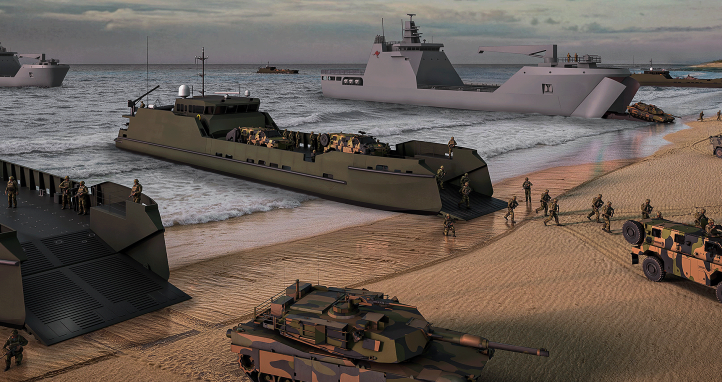
Urban conflict has been described as the most difficult form of warfare, favouring occupying forces. The urban defender maintains the advantage in tactical positioning, freedom of manoeuvre, and fortification, while the attacker is limited in intelligence, reconnaissance, cover, and concealment. Including littoral combat within this calculus has led to the blending of urban and littoral operations being labelled as the ‘worst of both worlds.’ This increasing complexity represents challenges for Army but also opportunity. Optimising for littoral manoeuvre will allow Army to seize the initiative at short notice to deny and repel enemies, support logistical sustainment and follow-on forces, and support sea and air control.
David Kilcullen has written that any potential conflict in Australia’s region is likely to occur within littoral, urban environments in our northern approaches, a geography of archipelagic environments around PNG, Timor-Leste, and Indonesia. Just as Army rapidly adapted in the Second World War from its initial combat experience in the deserts of North Africa to the jungle and amphibious operations that characterised the period of 1942-1945, it now faces a similar period of adaptation in transitioning from operations in the Middle East to defence of Australia in our immediate north. An approach focused on rapid, agile, and deceptive (RAD) manoeuvre can meet this mission, which will be outlined in part two of this series.

On a different issue, the reported activities of the Iranians effectively leading to the closure of the Straits of Hormuz is something we might want to look at closely. Chinese MDCOA approaching Northern Austalia via the Lombok and Sunda straights could face potentially similar difficulties as ships trying to transit Hormuz.