
A new educational wargame from the Army Battle Lab
“This is not just a game. It is training for war! This practice must be recommended to the whole army!”
– Marshal von Müffling, Chief of Staff of the Prussian Army, 1824
In recent years wargaming has gained increasing recognition and popularity within military and other organisations around the world as a powerful tool for experiential learning, giving its users an opportunity to explore new ideas, scenarios, and the dynamics of warfighting and competition. They expose their players to risk, friction, and the uncertainty of dealing with adaptive and thoughtful adversaries, competitors, allies, and other stakeholders. Wargames provide a kinaesthetic, storytelling, or roleplaying environment that can result in high levels of engagement, debate, learning, and resultant professional mastery and understanding.
The new ADF planning methodology in ADF-I-5 Decision Making and Planning Processes (DMPP) also reinforces the need for wargaming to support the immediate decision-making process (IDMP). This doctrine clearly explains the need for our leaders to develop mental models, a key requirement of the recognition-primed decision-making process that uses rapid pattern matching as part of intuitive decision making. Wargames enable the development of such mental models.
The Australian Army Battle Lab has therefore produced a number of manual educational wargames to support Forces Command’s intent to reinvigorate educational wargaming in Army.
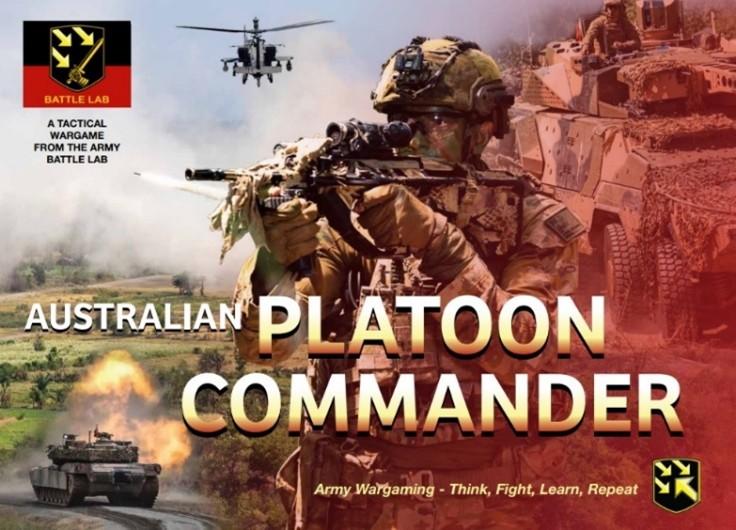
The first Army Battle Lab produced wargame titled Australian Platoon Commander focused on platoon level tactics and was designed for use at the Royal Military College – Duntroon. This wargame was developed to support specific learning outcomes associated with the Full Time and Part Time Officer Commissioning Program. However, it can also be used by unit commanders to conduct manual tactical wargames to help develop their peoples’ critical thinking, foresight, and innovation and exercise their tactical decision making in order to develop professional mastery and further their warfighting skills.
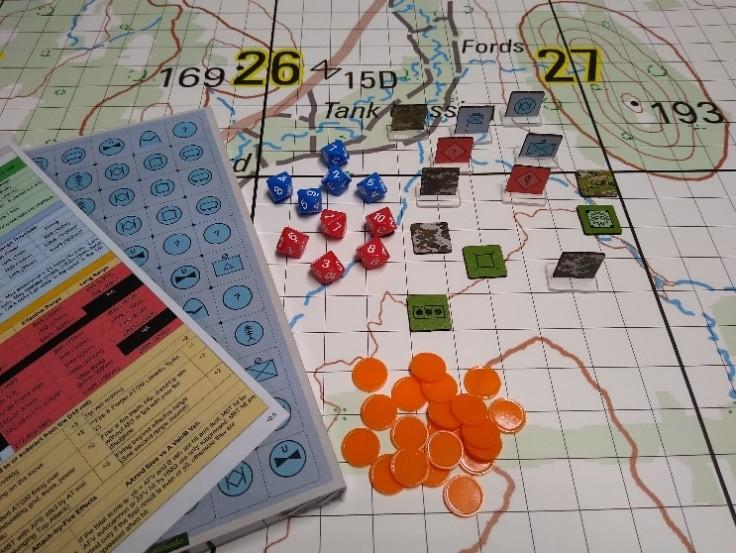
Over 250 copies of this wargame have now been distributed to various Army units and training establishments. Australian Platoon Commander has garnered attention in a number of international forums and a small number of copies have now been provided to the New Zealand Army, the US Army, the British Army, and even the German Bundeswehr. It is not available to the public.
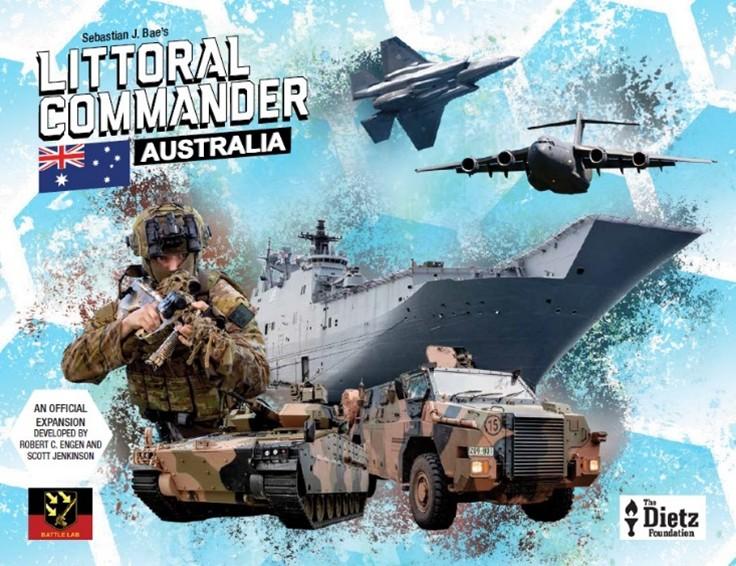
The second Army Battle Lab wargame titled Littoral Commander: Australian focuses on joint operations in a littoral environment and was developed in consultation with the Australian War College (AWC) for use on the Australian Command Staff Course.
Littoral Commander Australia is an official expansion of Sebastian J Bae’s wargame titled Littoral Commander Indo-Pacific. It is a “grand tactical” educational wargame for two to six players (multiple players play as teams) about a possible future conflict in the Indo-Pacific region. The Littoral Commander Australia expansion being produced by the Army Battle Lab adds Australian Defence Force capabilities, maps of Australian areas of interest and additional scenarios that complement the original game.
Littoral Commander Australia allows players to explore the concepts of littoral warfare, multi-domain strike, integrated air and missile defence, and integrated ADF warfighting capabilities with little to no experience of games necessary in order to play. It may also assist players to understand Australia’s strategic environment, the nation’s future security challenges, and the rationale for the recent Defence Strategic Review. It provides a rich and interactive “intellectual sandbox” for inquisitive minds to explore and engage with the challenges of potential future wartime operations.
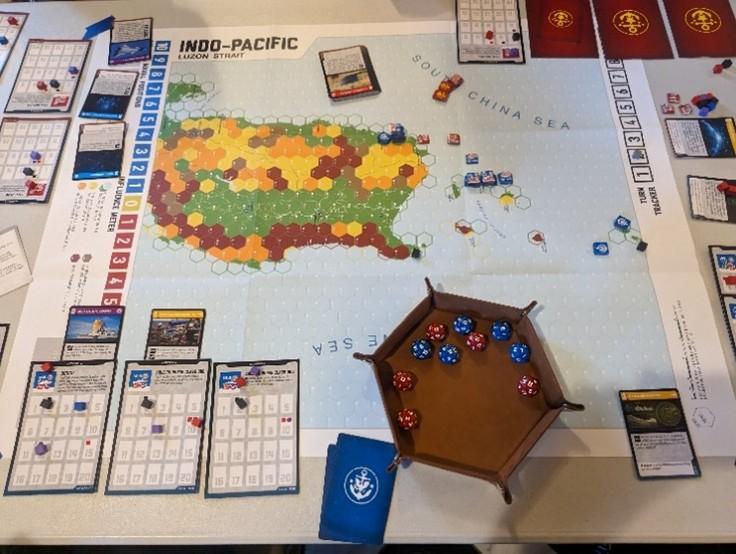
100 copies of this expansion have been distributed to Army units and training establishments along with the original wargame Littoral Commander Indo-Pacific. A further 250 copies of both of these wargames will be available for future distribution in early 2026. They can also be purchased directly from the Dietz Foundation, a non-profit education games publisher in the USA.
The latest Army Battle Lab wargame – Australian Combined Arms is focused on battlegroup and combat team operations. It has been designed for use at the Officer Training Wing, Canungra and in select Combat Arms Schools of the Land Combat College. The Officer Training Wing assisted with play testing in late 2024 and have already received advanced copies of this wargame for use on the Combat Officers Advanced Course. Copies of Australian Combined Arms have now been distributed to various Army units and training establishments via their local Battle Simulation Site.
Australian Combined Arms has been designed for “fast play”. It enables players to ‘fight’ Battlegroup and Combat Team combined arms engagements in two hours or less following a short period of planning. It is suitable for use by commanders that want to conduct educational wargaming as part of their unit professional military education (PME) programmes. It should not be misconstrued as a tool for Course of Action (COA) wargaming. Australian Combined Arms has been produced to assist players in developing mental models and improving post H-hour decision making; as such it should be viewed as a learning tool rather than a recreational ‘game’.
Australian Combined Arms is played by two players (or two small teams of two to three players) on an enlarged topographical map using laser cut Medium Density Fibreboard (MDF) playing pieces that represent the forces involved, six-sided dice to generate random numbers, and a set of rules to govern play.
Laser cut MDF playing pieces representing various Australian and Olvanan units are provided in the Australian Combined Arms wargame kit. The kit also includes Perspex bases so unit tokens can be seated upright on the map, allowing them to be turned so the opposing player cannot determine what the token represents. This aids in modelling the ‘fog-of-war’ and the need for intelligence, surveillance and reconnaissance (ISR) and development of deception in the wargame.
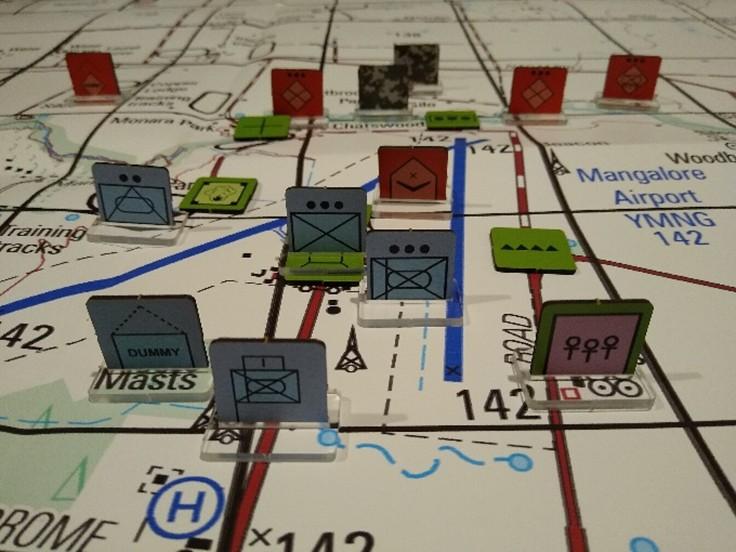
The players control – by moving the playing pieces across the map – the friendly and adversary forces in a simulated battle according to the wargame scenario and the rules of play. It is played in a series of ‘Game-Turns’ representing a period of 15 minutes of real time. During a Game-Turn, both players’ pieces may move and engage in tactical actions according to the wargame rules, in an attempt to achieve set scenario objectives.
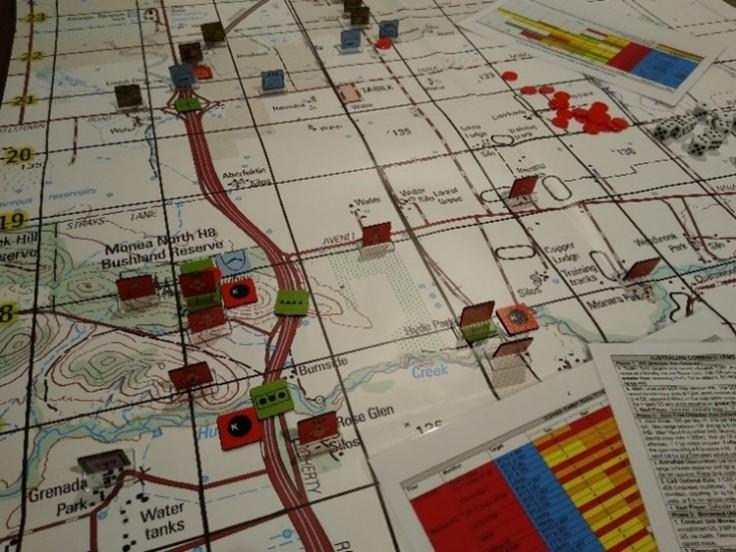
Participants require either an enlarged 1:25000 or 1:50000 map to represent the operating environment selected for the wargame. Maps may be laminated, allowing players to mark areas of restricted and very restricted terrain, military crest lines, defiles, prepared defensive positions, obstacles, minefields, etc., directly on to the map.
The Standard Rules include use of intelligence, surveillance and reconnaissance (ISR) assets such as tactical unmanned aerial vehicles (TUAV), application of Joint Fires, Manoeuvre, Attack-by-Fire, Battle Damage assessment, and unit reorganisation following disruption. The rules use data sourced from current Australian Army doctrine, including the Decisive Action Training Environment (DATE), the Operational Environment Data Integration Network (ODIN) Worldwide Equipment Guide, the Land Combat College ‘Blue and Red Books’, LWD 5-1-2 Staff Officer’s Aide-Memoire, 2010 (now obsolete) and various professional and recreational wargaming methods that model combat using simple game mechanics. The rules are meant to augment military common sense and encourage original thought.
Optional rules add greater detail and variety. These include additional subjects such as military engineering, logistics, exercising command and control, conduct of Airmobile, Amphibious or Airborne Operations, use of Loitering Munitions and CBRN, and have been included to provide a broader scope of operational issues for players and facilitators to consider.
The majority of military educational wargames focus on human decision making; they are in effect ‘decision games’ that assist in the development and improvement of the players’ mental models, leading to improved pattern matching and recognition primed decision making. Wargaming for PME not only helps develop better decision makers but can also lead to our people gaining an enhanced aptitude in military reasoning, improved tactical understanding, and a superior ability to out-think and thus out-fight our adversaries.
By challenging assumptions and exposing players to diverse perspectives, wargames can help develop a more flexible and adaptable mindset. Educational wargames should be designed to encouraging self-directed learning, critical analysis, and cognitive engagement. Australian Combined Arms has been developed with these objectives in mind.
If readers are seeking further information, support or assistance with integrating Army wargaming into unit activities they may contact the Land Simulation and Wargaming branch of the Australian Army Battle Lab via email at: armybattlelab.landsimulationandwargaming@defence.gov.au.

If anyone has any thoughts on PhD topics on areas that will greatly assist our organisation, please reach out.
Leaving aside mech inf, do they relate to the actual RAAC circumstances, or are they based on theoretical establishments?
If the latter, does this perpetuate false lessons being learnt?
(At the moment, 2 Cav Regt has an enormous task trying to manage its competing reconnaissance and close fire support roles.)
Bruce, thanks for your question regarding the educational wargame Australian Combined Arms.
Australian Combined Arms does not stipulate specific Orders of Battle or force structures. These are determined by the players or facilitator who must create their own scenarios based on the learning objective for the activity. Force structures employed in the wargame are informed by scenario design and current doctrine.
Australian Combined Arms includes unit tokens to represent dismounted, motorised and mounted forces of both Australian and adversary forces. As tokens represent section and platoon sized elements players can create Combat Teams or Battlegroups with various combat arms and supporting arms. These could include a tank heavy mechanised Battlegroup, or a motorised battalion supported by an attached Engineer Troop and Cavalry Troop, or a standard subunit such as a Mechanised Company mounted in Infantry Fighting Vehicles or a Tank Squadron or Cavalry Squadron. There are also Artillery, Engineer, Army Aviation and Combat Service Support unit tokens allowing players to employ all elements of a combined arms team. Players can even represent a force that has suffered attrition and no longer has all of its establishment strength due to battle casualties from a previous action.
Australian Combined Arms was designed as a wargame 'kit'. It is up to the players or facilitators to determine suitable scenarios (including force structures) in the game. These are based on the purpose and objectives of the wargame.
Yours sincerely,
Andrew Somerville