



Article Summary
Building on Colonel Ben Watson’s 'Combined Arms After Hamel: The Division and the Changed Character of War', this article accepts that the transparent battlespace has broken long-held assumptions about force design but argues that where capabilities sit matters less than how much dependency the future force can afford to carry. It contends that the test of any dependency is latency – the time within which a capability must influence the fight – and that Australia’s dispersed maritime environment, where reinforcement may be impossible rather than merely delayed, may render some centralised dependencies operationally unacceptable. It reframes contested logistics as the organising problem for force design, arguing that organisation should follow the sustainment problem rather than the reverse. The piece concludes that force design is ultimately the deliberate management of dependency across the integrated force, and that competing structures should be tested in Australia’s actual operating environment before any further structural redesign is undertaken.
Colonel Ben Watson's article, Combined Arms After Hamel: The Division and the Changed Character of War, has stimulated an important discussion about the future design of the Australian Army. By challenging long-held assumptions about force structure in an era of persistent surveillance and precision strike, it asks precisely the questions professional military institutions should be debating. More importantly, it reminds us that Monash's achievement at Hamel was not the creation of a timeless organisational model, but adapting to the changing character of war.
On that much, there should be little disagreement.
This debate also sits within a broader strategic context. The National Defence Strategy directs Army to generate effects as part of an Integrated Force rather than as an independent land component. Force design should therefore be judged not simply by how efficiently it organises land capabilities, but by how effectively it enables Army to contribute to integrated operations alongside maritime, air, cyber, and space effects. That strategic purpose should remain the reference point against which competing force structures are assessed.
The contemporary transparent battlespace has changed the survivability calculus for land forces. Headquarters, logistics nodes, and assembly areas can no longer assume they will remain hidden long enough to generate combat power. The battalion has also been progressively hollowed out by decades of efficiency-driven reform, leaving commanders increasingly dependent on attachments from elsewhere simply to conduct combined arms manoeuvre.
Properly resourcing units at all levels should never be in question. It should also be acknowledged that the modern Australian Army is arguably more lethal than at any other point in its history. Restoring organic reconnaissance, tactical fires, counter-UAS, resilient communications, sustainment, and autonomous systems to battalion level is persuasive, but the wider organisational context should not be ignored. Likewise, there is merit in treating armour as a scarce capability allocated according to operational need rather than permanently embedded within every brigade, although doing so inevitably comes at some cost to habitual relationships between the close combat arms. As with most force-design issues, there is likely to be a balance point rather than a perfect solution.
One emerging approach proposes concentrating scarce capabilities such as artillery, engineers, intelligence, surveillance and reconnaissance, electronic warfare, and sustainment at higher echelons. Manoeuvre formations become lighter and more dispersed, drawing upon those capabilities only as operations demand. That is a coherent proposition; however, where capabilities sit is less important than the question of how much inter-echelon dependency the future force can afford to accept.
This paper does not argue against a stronger division. Quite the opposite. The future Australian Army will require a division capable of integrating joint effects and synchronising operations across domains. The question is not whether the division should become more capable, it should. The question is whether the strength of the division should be measured by its ability to reduce operational risk without creating dependencies that Australia’s operating environment cannot reliably support.
Every military organisation depends on capabilities held elsewhere. No formation can own everything it might require, and no army can afford to duplicate scarce capabilities indefinitely. The challenge for force designers is therefore not to eliminate dependency, but to determine which dependencies are acceptable, under what conditions, and at what cost.
Whether those dependencies are acceptable depends largely on latency: the time within which a capability must influence the fight. A dependency that can routinely be satisfied within the time demanded may be acceptable. One that cannot, becomes a liability. Geography determines how readily dependency can be satisfied. Logistics determines whether it can be sustained. History illustrates the consequences of getting that balance right or wrong.
Geography Determines Acceptable Dependency
Recent force design discussions correctly identify the increasing vulnerability of concentrated headquarters, logistics areas, and artillery positions in a transparent battlespace. Persistent surveillance and precision strike have made many of the assumptions underpinning modern land combat considerably less certain than they once appeared. Yet moving capabilities to higher headquarters does not remove dependency, it changes its nature.
A dispersed divisional headquarters is undoubtedly more survivable than the static command posts of previous generations. Yet dispersing command posts is not the same as dispersing capability. If artillery, electronic warfare, engineers and sustainment become permanent divisional assets, they remain functionally concentrated even if their headquarters is physically dispersed. Disrupt the divisional network and a number of brigades may lose access simultaneously. This is not necessarily an argument against centralisation. It is simply a reminder that centralisation may exchange one form of vulnerability for another, and Australia's operating environment makes that distinction particularly important.
Contemporary evidence drawn from Ukraine, Nagorno-Karabakh, and (to a lesser extent) Gaza is highly relevant but must be scrutinised carefully. These conflicts demonstrate beyond doubt that persistent surveillance and precision strike have transformed the battlefield; however, they are fundamentally continental campaigns, which differ markedly from Australia’s likely operating environment.
Even under constant observation formations operate across connected land areas. Reinforcement may be delayed, movement may be dangerous, and logistics may be contested, but there remains a physical connection between higher headquarters and subordinate formations. Australia's most demanding operational problem is unlikely to look like that.
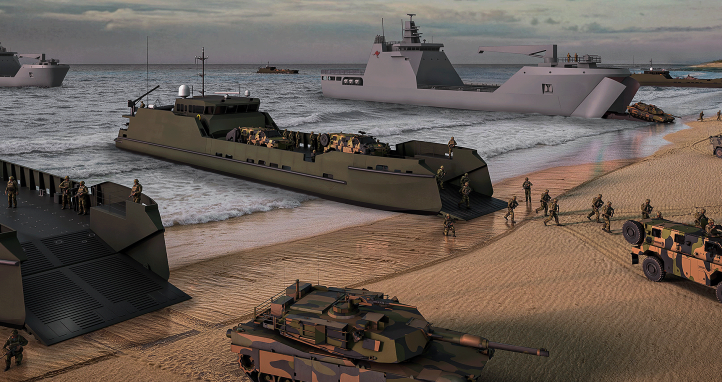
Operations across Australia's northern approaches are more likely to involve dispersed forces separated by sea and operating across islands, maritime choke points, and complex terrain while relying on maritime and air movement that are themselves vulnerable to persistent surveillance and long-range strike. That changes the dependency equation.
The question is no longer simply how quickly division can reinforce brigade, but whether reinforcement can occur at all.
This should not be interpreted as diminishing the importance of the division. Quite the opposite. The division’s enduring value lies in integrating effects and as Army increasingly contributes to an integrated approach to deterrence, divisional headquarters provide the natural level at which land manoeuvre can be synchronised with maritime, air, cyber, and space effects. The question is not whether division should perform this role – it should – but whether doing so requires manoeuvre formations to become more dependent than Australia’s operating environment allows.
Some capabilities derive value precisely because they are scalable across tactical and operational levels. Intelligence, C2, and many aspects of sustainment exemplify this principle. Their effectiveness often increases when they are integrated across the joint force rather than duplicated in formations. The challenge for force design is distinguishing these capabilities from those whose value depends on immediacy to manoeuvre, where responsiveness may outweigh efficiencies gained through centralisation.
Reinforcement becomes contingent upon the broader joint fight rather than tactical command decisions. A division committed to dispersed littoral operations should therefore not be structured around the expectation that reinforcement can be provided in a contested air and maritime fight. Divisions should set conditions, enable subordinate formations, and exploit opportunities as they emerge. Without the capabilities to do this over extended distances, small land contributions to the theatre quickly become joint force dependencies and therefore responsibilities. The division being able to provide close or enabling support from afar should not become the assumption upon which brigade effectiveness depends.
Geography does not determine the correct structure for the future force. It does, however, determine how much dependency that force can safely carry. If geography shapes dependency, logistics determines whether that dependency can be sustained.
Logistics Determines Resilience
Before deciding where capabilities should sit, Army must first answer a more fundamental question.
How will those capabilities be sustained?
Persistent surveillance and precision strike create more than a targeting problem. They create a contested logistics problem. Fuel, ammunition, repair parts, medical support, and personnel replacement must all move through an environment where movement itself generates signatures, and every logistics activity presents an opportunity for detection and attack. Artillery regiments without ammunition, electronic warfare units without maintenance, and manoeuvre forces without immediate access to credible combat power are unlikely to achieve resilience in contact.
Combat effects are therefore inseparable from logistics assurance, and this raises an important sequencing question for force design. Should Army first redesign combat echelons and then determine how they will be sustained, or should it first demonstrate how combat power can be generated under persistent interdiction before deciding where capabilities belong?
This is not simply an administrative consideration. It goes directly to the logic of the force being designed. If artillery, ISR, engineers, and sustainment become divisional assets then division must also possess the ability to move, protect, replenish, and regenerate those capabilities across a dispersed maritime battlespace. Without that assurance, organisational efficiency risks being achieved at the expense of operational resilience.
This is why contested logistics should become the organising problem for force design rather than a supporting consideration. Without logistics assurance, there are no resilient combat effects. The Army can debate whether artillery belongs to brigade or division, but the debate becomes academic if ammunition cannot be delivered. The same applies to fuel, engineering stores, medical support, maintenance, and personnel replacement. A force that cannot sustain itself cannot exploit its command arrangements, regardless of how elegantly they are designed.
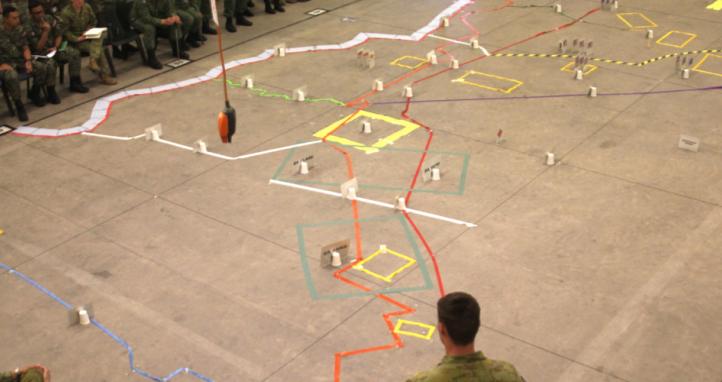
It may therefore be worth asking whether Army is attempting to solve the right problem in the right sequence. Rather than beginning with combat echelon structures, perhaps force design should begin by asking what logistics architecture is required to sustain dispersed operations under persistent surveillance. Once that question has been answered, command relationships become easier to determine because the practical limits of reinforcement are already understood.
Army has historically devoted much of its intellectual energy to optimising the close fight. The capabilities that generate, sustain, and integrate combat power deserve equal attention. Organisation would follow logistics rather than assuming logistics can always support organisation, and Australian military history provides several examples of precisely this approach.
History Suggests Organisation Should Follow the Problem
While history does not prescribe organisational models, it can reveal enduring principles that can be adapted to new operational problems.
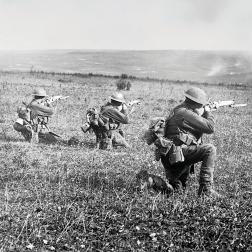
Monash did not succeed because he created a perfect organisational model. He succeeded because he adapted to solve a specific tactical problem. Hamel was not an argument for centralisation or decentralisation; it was an argument for integration. Capabilities requiring deliberate planning and concentration were controlled accordingly. Those requiring immediate tactical responsiveness remained closely integrated with manoeuvre forces. Form followed function.
The Australian experience in Vietnam reinforced this same principle from a different direction. The 1st Australian Task Force was built around habitual combined-arms relationships developed through training and sustained employment rather than capabilities assembled only when operations demanded them. Habitual relationships reduced coordination demands when decisions needed to be made quickly.
This is not to argue against task-organising scarce capabilities; rather, it suggests that dependency carries costs beyond simple questions of availability. Every dependency introduces not only a command relationship but also a potential familiarity gap. The further capabilities are removed from the commanders who employ them – physically, functionally, or temporally – the more difficult it becomes to develop trust, shared understanding, common procedures, and the informal relationships that underpin effective combined-arms operations.
The Pentropic Division offers a lesson. Developed around contemporary United States doctrine and assumptions about nuclear war in Europe, it addressed a genuine operational problem for the US Army. It proved considerably less suited to Australian circumstances. Poorly aligned with Australia’s strategic circumstances, it was abandoned within a few years (Chadwick 2021).[i]
The lesson is not that allied innovation should be viewed with suspicion as Australia has consistently benefited from learning alongside its closest partners. Rather, it is that Australia has generally been most successful when it adapted ideas to Australian circumstances rather than adopting them wholesale. That lesson remains relevant today.
Allied armies examining the implications of persistent surveillance, precision strike, and contested logistics have not reached a single answer. The US Army's 25th Infantry division is experimenting with greater centralisation of artillery, intelligence, and electronic warfare (US Army 2025).[ii] The British Army has pursued a different approach through its developing Recce-Strike concept (Watling 2025).[iii] Neither has yet become settled orthodoxy, and both are underwritten by a force with mass to spare should their respective concepts fail.
Australian planners don’t have that luxury and should treat allied force design as a proposition rather than prescription. This distinction also highlights an important difference between force design and operational planning. Force design determines the capabilities needed for future commanders; it shouldn’t determine how those capabilities will be task organised for a potential operation. Campaign planning, mission analysis, and task organisation remain the responsibility of commanders responding to specific operational circumstances. The question for force designers is therefore not how the next battle will be fought, but what capabilities future commanders should have available when they make those decisions.
Institutional Implications
Force design also carries institutional costs that should not be overlooked. Reallocating capabilities requires headquarters, staff and specialist expertise as well as equipment. At a time when Defence is pursuing workforce efficiencies, proposals that expand headquarters or create additional command layers should be assessed not only for their operational benefits but also for the opportunity costs they impose. Organisational elegance is of limited value if it cannot be sustained by the workforce available.
Conclusion
The debate generated by Colonel Watson’s article is both necessary and timely. The transparent battlespace has exposed assumptions that have shaped force design for decades. Adaptation is clearly required. The central question, however, is not whether brigade or division is the future of the Australian Army. It is whether the dependencies built into the future force reflect Australia's operational reality.
Geography determines how much dependency Australia can safely accept. Logistics determines whether that dependency can be sustained. Latency determines whether that dependency remains operationally relevant. History reminds us that successful force design emerges when organisation follows the operational problem rather than a preferred organisational model. Some dependencies are necessary. Others may prove fatal.
Before Army commits itself to another significant structural redesign, it should test those assumptions in the environment for which the force is actually being designed. A brigade operating across dispersed littoral terrain, supported by a division attempting to project combat power through contested sea and air lines, will reveal far more about the merits of competing force structures than any organisational chart ever can.
Australia should continue to learn from its allies, just as it always has; however, the lessons from its own history should not be forgotten. Successful Australian force design has never been about importing another army's organisation; it has been about adapting good ideas to Australian conditions.
The transparent battlespace changes many assumptions about land warfare. It does not change the requirement to begin with the operational problem rather than the organisational model. Ultimately, force design is the deliberate management of dependency across the integrated force. The question is not whether dependency exists, but whether the dependencies we create can be satisfied within the latency demanded by combat when geography, logistics, and the enemy conspire to prevent them.
End Notes
[i] Justin Chadwick, "The Atomic Division: The Australian Army Pentropic Experiment, 1959-1965," Australian Army Journal 17, no. 1 (2021).
[ii] U.S. Army, "25th Infantry Division Advances Transformation with HIMARS Precision Strike and DIVARTY Integration," U.S. Army, 25 April 2025, accessed 22 July 2026, https://www.army.mil/article/291673/25th_infantry_division_advances_transformation_with_himars_precision_strike_and_divarty_integration.
[iii] Jack Watling, "The UK's Deep Recce-Strike Brigade: Old Wine in New Bottles?," European Security & Defence, September 2025, accessed 22 July 2026, https://euro-sd.com/2025/09/articles/armament/46311/the-uks-deep-recce-strike-brigade-old-wine-in-new-bottles/.

I concur that Australia’s geographic environment is challenging. And that logistics is fundamental. Amateurs study tactics, professionals logistics. Logistics is the key. German logisticians warned that Barbarossa would fail before they launched, not tactically, but logistically. Without ammo you end up in a POW camp.
As for Australia, domestically we find wide open empty areas, with a few targetable nodes and links sitting on the coast. Nodes and links that can’t be avoided. Think our bare bases, ports and cities; as well as the roads and rail, and their bridges. Everything is clustered around those nodes.
In the near abroad we find an archipelago. Nowhere else in the world do you find an archipelago with 1000s of islands. Island with mountains, jungle, paddies, cities and villages that constrain movement and manoeuvre. And don’t forget the water around those islands. Making matters interesting is the tropical climate. If you’ve spent time in the tropics you understand how debilitating wet-hot-humid can be for both materiel and personnel.
The military context seems to be accepted. A transparent battlespace covered in sensors, with strike systems that can be easily cued due to digitisation and computerisation. Strike systems with sufficient munitions to saturate defences. The fighting system must tend towards cheap, plentiful and potent. The missile-drone era is here.
The core problem becomes ‘surviving the volume of fire long enough to undertake meaningful tasks’.
Does anyone really believe any part of the ADF can do that? Our air defence, and electronic warfare probably can’t defend Bondi. We’ve spent a lot of money and not got much capability to show.
The performance of NATO in Ukraine and the American’s in the Middle East tell you everything you need to know about the current capability of the Collective West’s forces. Even General Zaluzhny says the west is at least 12 yrs behind the Russians. And that NATO (Australian) doctrine remains wedded to WW2, not the current era. The result is our system is not capable of confronting the adversary’s system. So the strategy of ‘deterrence by denial’ might be a pipe-dream.
As you indicate in your article, an iterative ‘top-down bottom-up’ process is required to make sure the system is resilient, potent and relevant. Logistics, geography, threat, population and wealth form the boundary conditions that constrain force design. Logistics is something we can influence.
As we’ve identified in Army lessons, logistics is a ‘mass at speed’ problem that is not possible with the current mix. New uniquely Australian logistics solutions are needed. We need ship like volume at aircraft speeds. And to minimise compromising deployed forces, water needs to be the preferred landing place. Therefore, ekranoplanes and seaplanes need to form the core of our logistics system, not ships chugging at WW2 speeds.
Thanks for engaging with the article.
I think your point about "surviving the volume of fire long enough to undertake meaningful tasks" gets to the heart of the problem, and why logistics, like C2, should be at the centre of force design discussions. Without them, nothing happens.
Understanding the endurance and resilience land forces require, and then designing the logistics and C2 architecture needed to enable them, is critical. Otherwise, there is a risk that the limitations of current structures define what we believe is possible rather than the operational problem to be solved.
As you note, geography, threat, distance, population and national resources all influence that equation. The challenge is understanding how those factors interact and then designing a force that remains effective within those constraints.
Thanks again.
The Brigade versus Division discussion has generated some really worthwhile debate, and I also learned a lot from thinking through the problem while writing the article.
Thanks for taking the time to read it and leave a comment.