

Facts and figures
| Currency | BTD (Bangladeshi taka ৳) |
The ‘Know Your Region’ series is designed to support unit and individual professional military education on the Indo-Pacific region. It’s important for all serving members of our military to have a foundational knowledge of the countries and issues in the Indo-Pacific.
On this page:
- Summary
- A Short History
- Major Industries
- Ready-Made Garments
- Agriculture
- Remittances
- Imports and Exports
- Challenges
- Transparency and Corruption
- Climate
- Energy
Summary
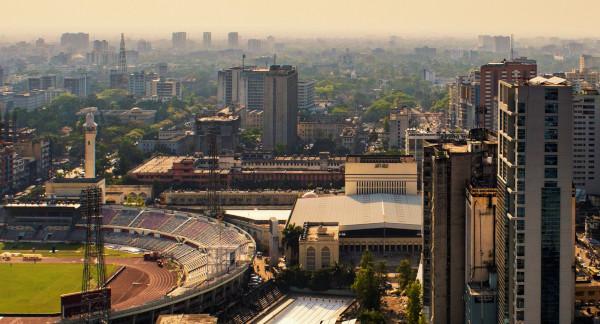
Bangladesh has transformed from one of the poorest, aid-dependent countries in the region to a lower-middle-income, rapidly growing urban economy. In 2025, it ranked as the 34th largest economy in the world in nominal terms and 25th by purchasing power parity. Bangladesh has a GDP of $450 billion and a debt-to GDP ratio of 40.3% The country has experienced an average GDP growth of over 6% per year over the past two decades, driven by a booming garment industry, strong remittance, and rising domestic consumption. Its success rests on a labour-intensive export model, strong social investments (within education and health for girls) and pragmatic macroeconomic management.
A Short History
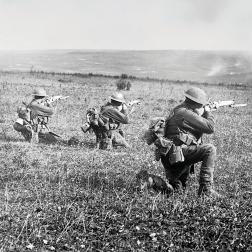
Bengal (including present-day Bangladesh) was historically wealthy. The fertile plains and deltas supported extensive farming while the cities produced exotic textiles, silks, and saltpetre (used to make gunpowder). Colonial rule, under the British East India Company, severely curtailed the economy. Extraction of revenue and high taxes resulted in widespread poverty and was a contributing factor in the 1770 great famine that resulted in approximately 10 million Bengali deaths.
The 1947 partition placed eastern Bengal as East Pakistan, geographically separated from West Pakistan by more than1500km. Economic policies and investments skewed toward the western wing; East Pakistan’s exports (notably jute) were taxed, and infrastructure investment lagged. Structural neglect, language and cultural grievances, and political exclusion fed the separatist movement that sparked the 1971 Liberation War.
Following its independence, Bangladesh inherited a shattered economy. Its infrastructure was devastated, and there was deep poverty. Early policy oscillated between import substitution, state ownership, and limited land reforms. Political instability and military rule limited consistent private investment. Poverty reduction was slow but gradual. Rural development programmes were introduced in the mid-1980s and NGOs began to build social foundations.
From the 1990s the economy gradually liberalised. The ready-made garments (RMG) sector expanded rapidly, making Bangladesh one of the world’s largest apparel exporters. The RMG boom created millions of (predominantly female) factory jobs, integrated Bangladesh into global value chains, and became the engine of export earnings and foreign exchange. Complementary policies, such as cheap labour, export processing zones, and trade preferences in some markets, helped scale the sector.
In the early 2000s, Bangladesh sustained impressive annual GDP growth rates of around 6%. Extreme poverty reduced during this time to single digits, and key human development indicators (maternal health, female enrolment) improved. The country graduated to lower-middle-income status and became a large contributor to UN peacekeeping (bringing foreign-exchange earnings and diplomatic capital). However, a reliance on low-value exports has limited diversification and there are significant infrastructure gaps. This has been exacerbated by recent political instability. Natural disasters, migration, and climate change have also proven to be formidable obstacles to the country's future prosperity.
Major Industries
Ready Made Garments
RMG is the cornerstone of Bangladesh’s modern economy. The sector employs around 4 million workers directly (mostly women), supports millions indirectly through logistics and services, and accounts for roughly 80% of merchandise export earnings. Bangladesh Garment Manufacturers and Exporters Association (BGMEA) figures show garment export receipts in the range of US$30-35 billion annually depending on the fiscal year and global demand cycles. Low-cost labour, concentrated supplier clusters around Dhaka and Chittagong, and long trade relationships with major Western brands have led to its success. While on the surface, RMG has been resoundingly positive, there have been many instances of questionable labour standards (workplace safety), and unfair business practices squeezing local profit margins.
Leather tanning and footwear have emerged as important export niches. While the labour sector has grown, (spinning, weaving) large shares of specialty items such as yarns and high-end fabrics are still imported, limiting foreign-exchange multiplier effects.
Agriculture
Agriculture is one of the most important pillars of the Bangladeshi economy, contributing roughly 12–14% of Bangladesh’s GDP (varies slightly by year). While its share of GDP has declined over time, agriculture continues to employ a large portion of the labour force (roughly 35–40%). It also ensures food security for a dense population. Over 70% of Bangladeshis live in rural areas, most depending on farming either directly or indirectly.
Bangladesh is now largely self-sufficient in rice; a major achievement compared to the food-deficit crises of the 1970s-1980s, largely due to advances in irrigation. Today more than 75% of cultivated land is irrigated, compared to less than 20% in the early 1980s. Aquaculture (shrimp/prawn farming) is also regionally important for exports.
Remittances
Remittances from Bangladeshi expatriates (notably in the Middle East and Malaysia) have been a steady cushion for the economy and a major source of foreign exchange. World Bank records show remittances as a material share of GDP. Fluctuations in global labour demand (e.g., host countries’ policies) directly affect household incomes and the macroeconomy. The Bangladesh government has actively promoted labour export as an economic strategy, while also trying to protect workers’ rights abroad. Remittance flows support consumption, education, and small business investment across the country.
Imports and Exports
Bangladesh's trade profile shows total exports of approximately $31.73 billion and total imports of about $48.06 billion, resulting in a trade deficit of around $16.32 billion.
On the export side, Knitwear, woven clothes, and related apparel products account for a large share of the country’s export revenues. Major buyers include the United States, European Union countries (notably Germany and the United Kingdom), and other markets such as Canada, Japan and various EU members. Beyond garments, Bangladesh also exports goods like jute and jute-products (sacks, fibres, etc.), leather and leather goods, footwear, and seafood (e.g. frozen fish and shrimp).
Bangladesh imports a significant amount of machinery and equipment, raw materials for its industries (for instance, raw cotton), fuel and petroleum products, and industrial commodities such as iron and steel, chemicals, and other intermediate goods. Its principal trading partners for imports are China (the largest source), India, Singapore, and other Asian countries.
Challenges
Transparency and Corruption
The Transparency International’s Corruption Perceptions Index (CPI) places Bangladesh low in global rankings with a score of 23 out of 100 which equates to 151 out of 180 countries (2024). This reflects a persistent public perception of corruption in public procurement, licensing, land administration, and political patronage. This sentiment affects investment, international reputation, and the efficiency of public spending.
Long-standing political clientelism has meant that business favours and public contracts often flow through political channels. This dampens competition, discourages small firms, and reduces quality and output. Improved audit institutions and civil society pushback have made some progress; however, rebuilding trust will be a difficult challenge.
Climate
Bangladesh is one of the world’s most climate-vulnerable countries and agriculture is the most exposed sector. Annual monsoon floods replenish soil, but extreme flooding destroys crops, particularly Aman rice. Major rivers (Padma, Jamuna, Meghna) shift course frequently, removing entire villages from the map and making thousands landless. While flooding events have always been a way of life in Bangladesh, the frequency of events has increased. As a result, large numbers of people are migrating to the cities, which are struggling to cope with the influx.
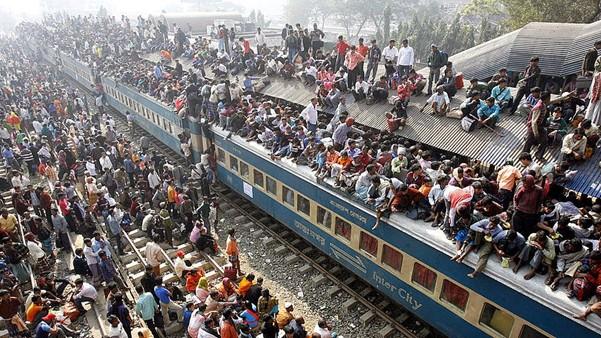
The Human Settlements: Dhaka: The most densely inhabited megacity
While life on the land is challenging, rural communities have shown incredible resilience and an ability to adapt.
Energy
Energy imports are playing an increasingly significant role in shaping Bangladesh’s economic stability, largely because the country depends heavily on imported fuel to meet its growing power demand. As domestic gas reserves decline and industrialisation accelerates, Bangladesh has turned to imported liquefied natural gas (LNG), diesel, and coal to keep its power stations running. These imports are expensive, and global price volatility – especially during periods of geopolitical tension – has placed pressure on Bangladesh’s foreign exchange reserves. Rising energy costs have contributed to higher production expenses for industries such as textiles, weakened the Bangladeshi taka, and increased the overall cost of living. When fuel prices spike, the government faces difficult choices: either subsidise energy (putting strain on the national budget) or raise electricity and fuel prices (which can dampen industrial competitiveness and public welfare). As a result, Bangladesh’s reliance on imported energy has become a central economic vulnerability, influencing inflation, industrial output, and long-term fiscal planning.
Videos
Articles
Know your region
Know Your Region series gives you a shortcut to understanding other nations in the Indo-Pacific region.