Facts and figures
| GDP | $USD 0.45 billions |
| GDP per capita | $USD 4,768 |
| Currency | United States dollar (USD) |
The ‘Know Your Region’ series is designed to support unit and individual professional military education on the Indo-Pacific region. It’s important for all serving members of our military to have a foundational knowledge of the countries and issues in the Indo-Pacific.
On this page:
- Summary
- Major industries
- Challenges
Summary
During the post‑World‑War II period, the islands that now constitute the Federated States of Micronesia (FSM) formed part of the United States (US) administered Trust Territory of the Pacific Islands (TTPI). Economic activity was limited, with subsistence agriculture and small commerce sustaining the population. The adoption of a national constitution in 1979 and the subsequent 1986 Compact of Free Association (COFA) with the US set the modern fiscal policy that is in motion today. Large US grants support government salaries, infrastructure, and social sectors.
The Compact’s economic provisions were amended in 2003 which included the creation of a trust fund and restructuring grants. In 2024, the COFA was extended with renewed economic support until FY2043. The 2024 package provides US$140 million/year in sector grants and US$500 million in new trust‑fund contributions, while ensuring continued access to select federal programs.
Economy Size
FSM has a small economy by global standards with a gross domestic product (GDP) of US $471.4 million (2024), which is reflective of its small population and limited productive base. GDP per capita (US$4,166) is relatively high compared to some developing countries due to significant aid inflows rather than domestic productivity. Real growth is hovering around one percent, accounting for pandemic‑era volatility. Like most other countries in Micronesia, FSM uses the US dollar as its currency. The economy is typical of other small pacific nations with a narrow production base, heavy import dependence, large external grants, volatile fisheries revenue, and high exposure to global commodity prices and disasters.
Major Industries
Fisheries
Fisheries are FSM’s most valuable natural resource. FSM controls a vast exclusive economic zone (EEZ) that is part of one of the world’s richest tuna fishing regions. Sale of fishing licenses to foreign fleets, fishing access fees, participation in regional tuna management agreements, and port services are together a major source of government revenue and foreign exchange.
Public Administration and Services
Public administration is the single most important economic activity in FSM. Government employment accounts for a large share of formal jobs. Salaries are often higher and more stable than private-sector wages and Government spending drives demand in retail and services. Public services include education, healthcare, utilities, and state-owned enterprises. While the sector provides social stability, it is also recognised as limiting private-sector growth.
Agriculture
Agriculture remains important, especially in rural areas, though its contribution to GDP is limited. Key crops include taro, breadfruit, cassava, bananas, and coconuts. Most production is for household consumption and local sale only as there are constraints on land availability, soil quality, and transport.
Tourism
Tourism is underdeveloped but has potential. FSM boasts spectacular Coral reefs, wreck diving, cultural heritage sites (e.g., Nan Madol), and unspoiled natural lagoons and atolls. Tourism contributes only a small share of GDP and employment but is often cited as a future growth opportunity. To expand, some hurdles would need to be overcome such as the high cost of flights, limited accommodation, and lack of a strategic marketing strategy.
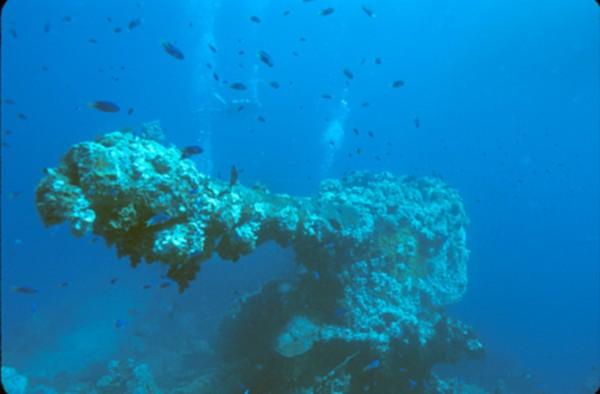
Image: Wreck diving (Chuuk) FSM – Wikitravel
Trade
FSM runs a large and persistent trade deficit. Imports greatly exceed exports, and the gap is financed through aid, grants, and fishing license revenue. FSM has limited domestic production and high dependence on imports. Locals are worried that traditional foods that are grown at home are slowly being replaced by imported packaged goods that are low in nutrition. There has also been a rise in non-communicable disease.
Major imports include food and beverages, fuel and petroleum, machinery, construction materials, and medical supplies. Key import partners include the US, Japan, Australia, and other Pacific hubs. Main exports include fish and seafood (small volumes compared to license revenue), copra and coconut products, and scrap materials.
Foreign Aid
COFA is the cornerstone of FSM’s economy. COFA funding supports basic government operations and social services as well as infrastructure (such as the submarine fibre connectivity), energy access, climate‑resilience, and road projects. Other development partners include the Asian Development Bank, World Bank, Japan, and Australia.
For more information on FSM’S economy, see the resources below:
Articles
Know your region
Know Your Region series gives you a shortcut to understanding other nations in the Indo-Pacific region.