Facts and figures
The ‘Know Your Region’ series is designed to support unit and individual professional military education on the Indo-Pacific region. It’s important for all serving members of our military to have a foundational knowledge of the countries and issues in the Indo-Pacific.
Geopolitics in the Pacific
Summary
The Pacific region has become increasingly important for geopolitical competition. Once viewed by major powers as strategically secondary, the Pacific is now central to global debates about security, trade, climate change, and influence. This renewed attention is driven largely by the growing rivalry between established powers such as the United States (US) and emerging powers such as China, as well as the strategic interests of countries like Australia, Japan, and New Zealand. Pacific Island countries, including the Federated States of Micronesia (FSM), are now playing an increasingly important role despite their small populations and limited economic capacity.
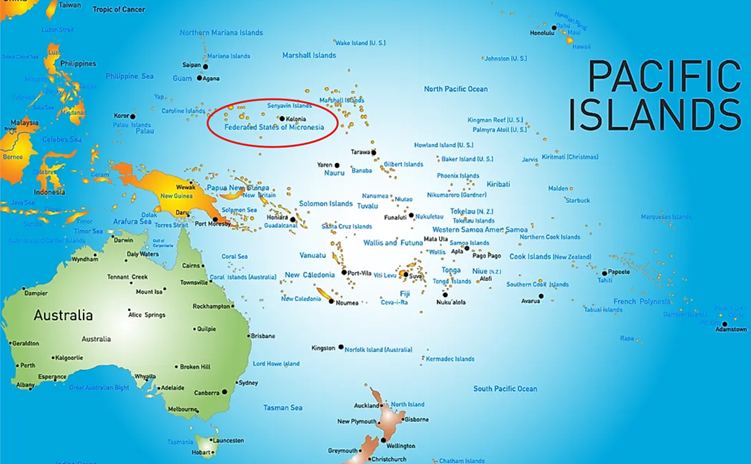
Geopolitics in the Pacific
The US maintaining strategic control over much of Micronesia and ensuring rival powers could not establish a military presence in the region was seen as especially important during the Cold War. Once the cold war ended, strategic thinking about the Pacific never disappeared. In recent years, it has re-emerged strongly due to China’s rise as a global power and its expanding diplomatic, economic, and political engagement across the region.
For the US, the Pacific region is essential for providing freedom of navigation and access between Asia and the Americas. While FSM’s land area is small, its exclusive economic zone (EEZ) is vast, covering millions of square kilometres of ocean. Control is seen as essential to preventing hostile powers projecting military force and using the islands to disrupt shipping and trade, as well as commandeering the land for military purposes.
Since gaining independence, FSM’s most significant role in the Pacific comes from its relationship with the US through the Compact of Free Association (COFA). The COFA grants the US strategic denial rights, meaning that no other country may establish military access or presence in FSM without US consent. While FSM does not host US military bases, its alignment helps maintain the existing balance of power in the region.
Over the past two decades, China has increased its presence through development assistance, infrastructure projects, trade, and diplomatic engagement. Chinese-funded projects in the Pacific often include government buildings, roads, ports, and telecommunications infrastructure. For Pacific Island countries, this investment offers opportunities to address development gaps and diversify international partnerships. However, the US and western powers have become weary of this shift and question where it might lead in the future.
Australia and New Zealand also play important roles in Pacific geopolitics. Both countries view the stability and security of the Indo-Pacific as directly related to their national security and interests. Both countries provide significant development assistance, security cooperation, and disaster response support. Likewise, Japan and India have similarly increased engagement focusing on infrastructure development, maritime security, and climate resilience. France remains a regional actor as well through its overseas territories, such as New Caledonia and French Polynesia.
While tied to the US, FSM has sought to maintain its sovereignty and independence in foreign policy decision-making. It participates actively in regional and international organisations, including the Pacific Islands Forum and the United Nations. Climate change is seen as the biggest existential threat and has become a key element of its diplomatic engagement. Rising sea levels, coastal erosion, and extreme weather events pose serious long-term security risks, making climate action a core national priority.
FSM’s emphasis on climate diplomacy intersects with geopolitical competition in important ways. Major powers increasingly use climate finance and development assistance as tools of influence in the Pacific. Like other Pacific nations, FSM must carefully manage relationships with external partners to benefit their populations while not undermining long-term security or sovereignty.

Image: ADF visits a school in Pohnpei, FSM during Operation SOLANIA – ADF
For more information on geopolitics in the Pacific, see the resources below:
Videos
- The Untold Story: China's real role in the Pacific
- Australia’s Military Strategy 2025-2035: Expanding Reach, Securing the Indo-Pacific
Articles
- China’s Power Play Across the Pacific
- China’s Pacific rise shocks neighbours – hidden agreements and secretive projects fuel fear – Deftechtimes
- The Long Shadow? China’s Military Rise in the Indo-Pacific and its Global Implications – CSDS
- China’s increasing political influence in the south Pacific has sparked an international response
- US Indo-Pacific allies and partners must remain in the spotlight | United States Studies Centre
- Explore Pacific Forum's Insightful Indo-Pacific Analysis
Know your region
Know Your Region series gives you a shortcut to understanding other nations in the Indo-Pacific region.